Cocido Leftovers: Part III

So! We have made a few things so far! We have made a plain cocido – with soup. And we have leftover stock we can use to make more soup in a hurry, with easy to cook pasta or parboiled 5-minute-done rice, or even ramen-style noodles. Very nice in these wintery days.

Then we made some hummus.

Then we made some old clothes.

Then we started with the croquettes. And now we finish it.

We left the croquette mix cooling down and sitting int he fridge, right? Well, this is our last stop. Whatcha need now? Just breadcrumbs and eggs really:
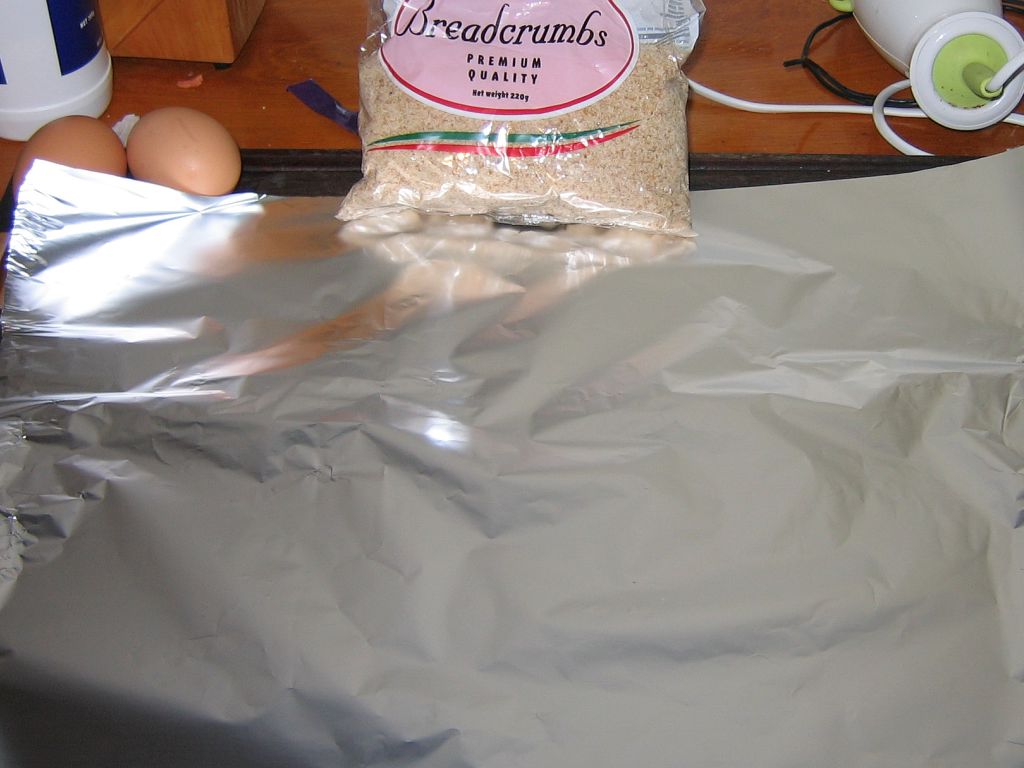
Getting ready for the croquette wrapping

Apart from the just-done cocido, the croquettes are my favourite part of it. Start by beating an egg or two and throwing some breadcrumbs on the tinfoil. The reason we use tinfoil is that it’s easy to cover the crowuette with crumbs if you lift one end or the other so that they pour over it, whereas with a plate it’s not so easy.

We’re gonna get that croquette mix, make some relatively big cilindrical shapes, then pass first over the egg and then over the brumbs. Make the shape with your hands (wash them very thoroughly before starting!), and use a fork to put through the egg and move over the crumbs. Don’t use the fingers for that or you’ll make a mess thanks to the egg! Once the croquette is nicely crumbed, you can use the fingers with no danger.
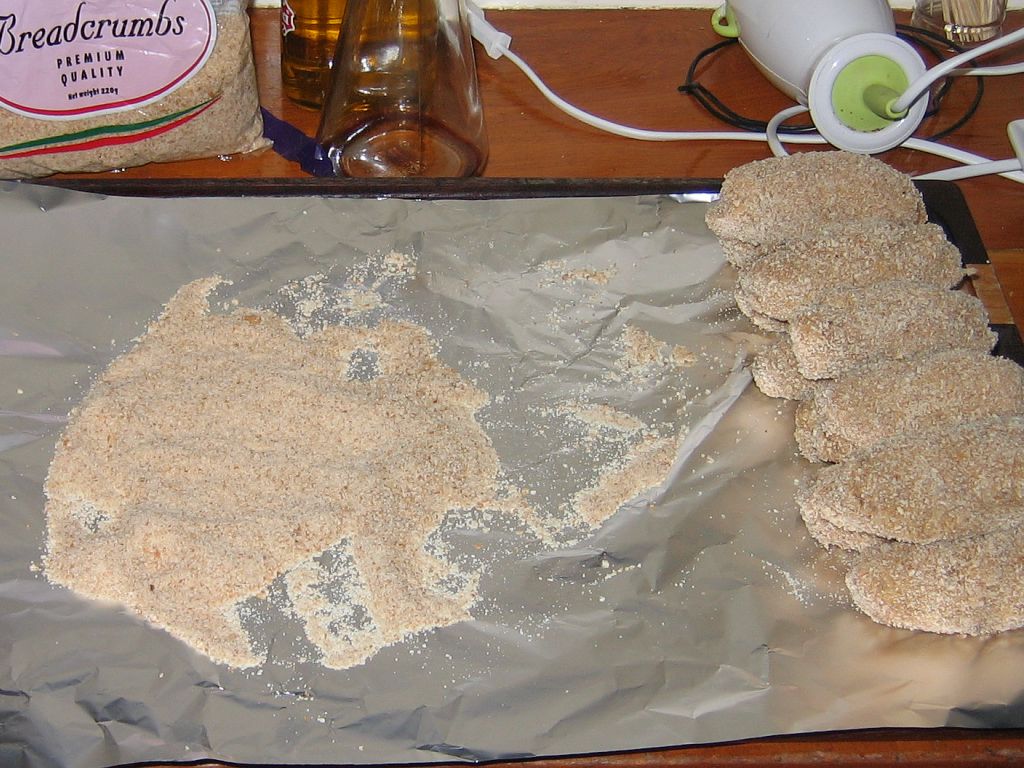
Croquettes prepared to be fried.

Now, just fry them in abundant hot oil. This is the last step in making Cocido leftovers because it rocks. You can make a ton of them and just freeze them, they freeze exceedingly well. Freeze them BEFORE you fry them, then they can go straight from the freezer to the pan.
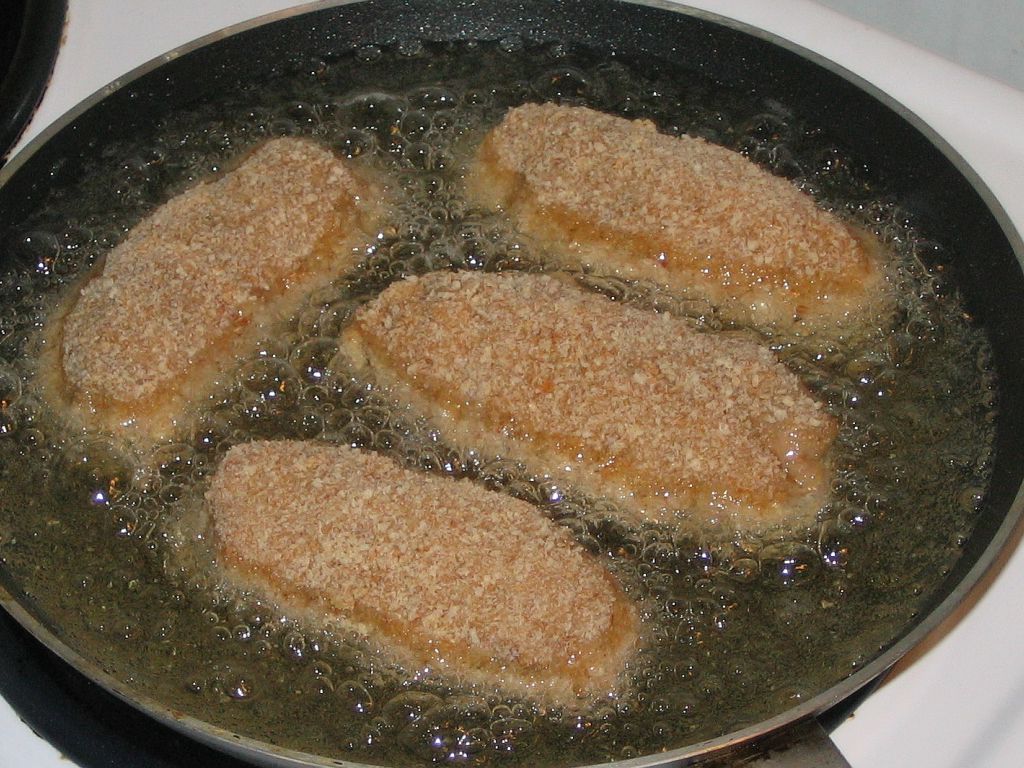
Frying the croquettes.

Since the “inside” is actually already cooked, all you need to do is give it a nice toasty crispy cover.
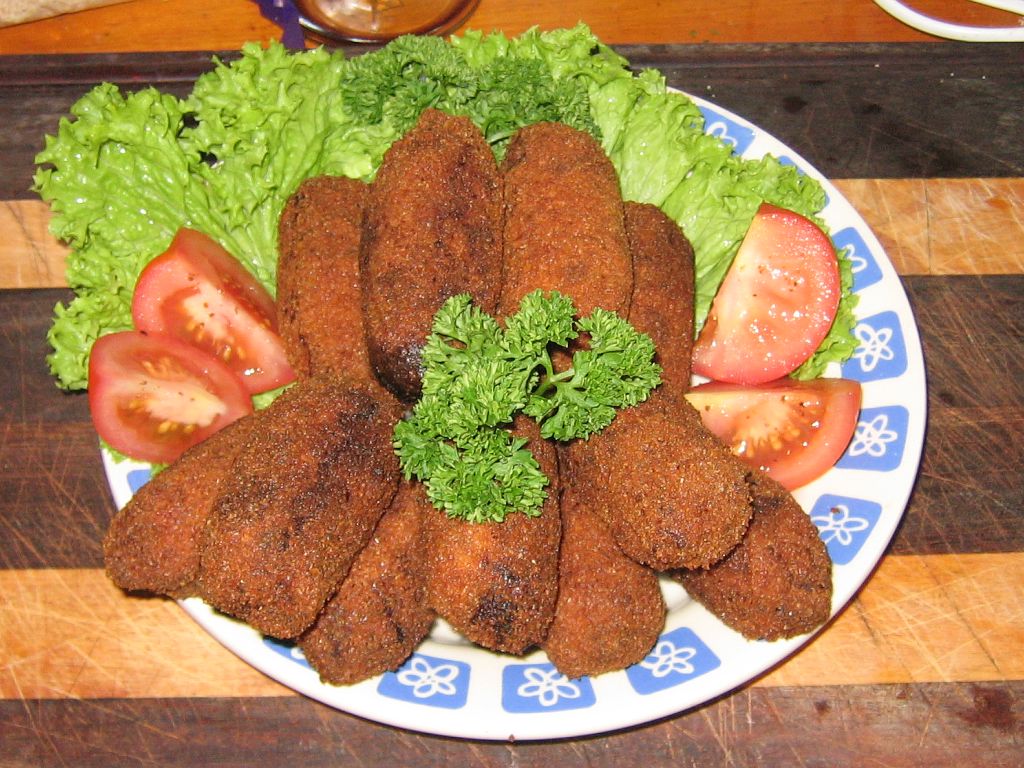
Croquettes ready!
Croquettes ready!

There are 2, possibly 3 portions there. I made that many because it looks good in the picture, and because I’m taking some tomorrow for lunch as well as today’s dinner. The remaining ones went into the freezer.

And that’s it! Well, that’s mostly it. That’s like 4 days straight eating the same thing, but different. See why I made a big Cocido now?
Cocido Leftovers: Part II

Next part, is using the meat for a couple of things. I’m going to do them simultaneously because I’m just that damn good.

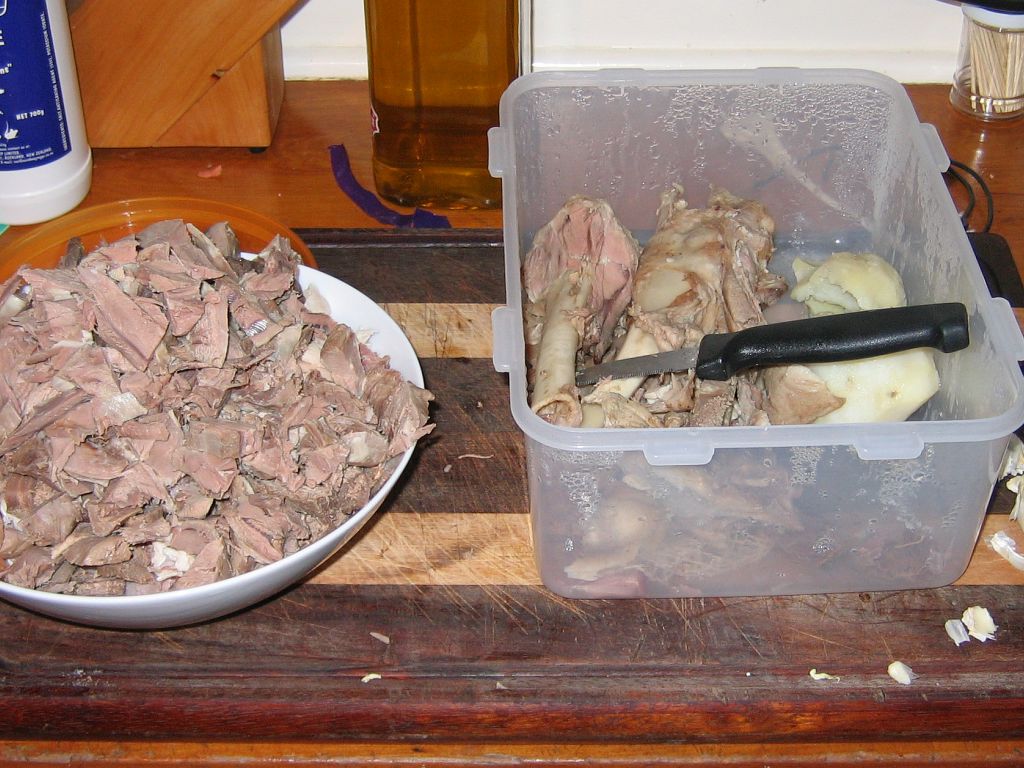
First off, we start by chopping up all the leftover meat(s):

Lots of meat.
Lots of meat.

There are several kinds of meat there, it’s just that I haven’t mixed it yet (it’ll be more obvious in a bit). What you do is chop it up into small-ish pieces. As you can see by the tupperware, it’s been in the fridge since yesterday, they’re proper leftovers!

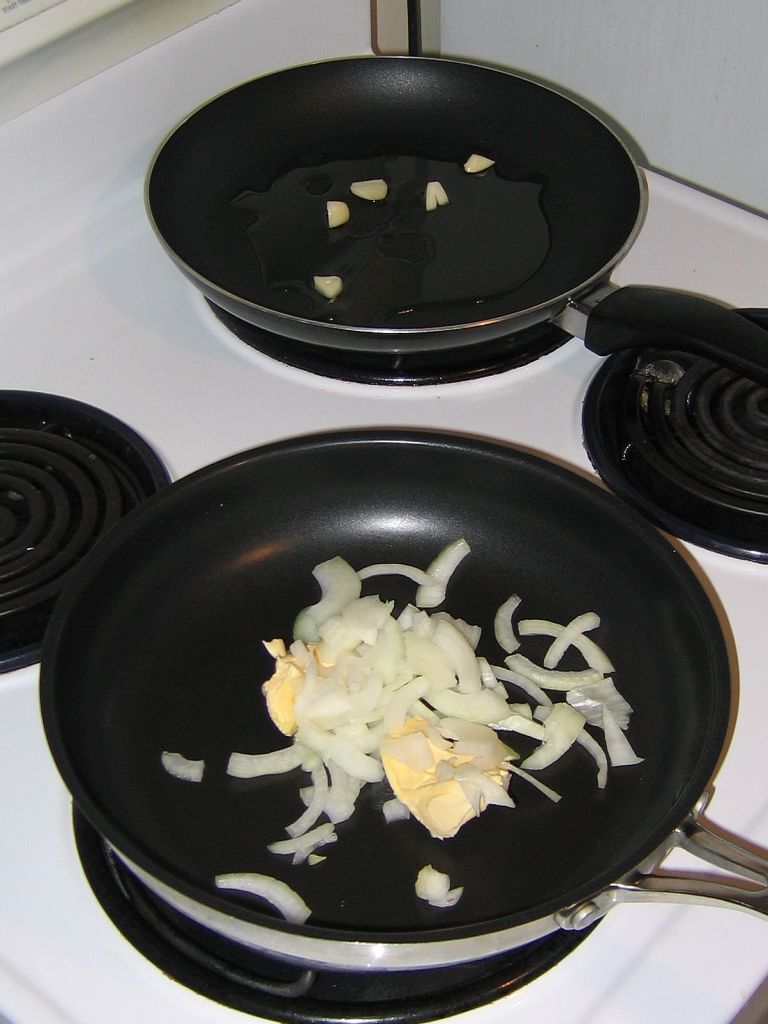
Now, grab a pan for each of the two things we’re going to do. One is called “Old Clothes” (“Ropa Vieja”) and the other is just croquettes.

Preparing the two meaty leftovers

For the croquettes:

  • An onion, chopped up.
  • Some butter/margherine (I use the latter).
  • Nutmeg.
  • Salt.
  • Milk.
  • Leftover meat and, if you want, veges from the Cocido.

For the old clothes:

  • Leftover anything from the cocido.
  • Paprika powder.
  • Garlic.
  • Onion (if you want).

So, I’ve put those two pans, and it’s pretty easy.

For the old clothes: Add the meat once the garlic’s a bit fried, and stir frequently. When the meat’s looking like it’s fried, add some paprika powder, stir till homogeneous, and serve. Easy!

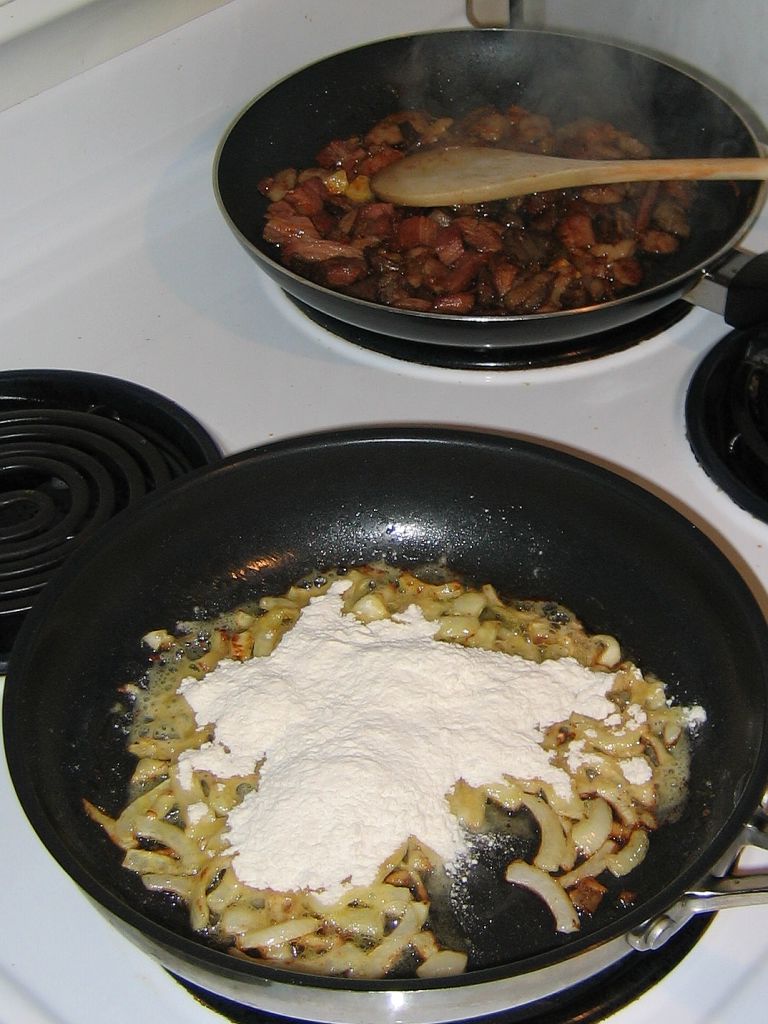
For the croquettes: Wait until the onion is more or less soft, then add a couple of well full spoonfulls of flour.

Old clothes are ready, croquettes just got started.

You can see at the top what the old clothes will look like. You can probably spot the similarity with how we served the cabbage before! Yes, it’s the same principle, and if you save some cabbage for mising with the meat, it’ll go quite well.

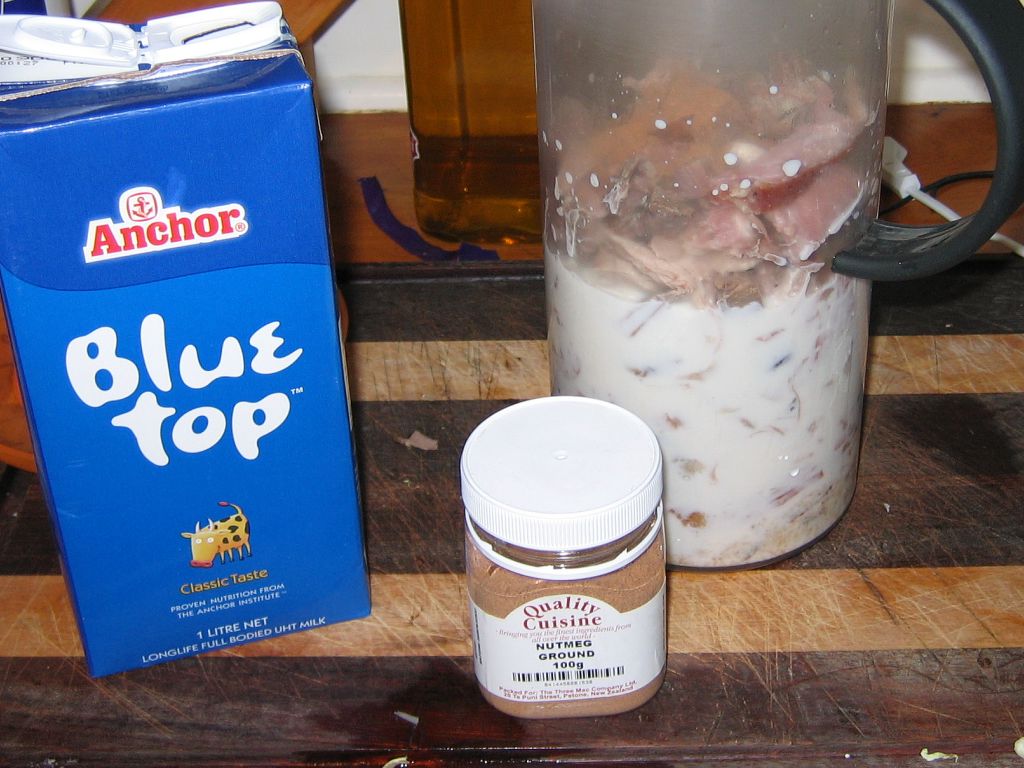
Anyway, the croquettes. After you add the flour, stir and stir so that the flour doesn’t burn, and when it’s looking to be nice and toasty, throw in a big vase or jar or whatever you have for food processor. Then add the meat on top, and enough milk to drown it all. Then top it with some nutmeg:

Getting the mix for the croquettes ready.

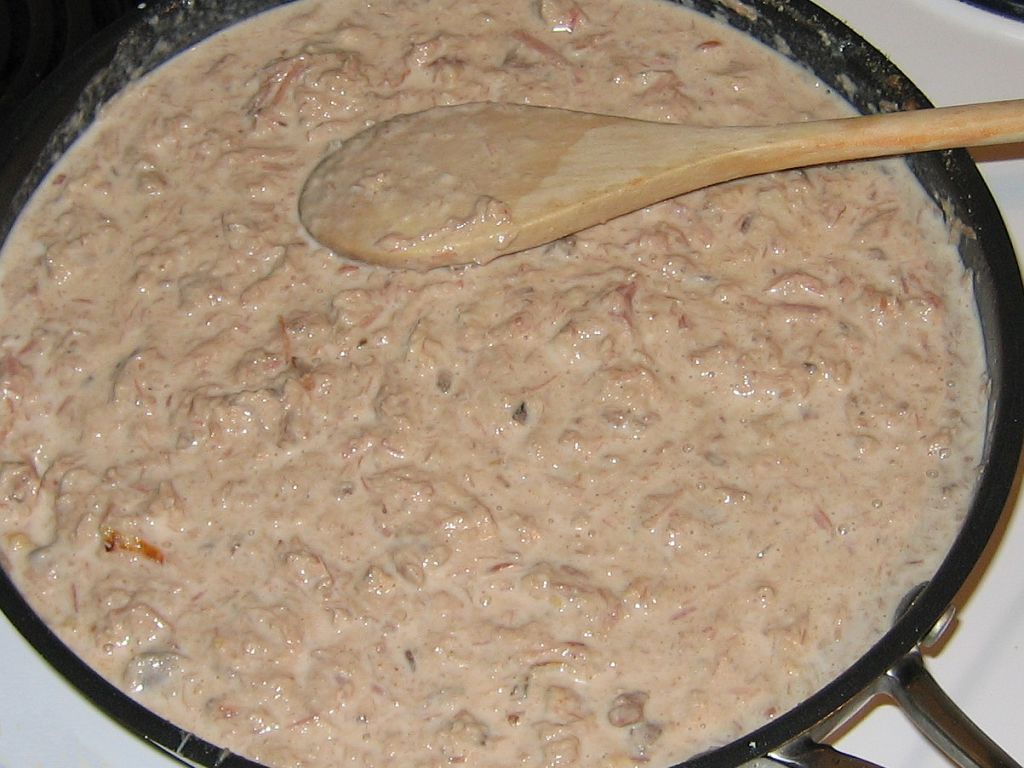
Now, put it through the blender/whatever, but don’t be overzealous. You don’t want a fine grade mush, chunky is good. As you process, you may want to add more milk! Anyway, once it’s nicely mixed, throw it in the pan again:

Croquette mix ready
Croquette mix ready to begin!

Now.. We stir. And stir and stir some more.

How much? Until it’s getting tough to mix.

Is it getting tough? Keep cooking and mixing.

“But…”

Keep at it.

“It’s looking pretty done.”

In that case, keep at it some more. And then some.

I’m talking that the mix has to become so tough that you can sculpt stuff with it. Like clay. That kind of thing.

Okay, maybe I’m exaggerating slightly. But when my mom makes cheese croquettes, she always lets the mix go so tough that she cannot move the spoon inside. And she’s no wimpy girly woman, let me tell you!

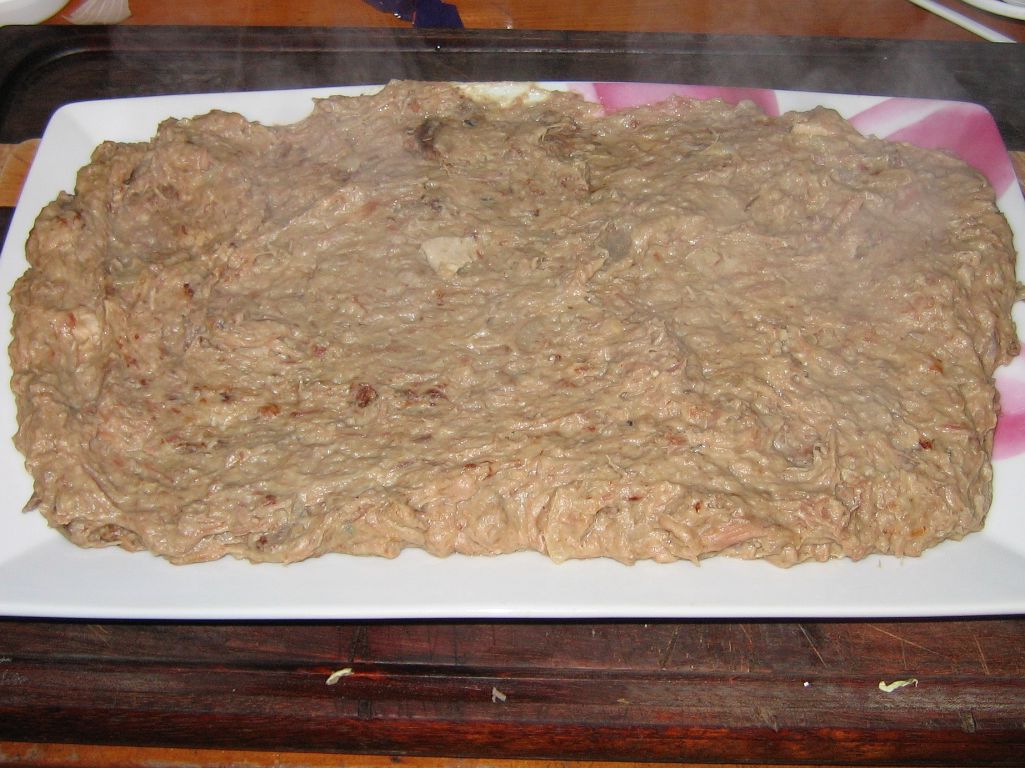
Anyway, once the mix is nice and tough, throw it on a tray:

Mix for croquettes ready

Let it sit for a few hours or a day or so. Put a cloth on top while you let it cool outside at first, then put some tinfoil and into the fridge it goes.

We will be using that later!

Cocido Leftovers: Part I

Okay, so we have a huge amount of leftovers from the cocido. Usually you eat the cocido for lunch and start having the leftovers for dinner. Anyway, let’s start with the simplest stuff.

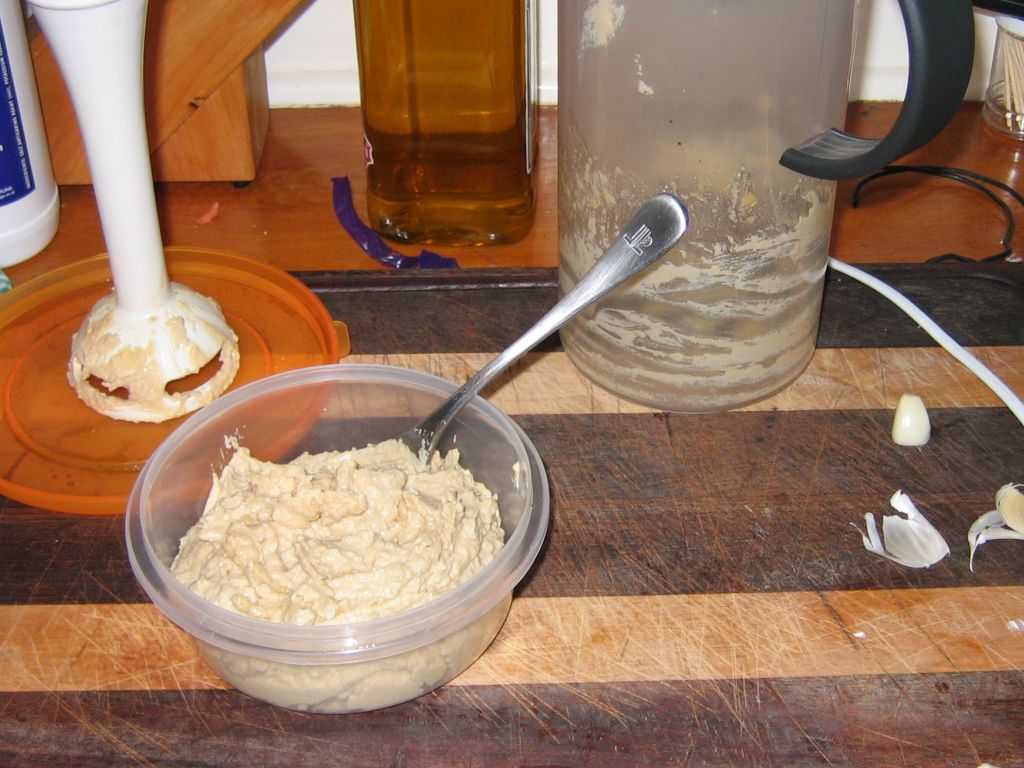
Yummy!
Yummy!

So, what’s that? That’s hummus! We had a ton and a half of chickpeas, and what’s best to do with them? Well, you can refry them and they’re pretty good, but hummus is nicer!

You need:

  • Leftover chickpeas from the Cocido.
  • Couple of cloves of garlic.
  • Olive oil.
  • Salt.
  • Vinegar or lemon. (I use vinegar! Nice zing).
  • Tahini paste (which I skip entirely, but there you go).

So, this is the simplest thing to do with the leftovers, throw all the ingredients into the blender and process until smooth. I’m putting it in a tupperware for the fridge, but you can instead serve straight away with some carrots/celery/crackers. Add some parsley and off you go.

Easy!

Hilariously, considering how it was cooked, this is quite likely the only non-vegetarian recipe for hummus you can find on the net.

Cocido

Whew! It’s been quite a while without an update! Well, that’s okay, because the one coming is definitely a big big big one. Cocido.

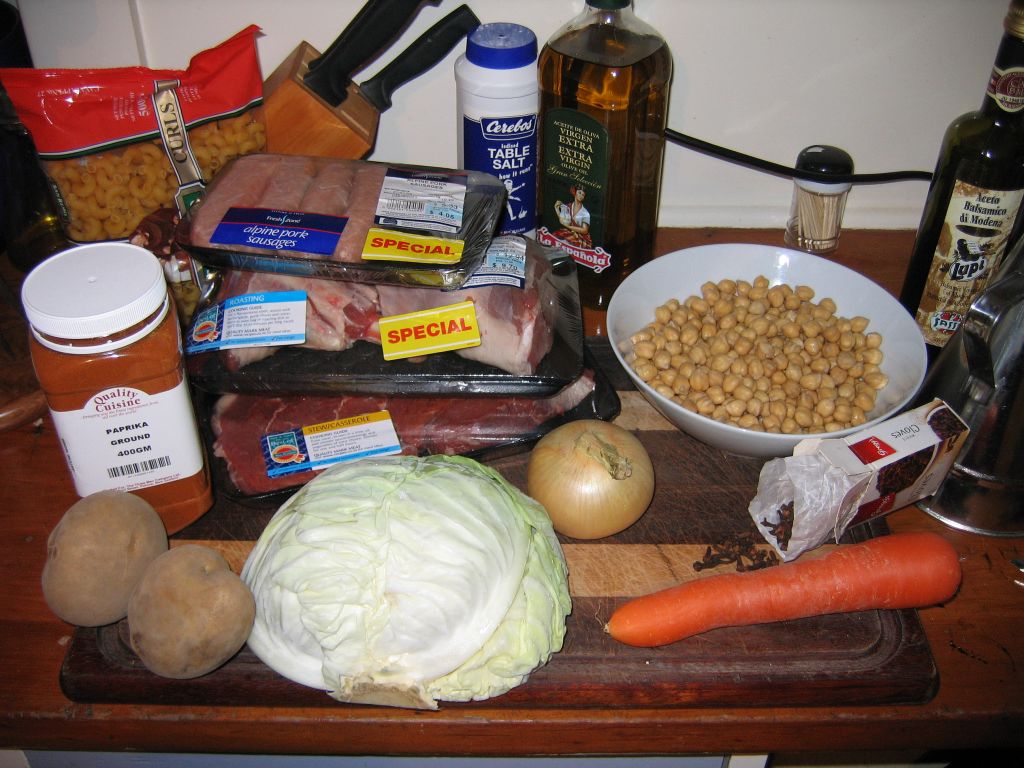
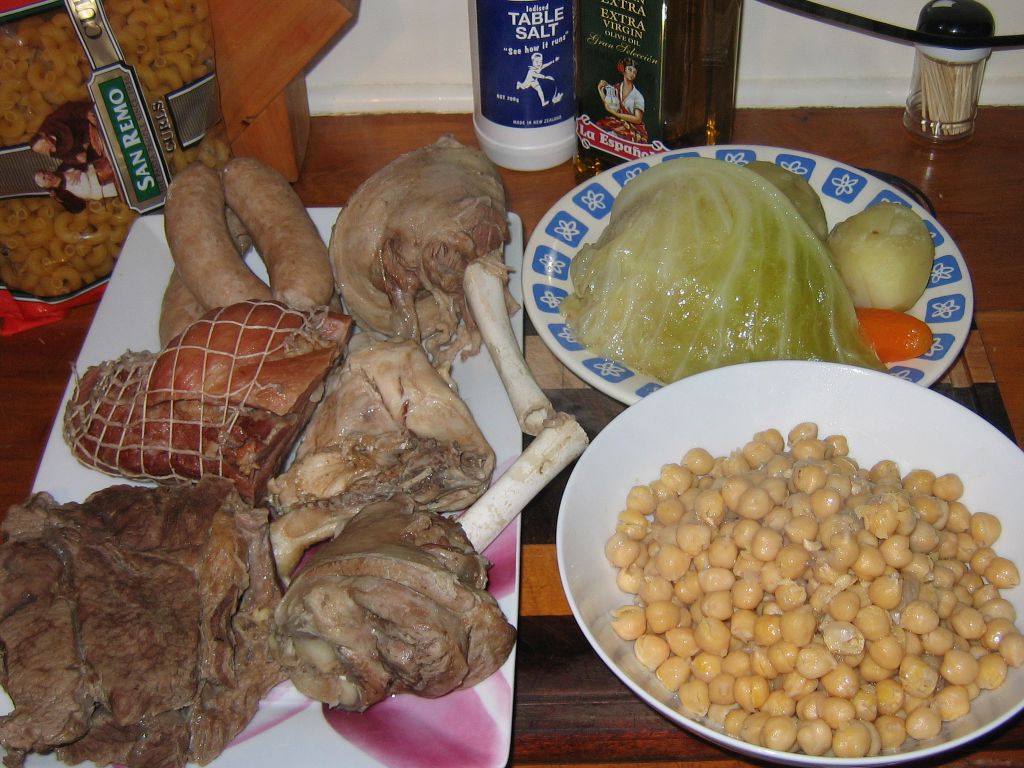
What is Cocido? It is, quite simply, a huge dish of boiled meats and vegetables. Quite simple to describe, huh? Well, let’s take a look at what we’ll be using:

Ingredients for Cocido

So whatcha need?

  • Meat. Lots of meat. Whatever is handy, but you typically need:
  • Some sort of pork. Bacon hocks or some hard (old) raw ham works.
  • Boned beef, or just a big beef bone.
  • Some spicy sausage and/or black pudding.
  • Any other meat that happens to be handy. Like chicken, lamb, venison… you name it.
  • Chickpeas/garbanzo beans. Better the dry ones than the tinned ones. If dry, put them in water a few hours before making the Cocido.
  • Cabbage.
  • Potatoes.
  • Carrots.
  • Any other tough vegetable (turnips, parsnips, or whatever they’re called for example) that can survive a boil.
  • An onion and some cloves. I put them together because a neat trick is to stab the onion with the cloves so that they don’t go all over the pot.
  • Garlic (not shown because we don’t need it just yet).
  • Paprika powder.
  • Pasta or rice for the soup.

Really, just throw in anything you have handy. You can’t see the boned beef or the piece of pork because they were already in the pot (whoops!).

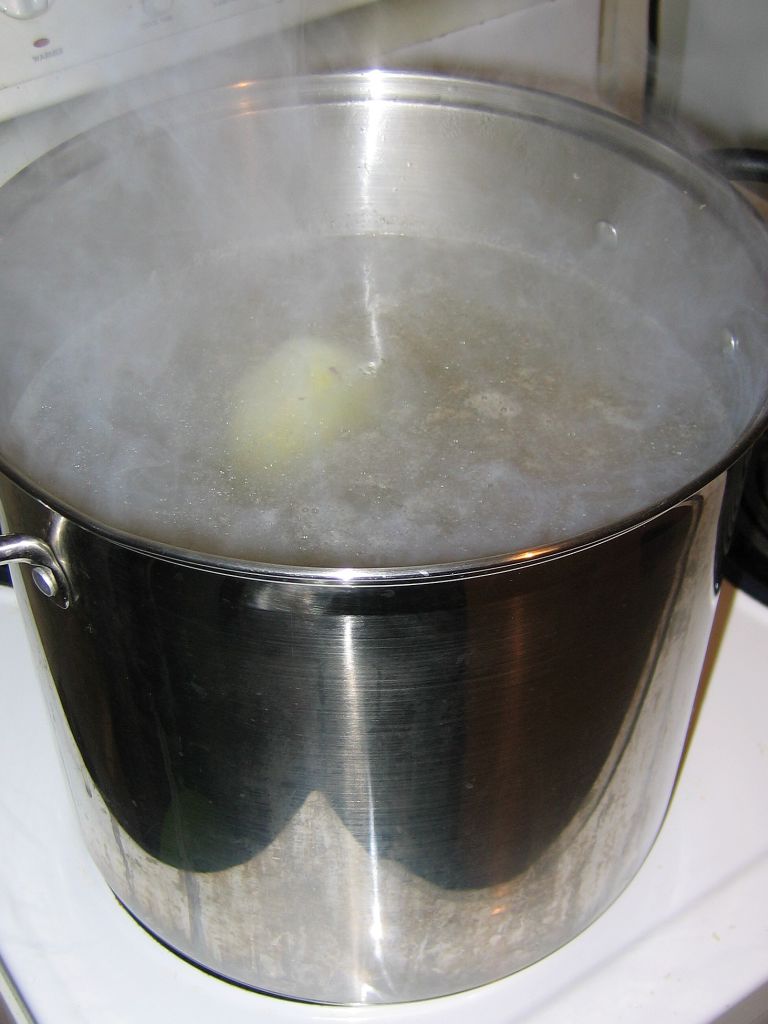
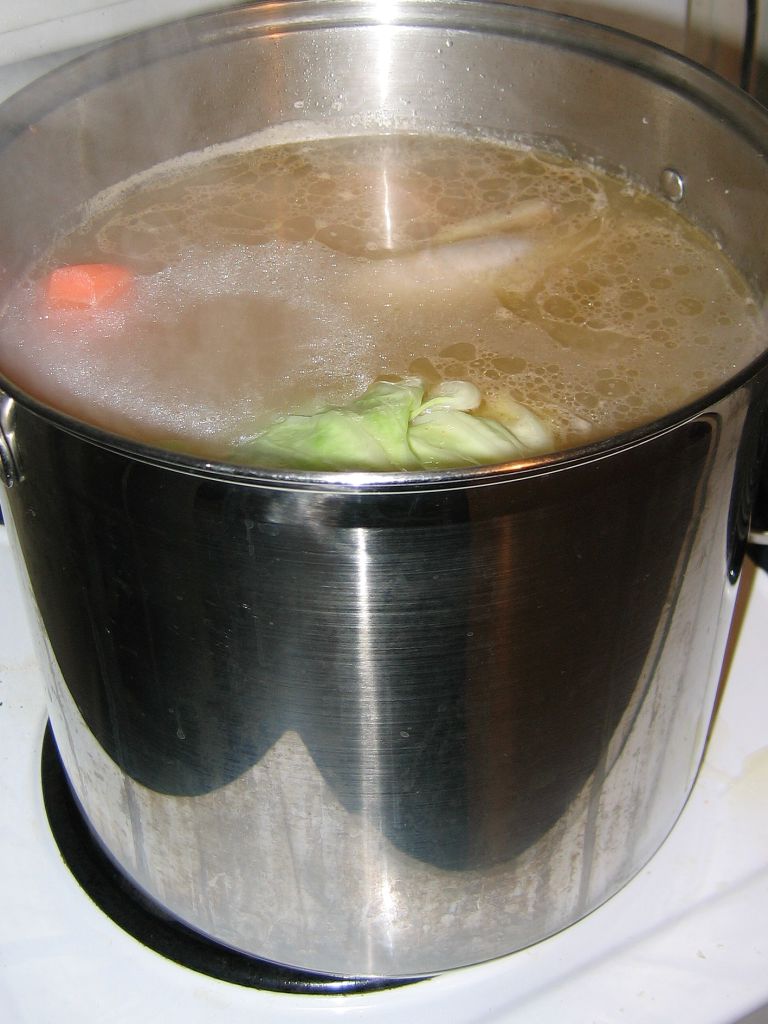
Anyway, fill a big pot with the meat and warm/hot water, and put on the stove on high (to begin with). As the water rises in heat, you’ll see some foamy scum rising to the top. Remove it with whatever kitchen tool you have handy, it’ll do so for a few minutes until it starts really boiling.

BIG pot!
BIG pot!

I use the “no more foam rising” mark to know when to add the chickpeas and the onion with the cloves – and the salt if you want salt. After you add them, put on medium/low, cover, and leave it for about an hour or so.

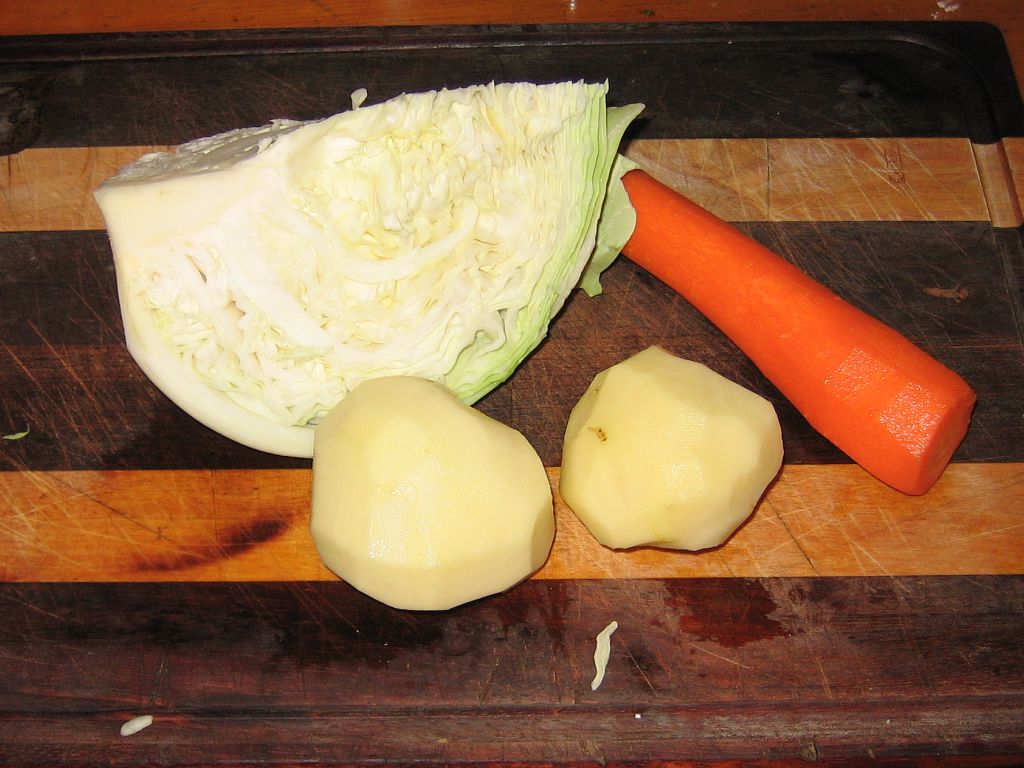
After an hour, get the vegetables ready and, if you’re adding them, the sausages and other “softer” meats like chicken.

A few vegetables, nothing fancy.

If you have meats, throw them in, leave for 15 minutes, then add the vegetables. Some people recommend boiling the vegetables separated from the meat, but I can’t be arsed. And they taste better if you put everything in there.

Fuller big pot!
Fuller big pot!

So, leave for another 20 minutes or so (until the potatoes are cooked) and take out the stuff. Serve the things separately:

  • The meats on one side.
  • The vegetables on the other.
  • The chickpeas by themselves.
  • With the remaining stock, make a soup.
Cocido ready to eat... almost!

So, do I really have to puit a picture of how to make the soup? Put the stock through a colander/strainer to get rid of the little bits of stuff (mostly bone splinters), then add rice or pasta and that’s it. Lemon goes very well with that soup.

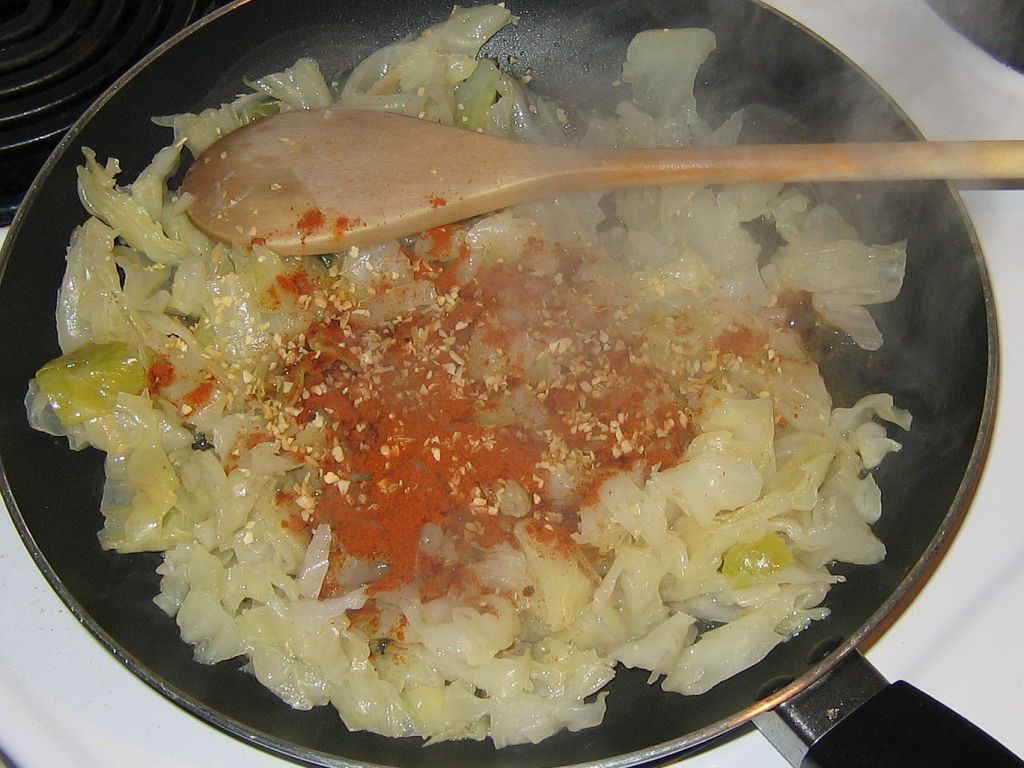
Also, you may want to spice up the cabbage a bit. To do so, chop it up and throw it in a frying pan with some oil, and after a bit add some paprika powder and garlic:

Frying the cabbage.
Frying the cabbage.

Stir quickly and efficiently so that you get a very consistent red through it all.

And that’s it!

Actually no, that’s not it. That’s it as far as the cocido goes, but! But the best part of the Cocido is the leftovers! Which is why I made cocido enough for like 6 or 8 meals. You’ll see how I’m going to get 6 or 8 meals out of it!

Stuffed Roasted Peppers

It sure has been a while! I have had a very busy week, with section meetings and, erm, “other” stuff (which I shall post in the near future) that basically meant lots of eating out and not being and home and, thus, little cooking.

Eventually, though, one has to go back to eating proper food at home. And so, here is the next little thing to add to the collection. We have a kind of red pepper in Spain called “Piquillo”, it’s a robust, tasty pepper that is very popular for a variety of dishes. It’s strongly flavoured, and the meat is “tough” (not tough as in chewy, but tough as in being able to take manipulation without falling apart). There are countless recipes for how to make stuffed Piquillo peppers, and here is but one of them.

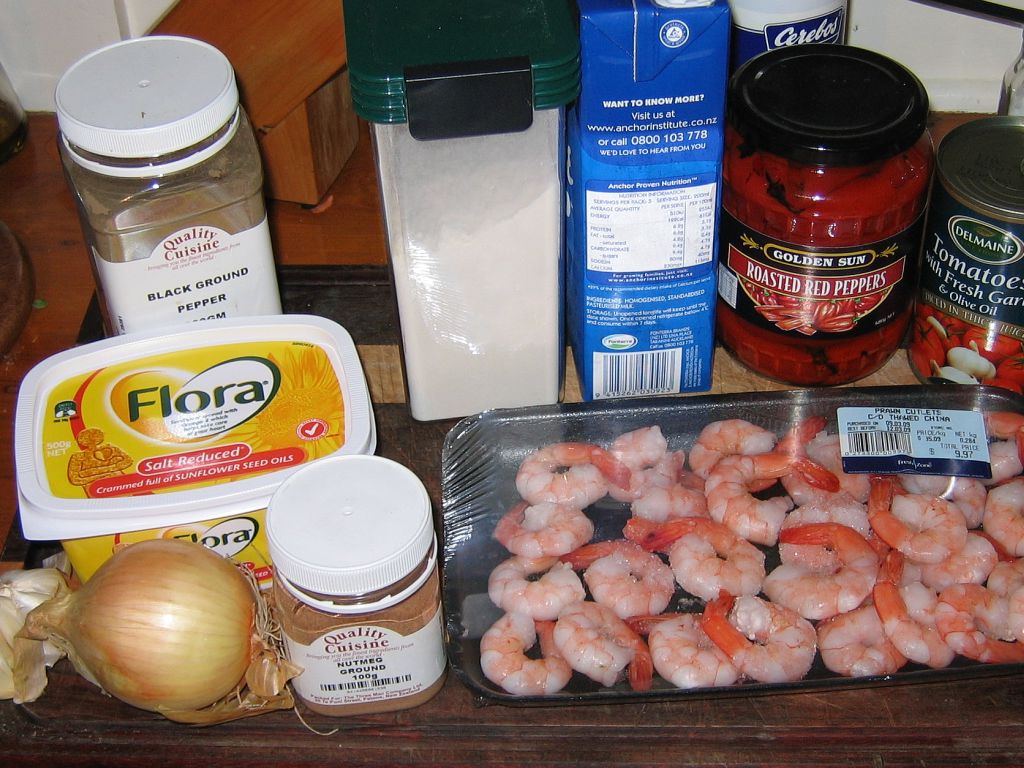
Ingredients for stuffed peppers

In no particular order:

  • Pot/tin of roasted red peppers, whole.
  • Onion(s).
  • Garlic.
  • Prawns.
  • Milk.
  • Flour.
  • Butter.
  • Pepper.
  • Nutmeg.
  • Tomato puree/chunks.

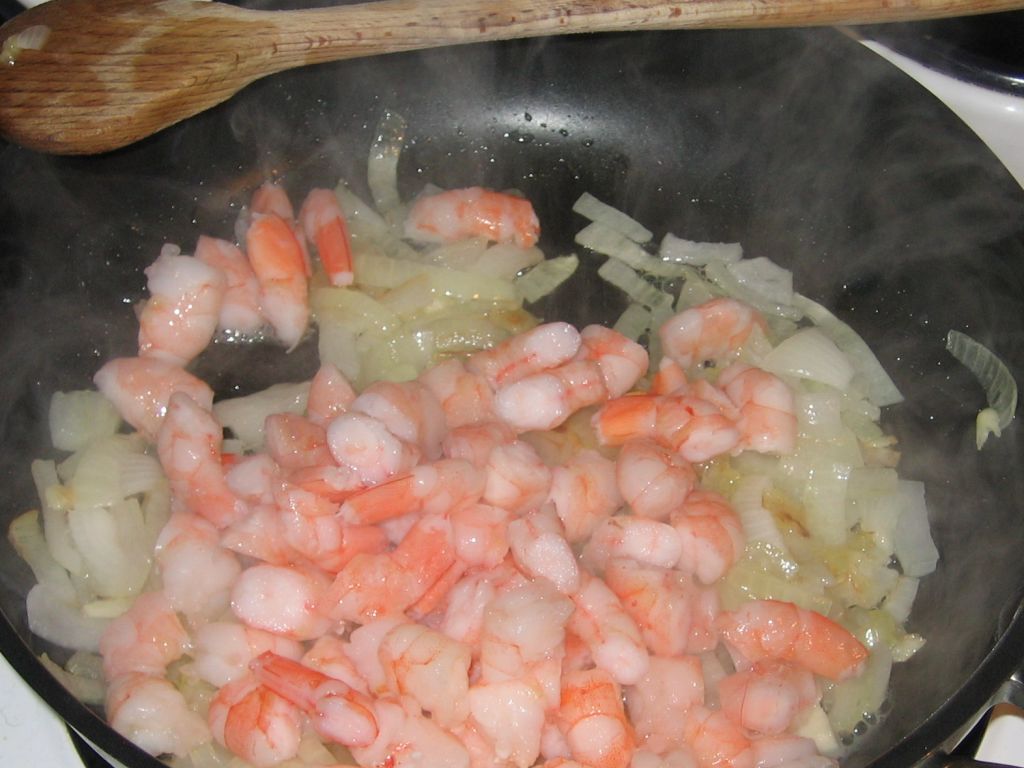
So, to start with we’ll cook the prawns. Start by chopping up an onion and a couple of cloves of garlic, then fry gently in a pan with a bit of oil. Let the onion go a bit soft, then add the chopped-up prawns.

Frying the prawns
Frying the prawns

Fry until the prawns have first released most of the water, then the water has been mostly consumed. Prawns tend to cook fast!

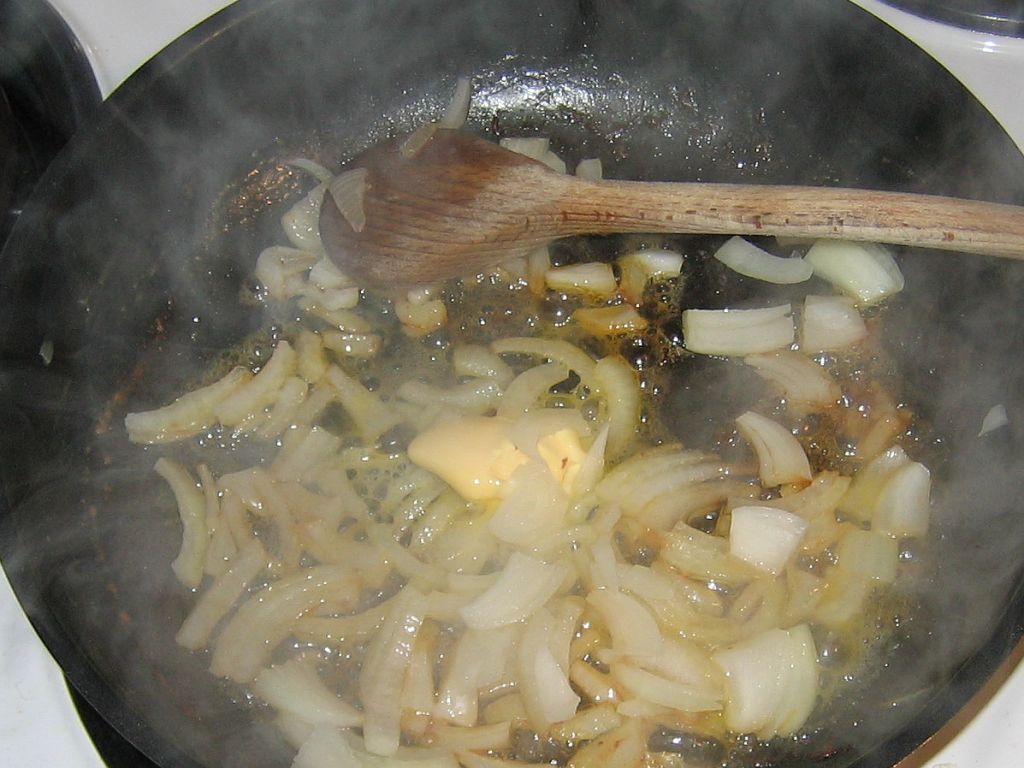
Now, the second step is to make a Bechamel sauce. You can even use the same pan. First chop up a bit of onion (I used an extra half), and put it in the pan with some butter/margarine. Give it a gentle fry.

Onion and Butter
Onion and Butter

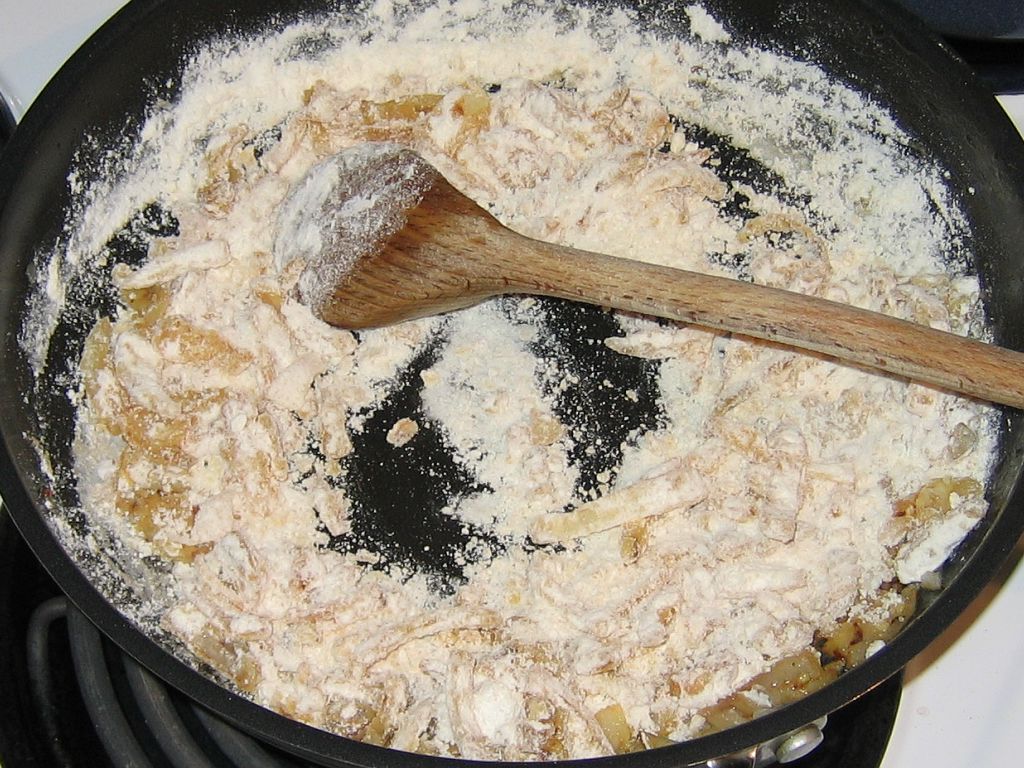
When the onion’s mostly ready, add a couple of spoonfuls of flour, give it a quick stir, so that you toast it a bit. Don’t let it burn!

Flour!
Flour!

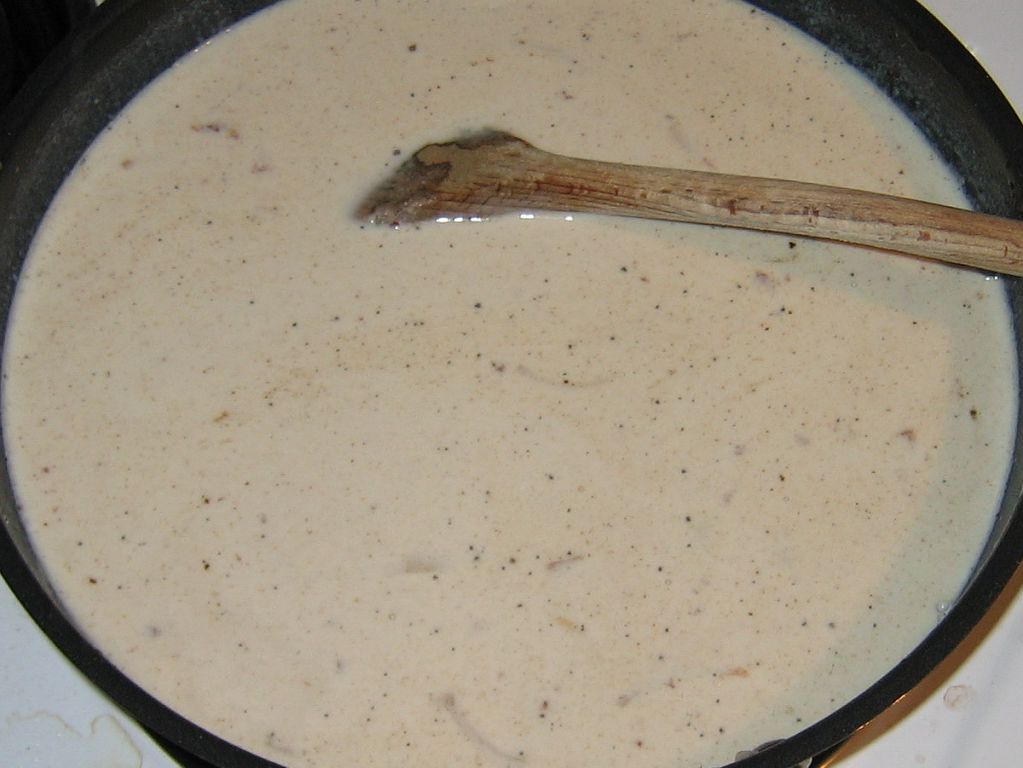
Afterwards, it’s a matter of adding the milk, and stirring constantly to make sure you leave no flour lumps. Add the nutmeg and pepper at this point, and salt if you want too.

Stir with patience
Stir with patience

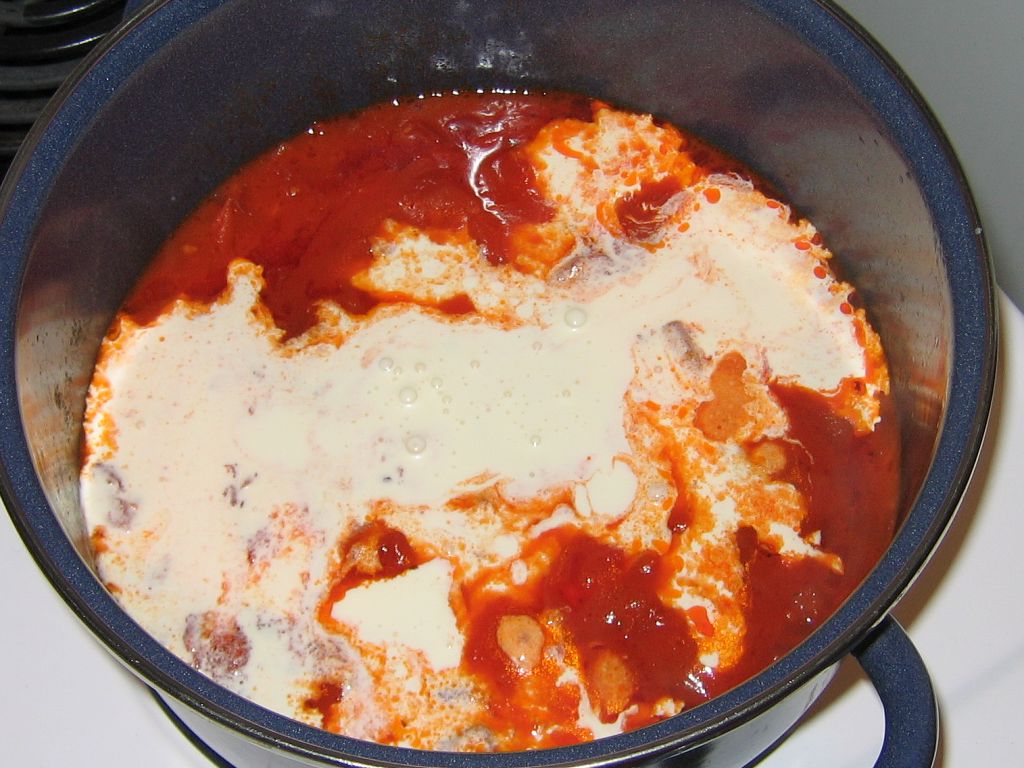
In the meantime, I am making a simple creamy tomato sauce to add to the peppers later on. In a pot, fry the tomato puree/chunks on mid heat, stir every so often, and when it’s mostly done, add a bit of cream, or milk, or both, or even some Bechamel sauce. It’s up to you, I used cream.

Creamy tomato sauce
Creamy tomato sauce

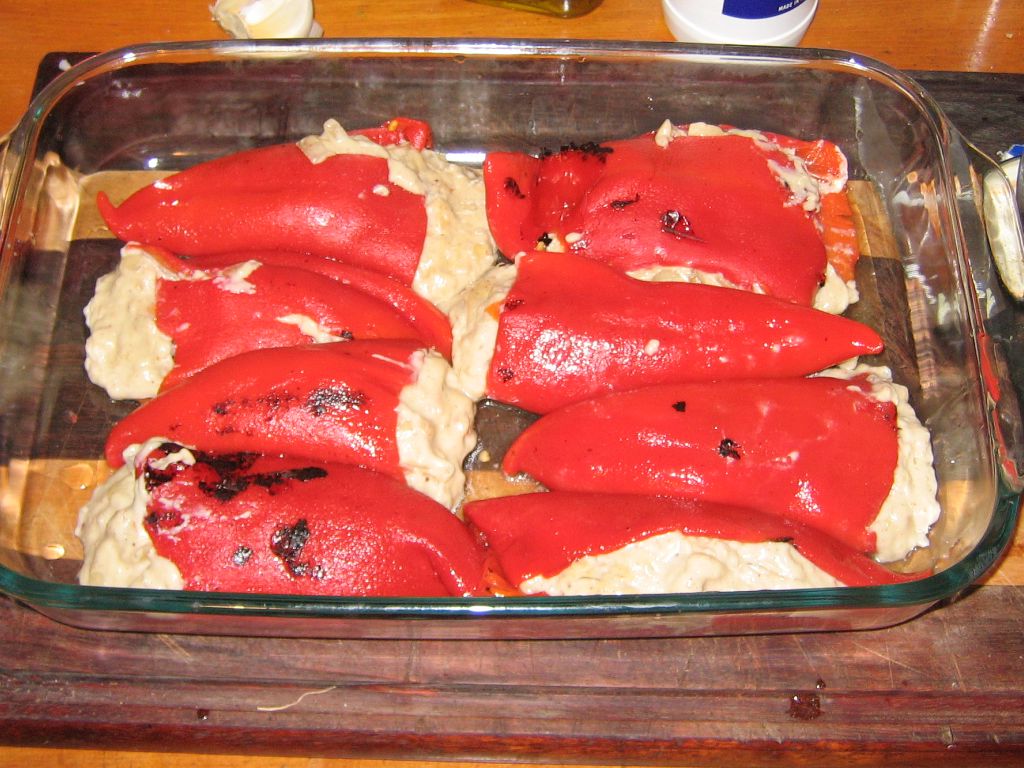
When the Bechamel is looking halfway done – starting to feel thick -, add the mix of fried onion/prawns to it, and now stir and stir and stir more so that it won’t burn, it’ll reduce, and it’ll be homogeneous.

Peppers stuffed
Peppers stuffed

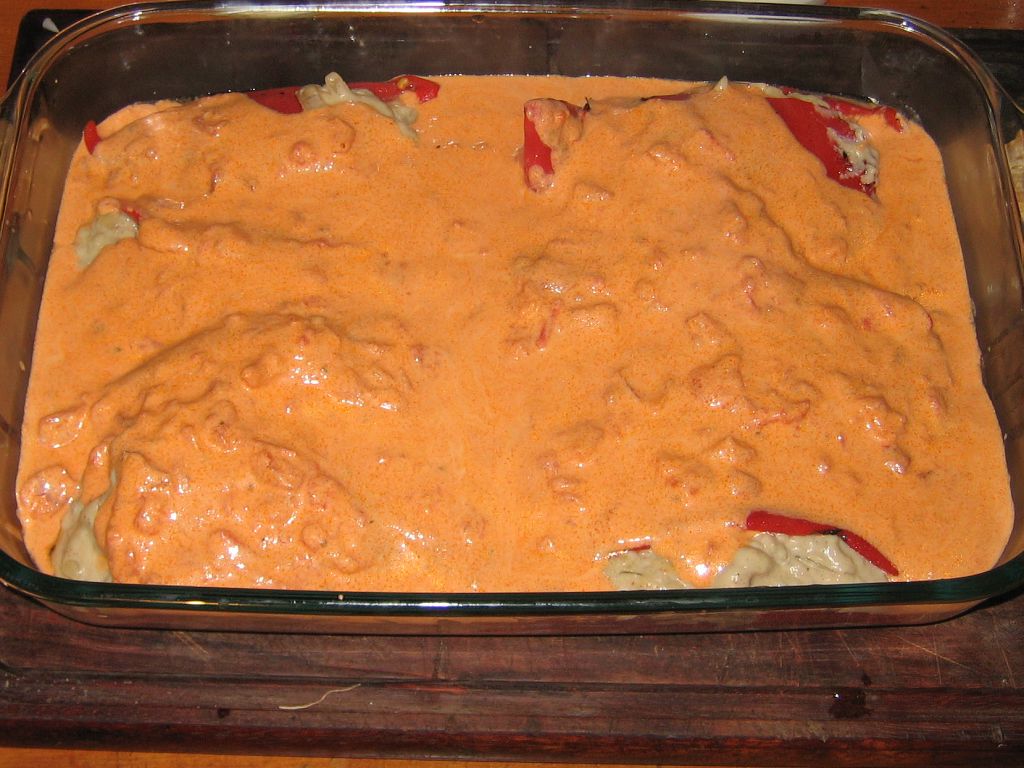
Now for the final touch, you cover them with the sauce (you can put it through the blender/processor if you want to make it smooth, I left it chunky as I like chunky vegetables… As I think I’ve mentioned already), and throw them in the oven, 200°C for 5-10 minutes.

Ready for the oven
Ready for the oven

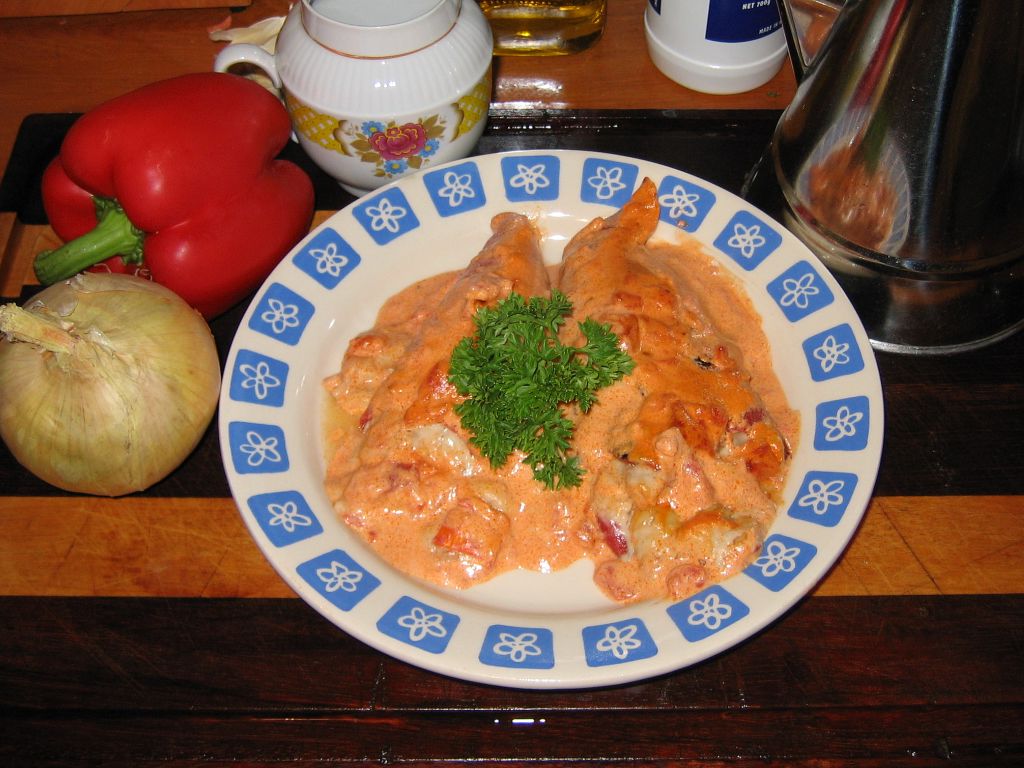
Serve hot, don’t be stringy with the sauce, and let it roast a bit nicely.

Stuffed roasted peppers

There are countless variations, use your imagination! Mushrooms go well, you can have prawns + fish too (Monk Fish or Cod work well), a very popular one in Spain is calamari, usually with a dark sauce with squid-ink. You can vary the stuffing and the sauce, it’s a flexible dish!