It’s like watching a triple coronary bypass in the making, real-time.
That has to be the most awesome website ever. EVER. I can’t stop watching.
*Keeps munching low-fat grilled fish with capers and lemon marinade*.
Posts about cooking – and eating too!
It’s like watching a triple coronary bypass in the making, real-time.
That has to be the most awesome website ever. EVER. I can’t stop watching.
*Keeps munching low-fat grilled fish with capers and lemon marinade*.
“What’s a Tatin?” You may ask. A Tarte Tatin is a kind of cake made “upside down”. Legend has it (I haven’t bothered verifying if it’s true) that two French sisters wanted to cook an apple pie, but they were a bit on the light headed side, and while they prepared the apples beautifully, they forgot to put the actual pie shell in the oven with the apples. Realizing their mistake halfway through, they put some puff pastry on top to try and salvage the pie, and they came up with a very delicious pie. Well, this is but a variation of that. What will we need?
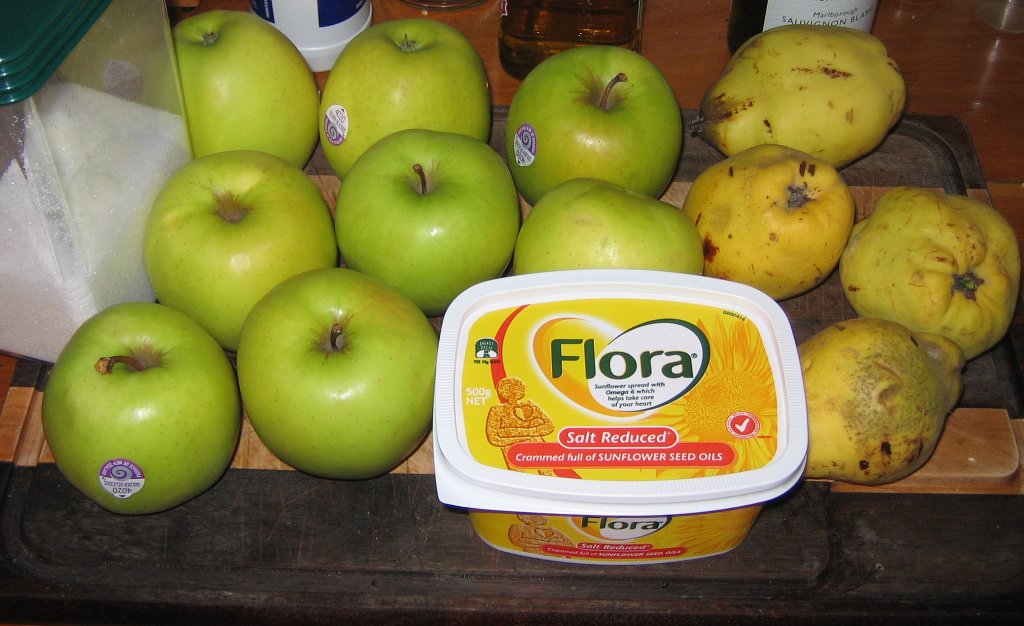
So, we need:
Start with chopping up the quinces and apples:
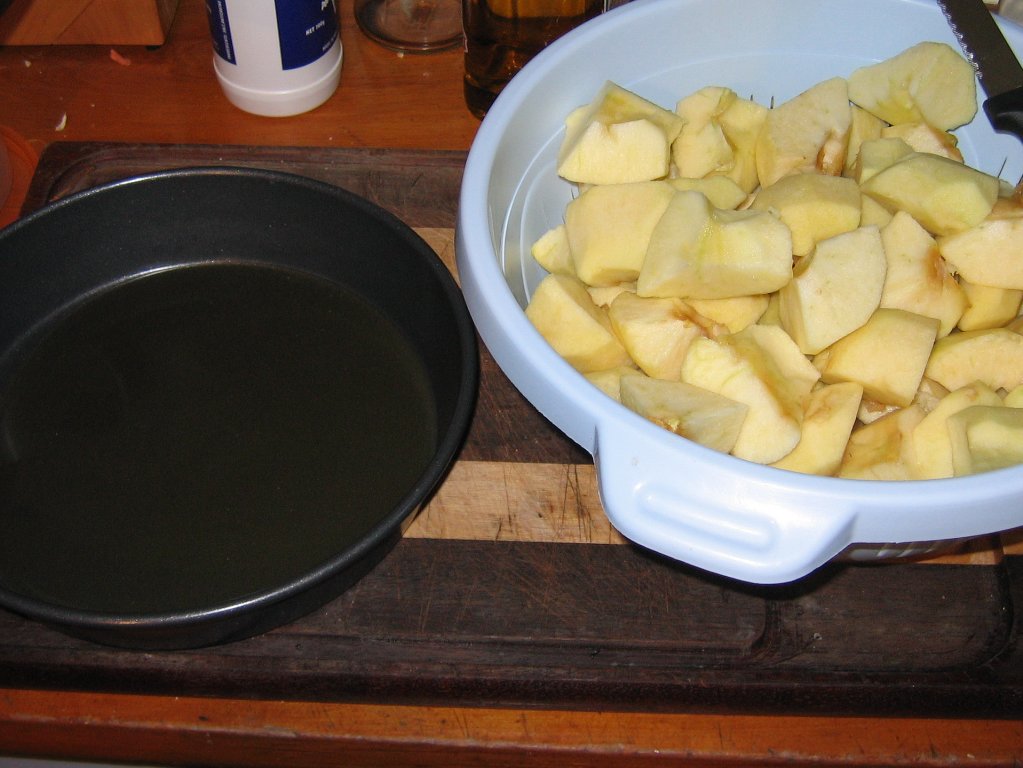
As you can see, The chunks are nicely chunky, we don’t cut the apple finely like it’s done often in other kinds of apple pies. Notice the pot I’m going to use in the oven, and how the bottom is covered with caramel! The caramel is easy enough to make: Put a cup of sugar or two (depending on the size of your tatin) in a pot with some water, stir until caramelized and browned. Add a couple of drops of lemon juice if you want, or anything else you like putting in homemade caramel.
Now, the important part: Arrange the apples nicely so that you leave as little space as possible, you want them to be tightly packed! Also, add a few nuggets of butter here and there because the apples will need butter to cook properly. Buttery goodness!
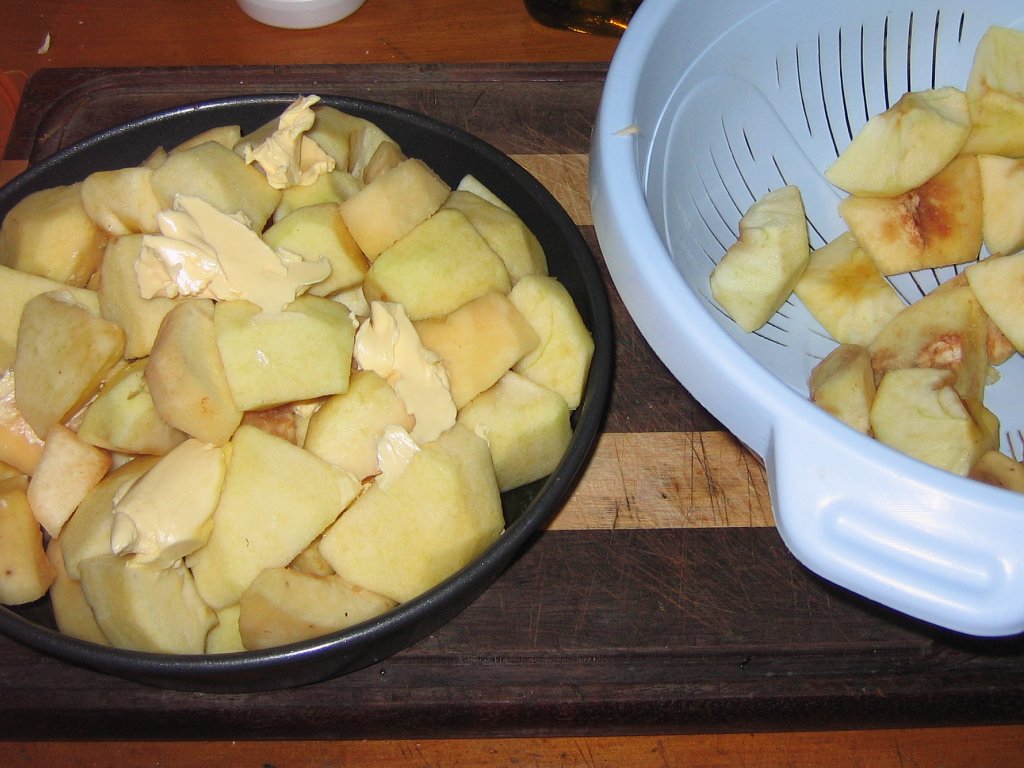
Now, preheat the over to 150°C and in the apples go. It’ll take 20-30 minutes until they cook as much as I want them to cook before adding the pastry. Yes, the famous French sisters didn’t notice the missing pastry for like half an hour 🙂
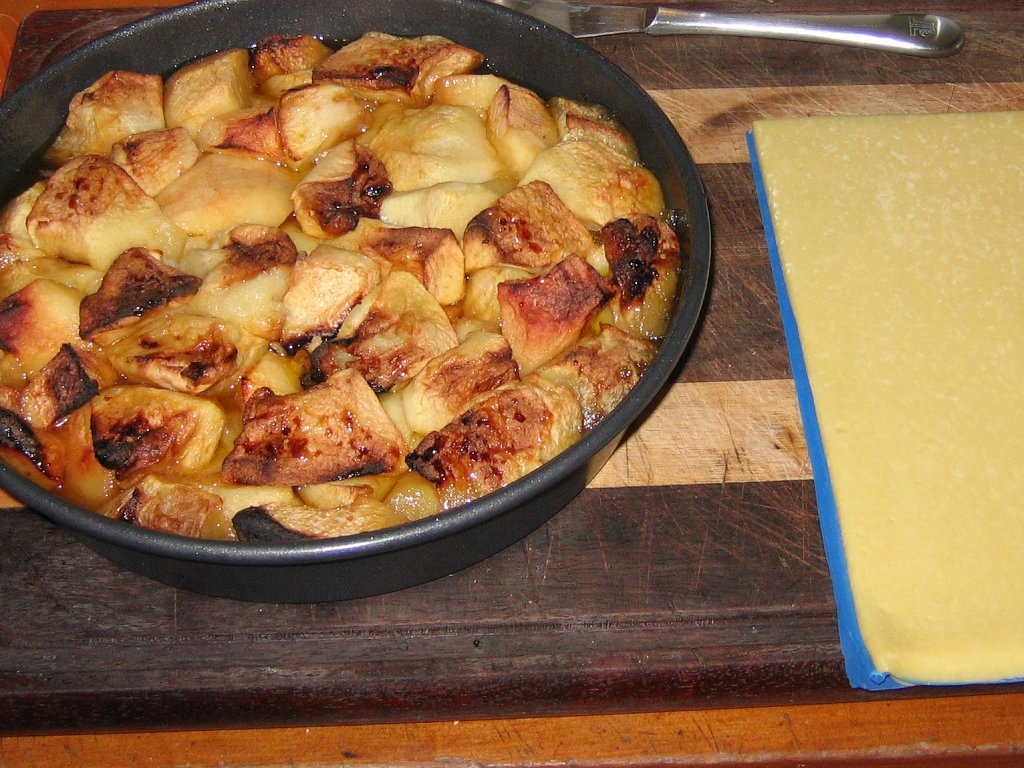
Now, we want to cover it with the pastry. Not just cover it, you have to fold the pastry on the sides so that it’s enveloping the apples nicely. Try to make the apples as evenly flat as possible, and make sure the pastry goes well on the sides to wrap them well!
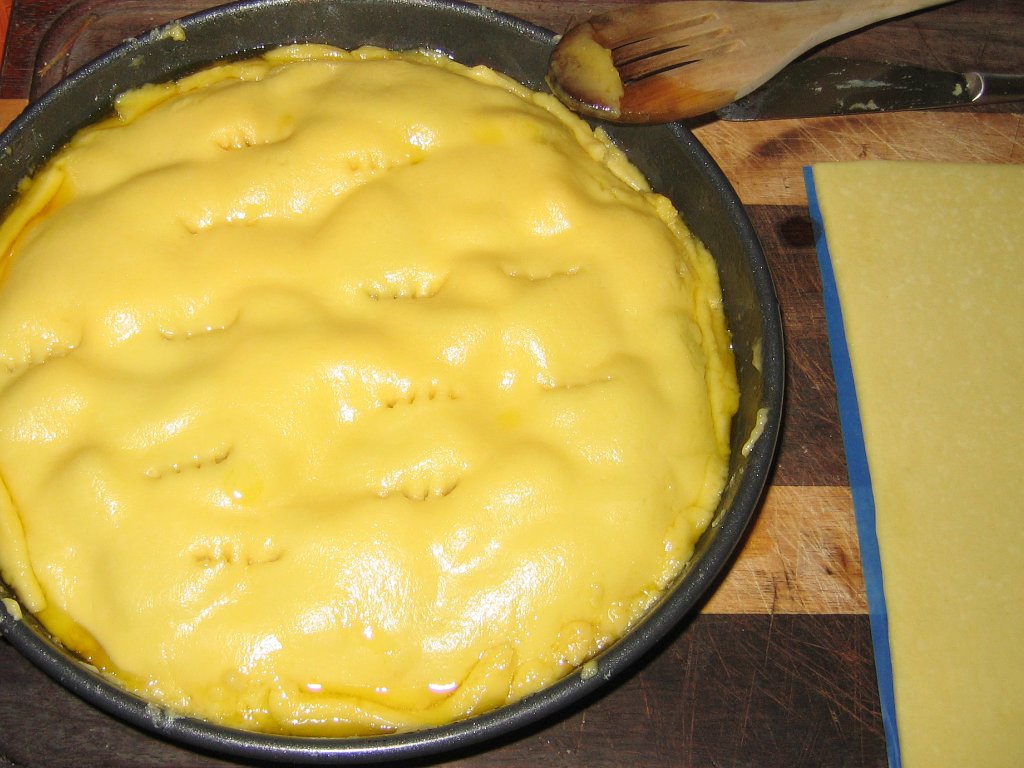
As you can see, I stabbed the pastry with a fork repeatedly. This way you won’t have steam bubbles forming under the pastry and it will cook evenly. Back into the oven for another 30 minutes or so (it will depend on your particular oven and pastry). I put it to 180°C for the last 10 minutes to cook the pastry well. The result?
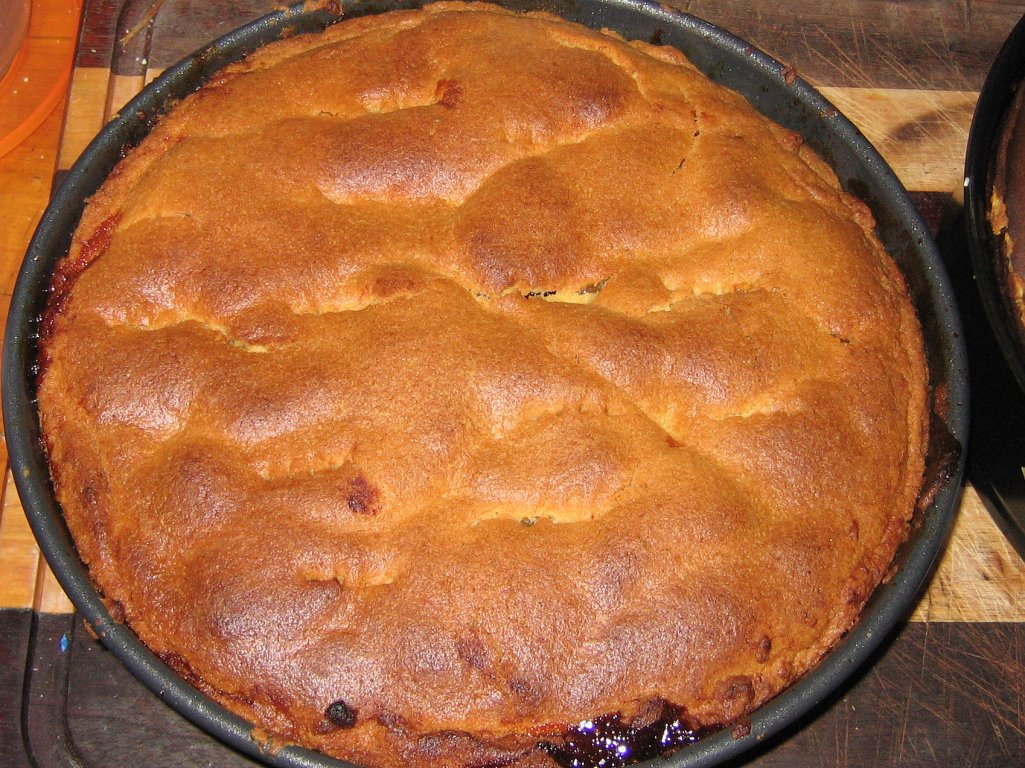
We’re almost there! An upside-down pie won’t be much good, will it? We have to flip it! First off, very carefully run a knife on the edge to make sure the pastry isn’t stuck to the oven pot anywhere. Afterwards, put a plate on top and flip it! Shake it and hit it a few times (carefully please) to make sure it has all come off, and you’re done! It’s likely that a few of the quince or apple pieces have stuck to the pot, but they’ll come off easily enough, all you have to do is put them back on the pie and clear the presentation. The pyrex glass pots work quite well for this too.
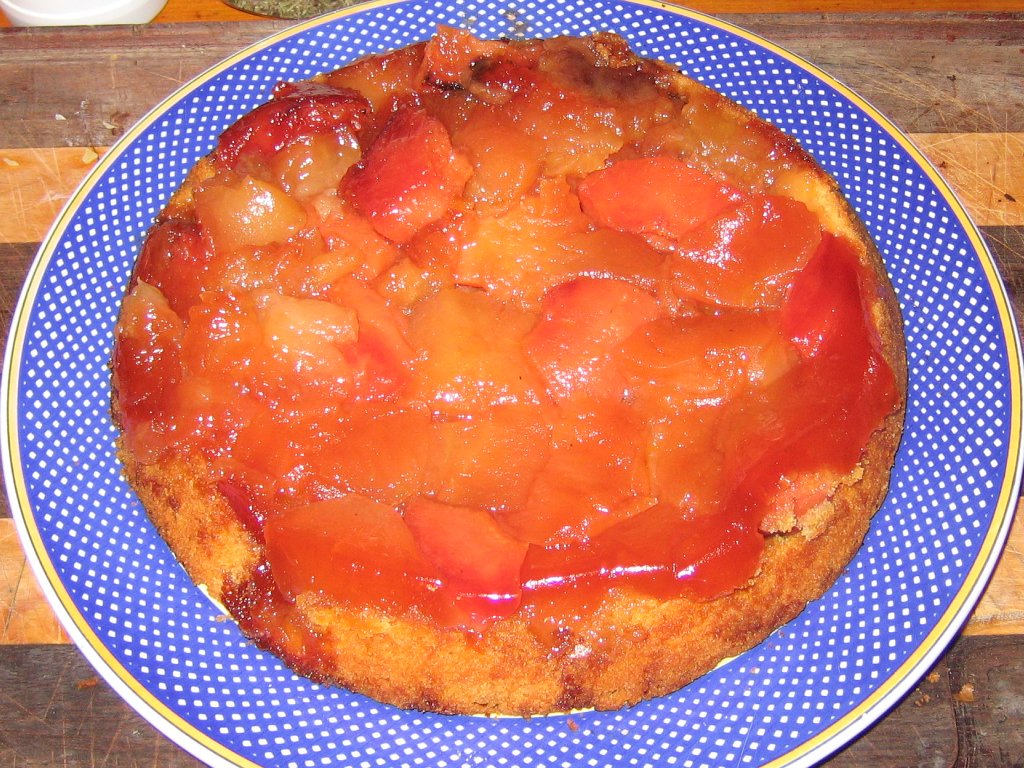
You can really tell the quince pieces from the apples due to their intense colour. And also you’ll have a bit of quince jelly at the bottom (now the top) to add to the goodyness.
Bon apetit!
Time for something sweet! Actually, I have a few sweet things lined up, just so happens that I feel like posting this one first, as it’s the one I’m om nom nomming now!
So, Cookie Pie! Typically, this pie is made as if it were a cookie, i.e., one makes a cookie-like dough, pours it in a pie shell, and bakes it. However, I have a different take on it, what I do is I take actual cookies, and make a pie with them! To start with, the ingredients:
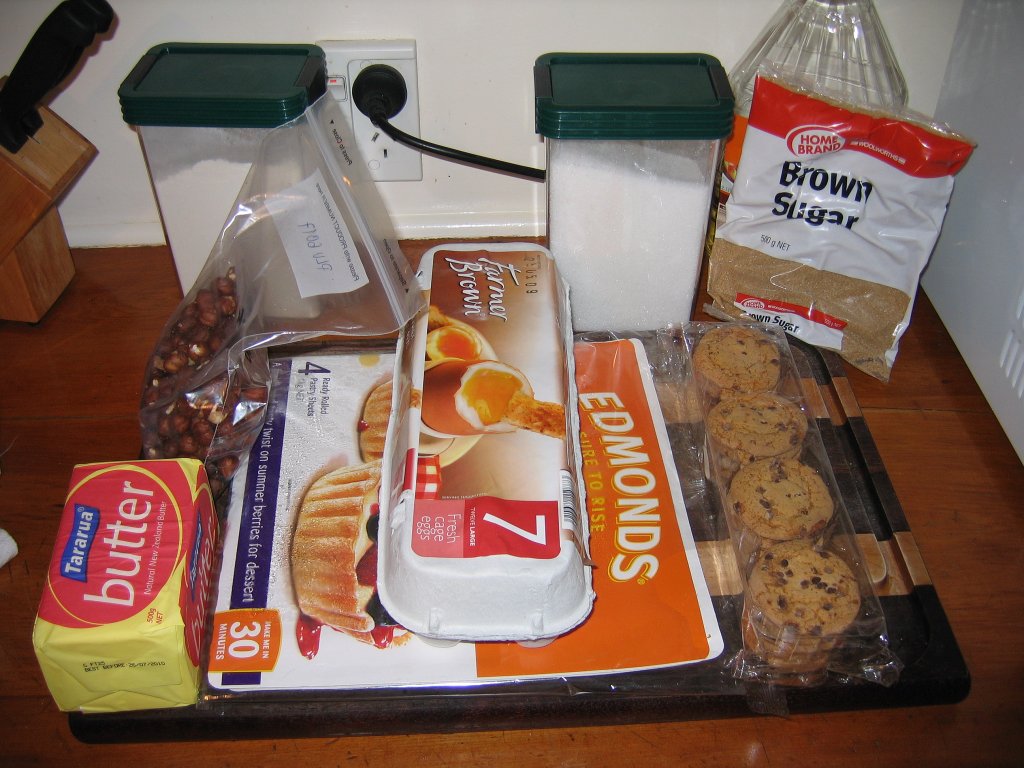
To start with, beat the two eggs and melt the butter (microwaves are handy for this), then add the butter to the eggs. Mix thoroughly, then add the sugar(s). Mix again.
Separately, you want to crush the nuts and the cookies, until the nuts are smaller-than-hazelnut sized, and the cookies are in similarly sized chunks. There’s no need to make them into powder! Note that this pie doesn’t require flour, that’s because we’re making it with cookies!
Once that stuff is crushed, add it to the egg-butter-sugar mix. It’ll look something like this:
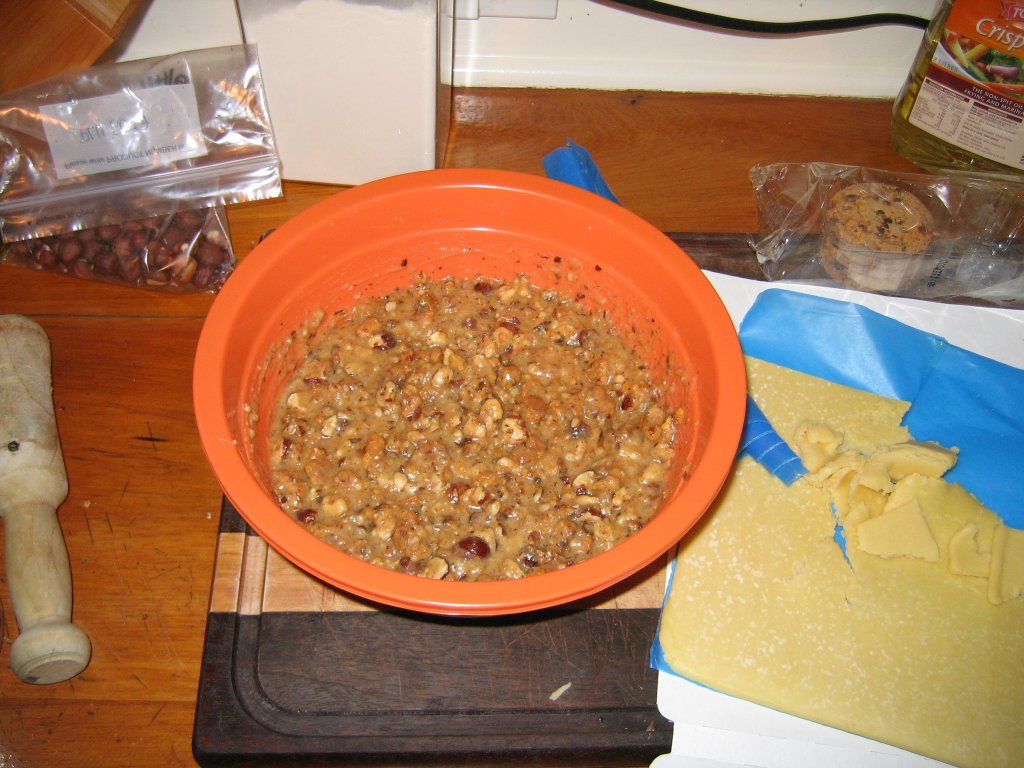
Pour in the pie shell or whatever you’re using, and into the pre-heated oven it goes! I set mine to fan-bake at 150°C for 40 minutes. Times will vary (mostly, look at the pie shell you have and the type of oven, non-fan baking usually should be a bit higher, 160°C to 170°C and may take a bit longer).
The result?
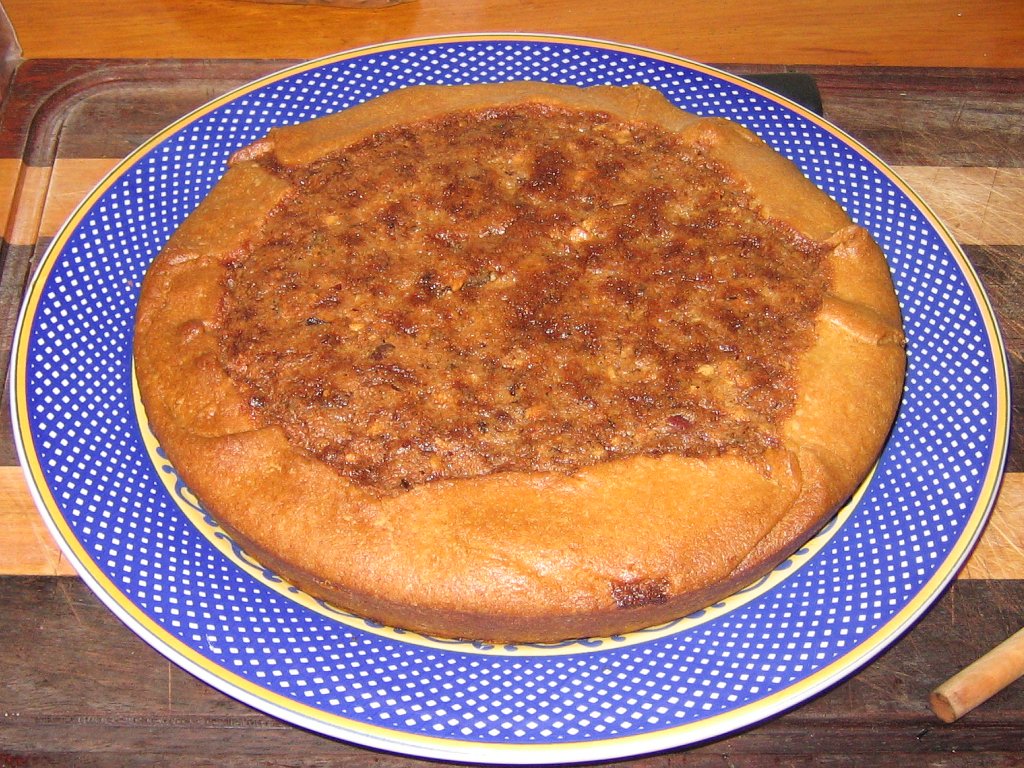
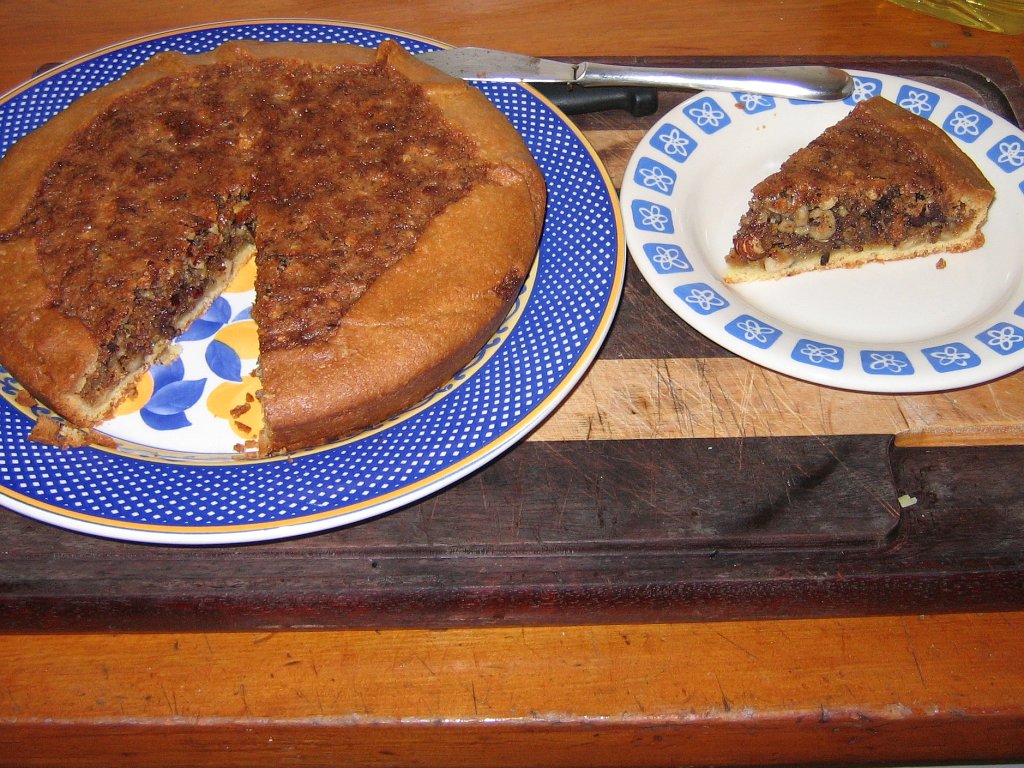
Presentation may vary depending on the shell you used! Let it cool for a bit, and serve warm! If you put the unfinished pie in the fridge, heat it (or slice it first, then heat the slices) before serving, some 30s in the microwave will do.
A very easy lamb roast! Lamb is kind of an institution here in New Zealand. It’s also very tasty ^_^
Here’s a very simple roast I make when I don’t have much energy to be creative (there will be more creative roasts here now that we’ve entered winter, roasted lamb is nice in these cold days, specially if just the slow cooking in the oven is enough to heat the house!)
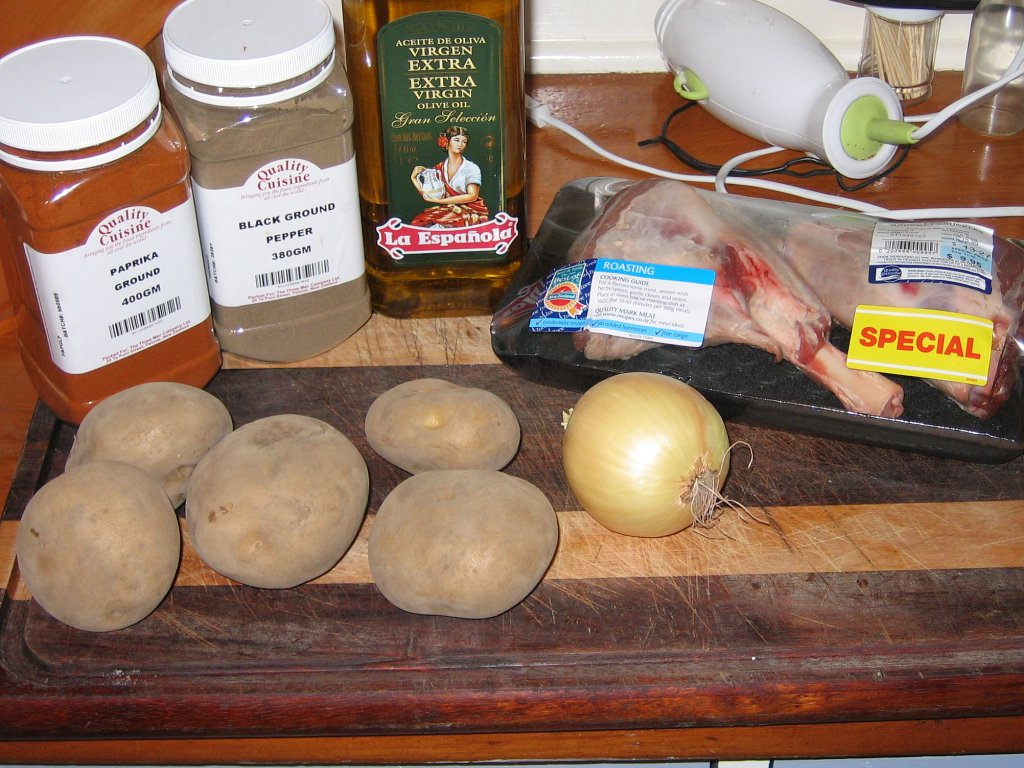
What do we have there?
So, start by putting a bit of olive oil to grease the bottom of an oven tray bigh enough to fit the amount of things you want to cook without much trouble. Peel the potatoes, slice them up in thick slices, and put them at the bottom. Slice the onion in similarly thick slices, and put it on top of the potatoes. Sprinkle generously with pepper and paprika, and throw some pieces of chopped garlic on top. Then put the lamb there too.
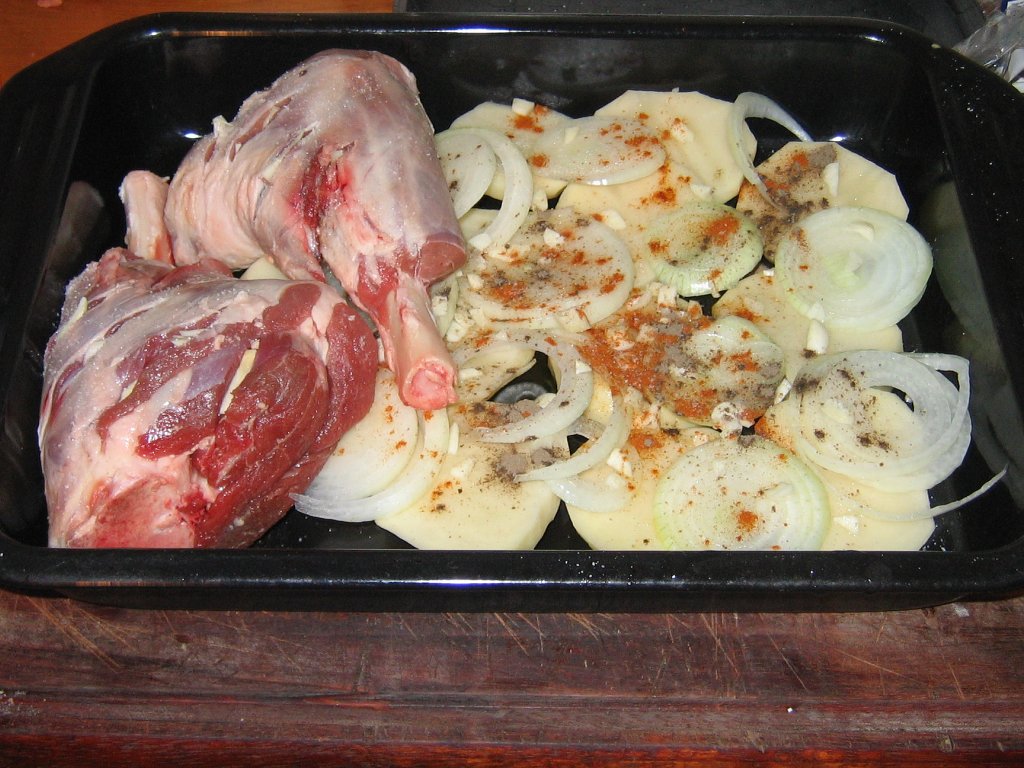
If you want, you can do as I did there and make some cuts into the lamb, and insert some pieces of garlic into the cuts as well. Pre-heat the oven to 180°C, and put the tray in. A few minutes afterwards, pour a glass of water over the lamb, so that it roasts a bit more slowly and juicily.
We’re going to take an hour to roast this, just turn the lamb after 30 minutes, and keep an eye on it. If it looks too dry, give it a bit more water.
End result? Something like this!
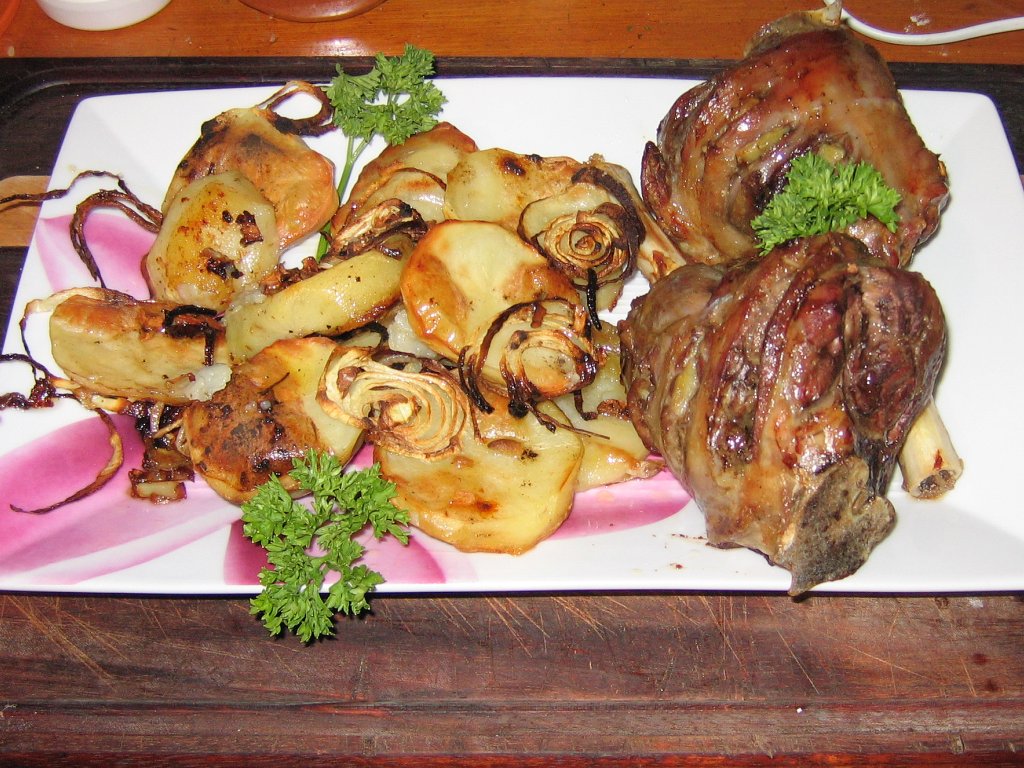
Yum yum! The center was still nice and pinky, but without being raw in the least. You can also use wine if you don’t want plain water.
Happy lamb eating!
So! We have made a few things so far! We have made a plain cocido – with soup. And we have leftover stock we can use to make more soup in a hurry, with easy to cook pasta or parboiled 5-minute-done rice, or even ramen-style noodles. Very nice in these wintery days.
Then we made some hummus.
Then we made some old clothes.
Then we started with the croquettes. And now we finish it.
We left the croquette mix cooling down and sitting int he fridge, right? Well, this is our last stop. Whatcha need now? Just breadcrumbs and eggs really:
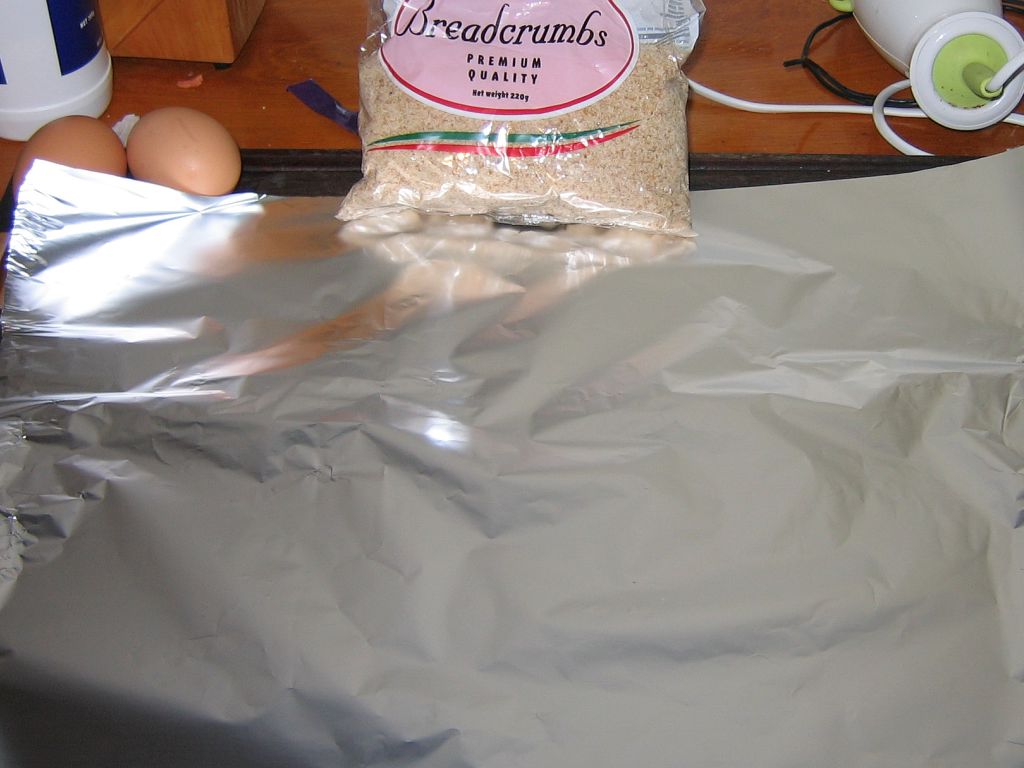
Apart from the just-done cocido, the croquettes are my favourite part of it. Start by beating an egg or two and throwing some breadcrumbs on the tinfoil. The reason we use tinfoil is that it’s easy to cover the crowuette with crumbs if you lift one end or the other so that they pour over it, whereas with a plate it’s not so easy.
We’re gonna get that croquette mix, make some relatively big cilindrical shapes, then pass first over the egg and then over the brumbs. Make the shape with your hands (wash them very thoroughly before starting!), and use a fork to put through the egg and move over the crumbs. Don’t use the fingers for that or you’ll make a mess thanks to the egg! Once the croquette is nicely crumbed, you can use the fingers with no danger.
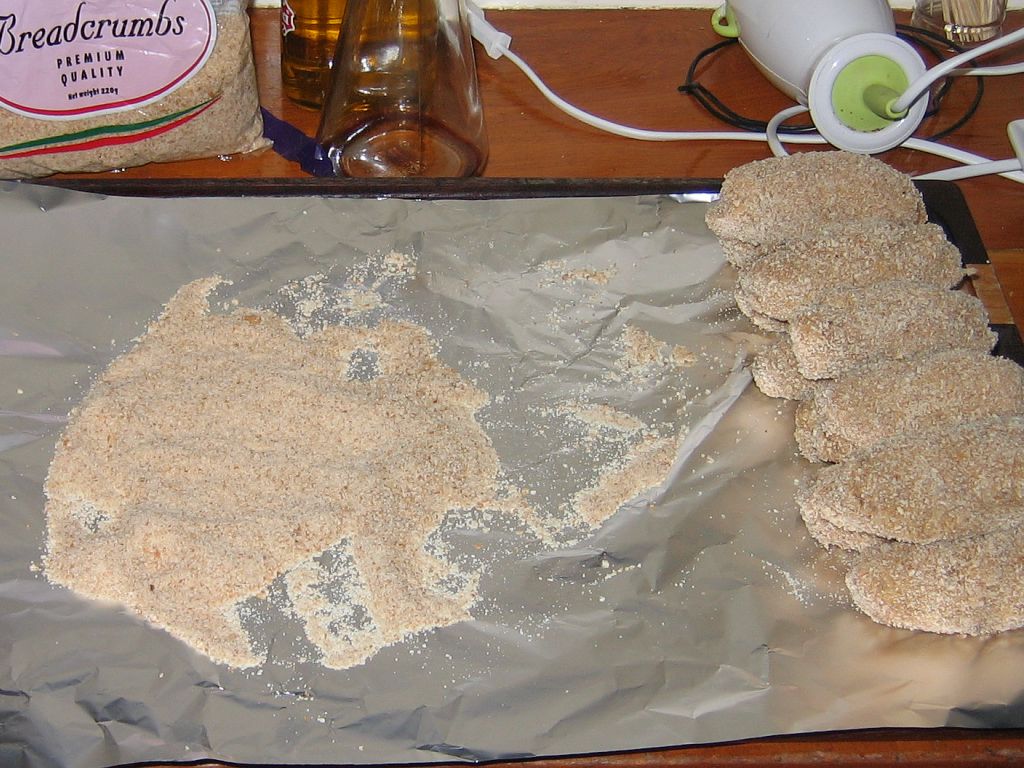
Now, just fry them in abundant hot oil. This is the last step in making Cocido leftovers because it rocks. You can make a ton of them and just freeze them, they freeze exceedingly well. Freeze them BEFORE you fry them, then they can go straight from the freezer to the pan.
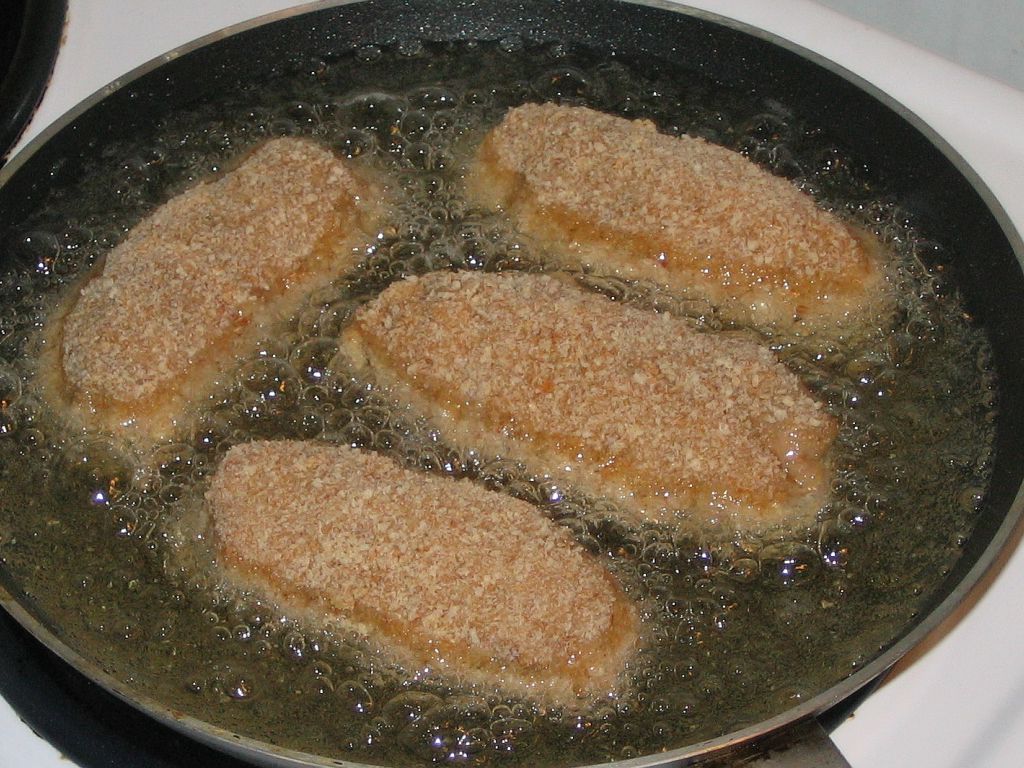
Since the “inside” is actually already cooked, all you need to do is give it a nice toasty crispy cover.
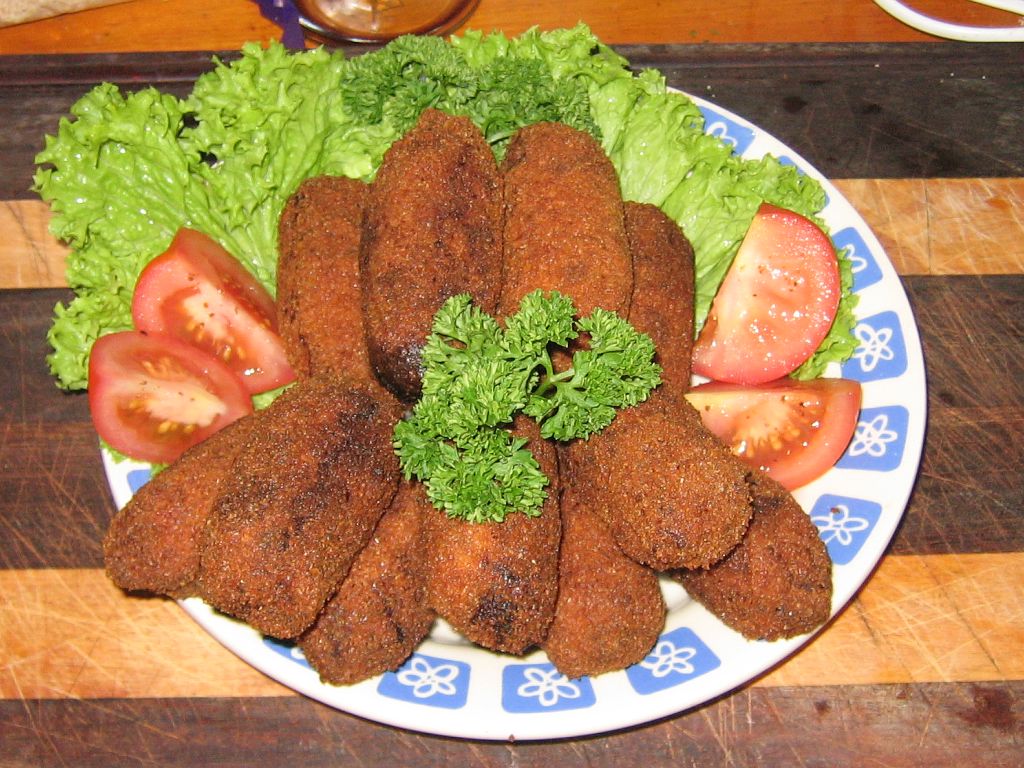
There are 2, possibly 3 portions there. I made that many because it looks good in the picture, and because I’m taking some tomorrow for lunch as well as today’s dinner. The remaining ones went into the freezer.
And that’s it! Well, that’s mostly it. That’s like 4 days straight eating the same thing, but different. See why I made a big Cocido now?
Next part, is using the meat for a couple of things. I’m going to do them simultaneously because I’m just that damn good.
First off, we start by chopping up all the leftover meat(s):
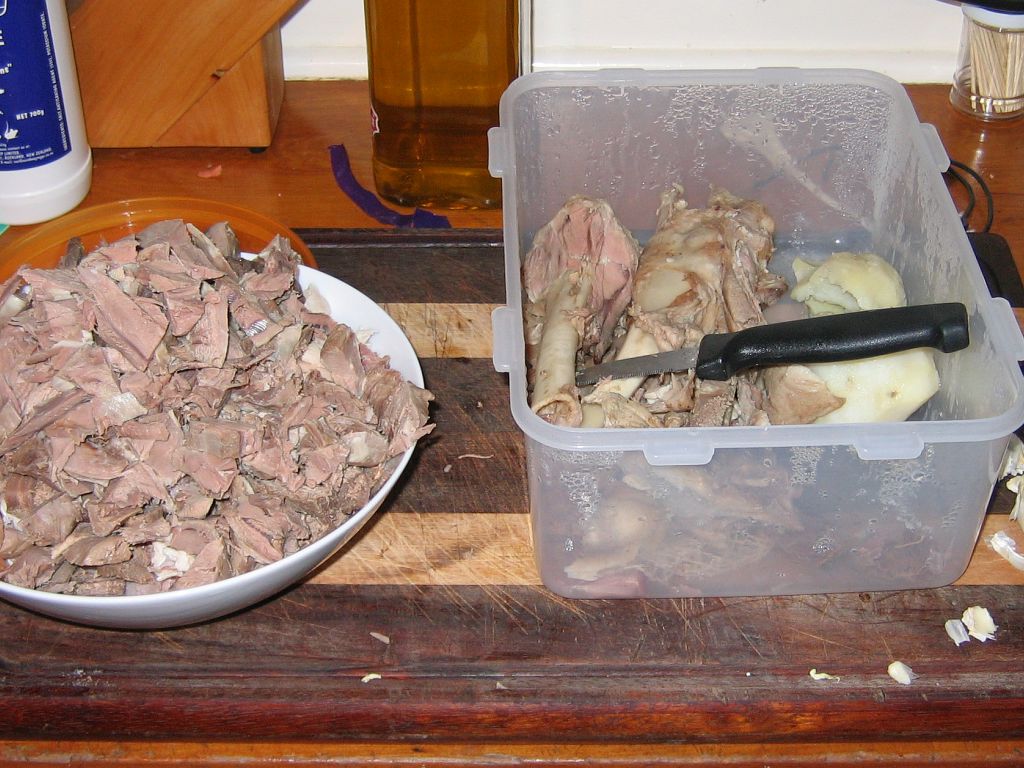
There are several kinds of meat there, it’s just that I haven’t mixed it yet (it’ll be more obvious in a bit). What you do is chop it up into small-ish pieces. As you can see by the tupperware, it’s been in the fridge since yesterday, they’re proper leftovers!
Now, grab a pan for each of the two things we’re going to do. One is called “Old Clothes” (“Ropa Vieja”) and the other is just croquettes.
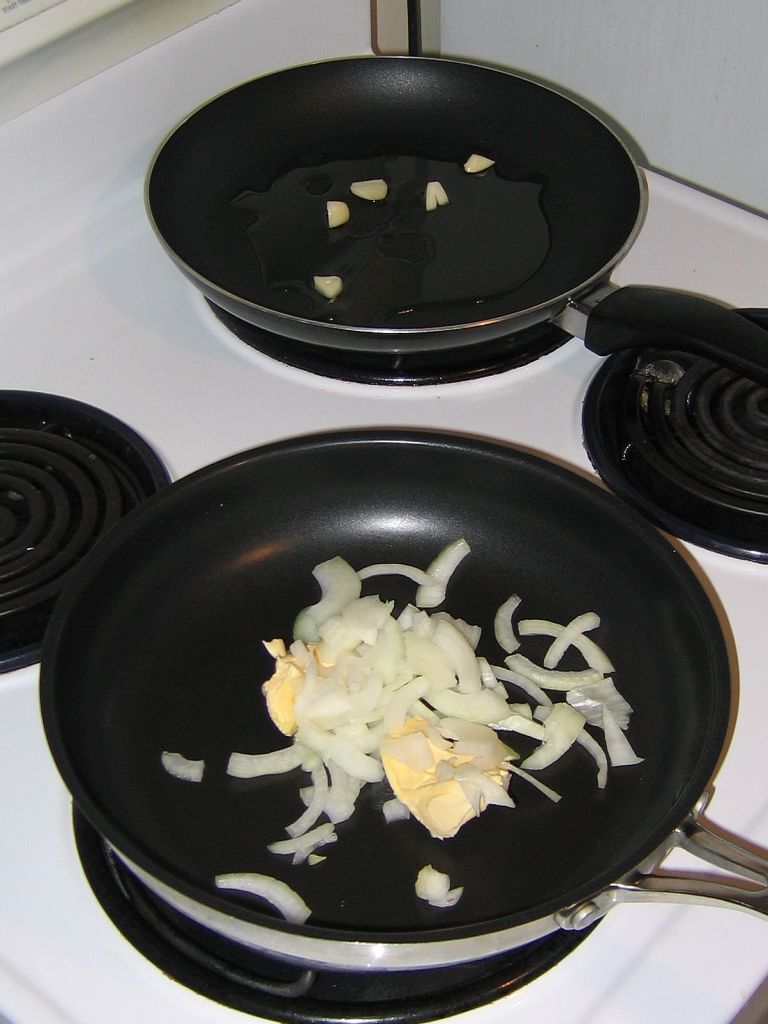
For the croquettes:
For the old clothes:
So, I’ve put those two pans, and it’s pretty easy.
For the old clothes: Add the meat once the garlic’s a bit fried, and stir frequently. When the meat’s looking like it’s fried, add some paprika powder, stir till homogeneous, and serve. Easy!
For the croquettes: Wait until the onion is more or less soft, then add a couple of well full spoonfulls of flour.
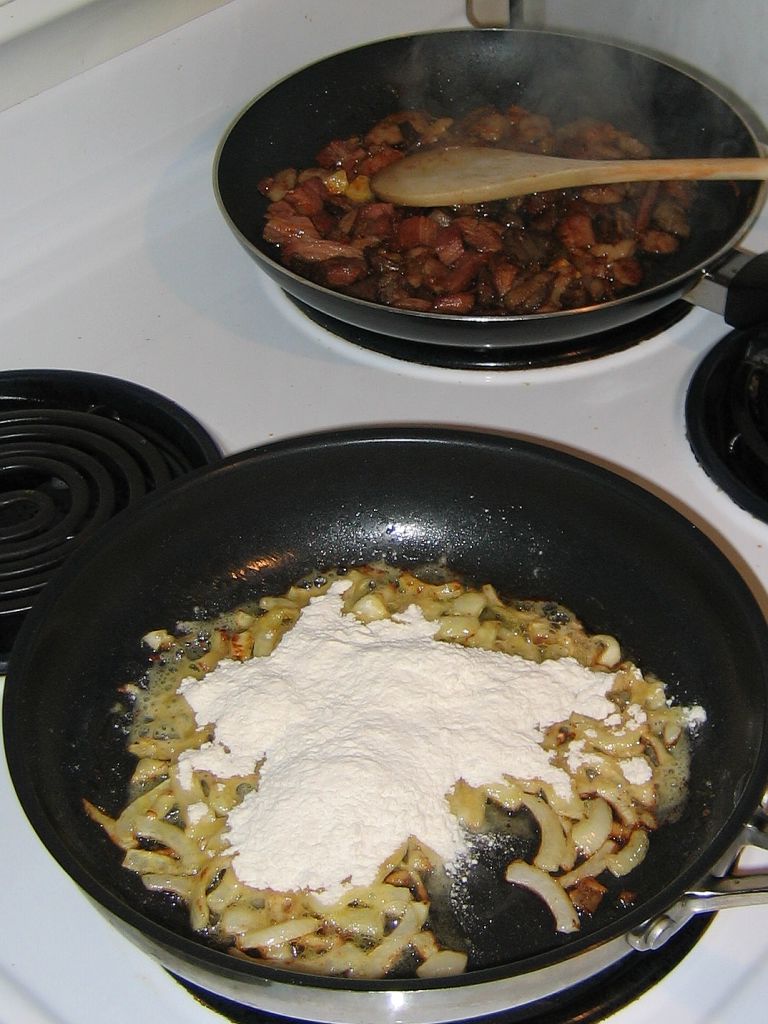
You can see at the top what the old clothes will look like. You can probably spot the similarity with how we served the cabbage before! Yes, it’s the same principle, and if you save some cabbage for mising with the meat, it’ll go quite well.
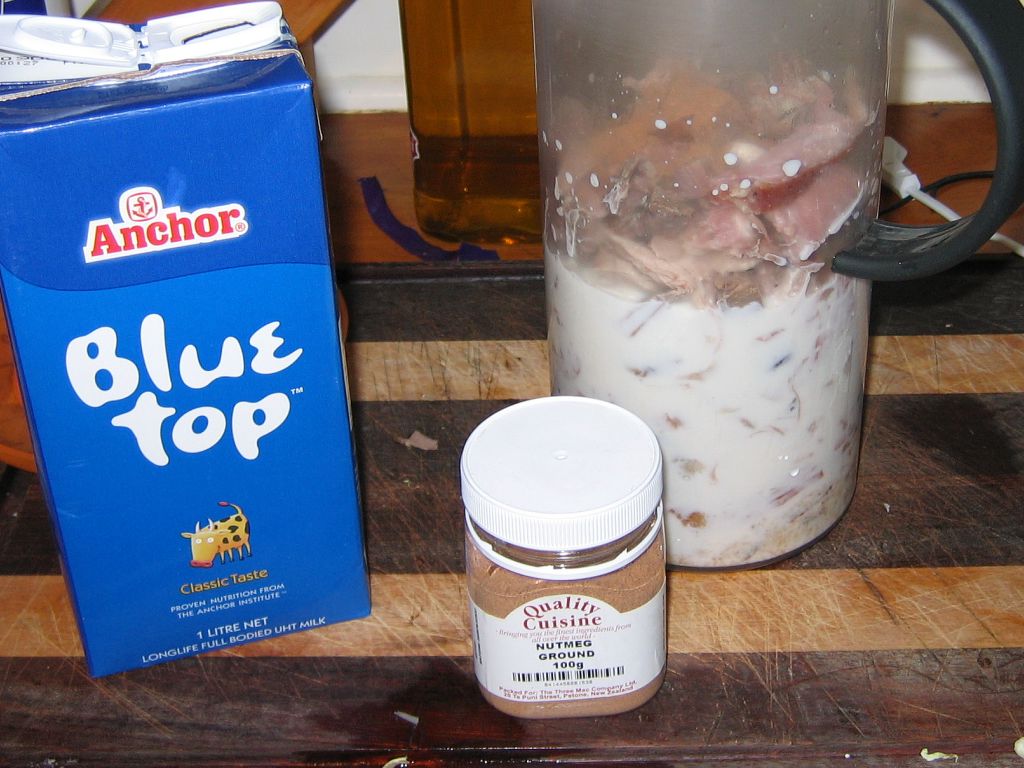
Anyway, the croquettes. After you add the flour, stir and stir so that the flour doesn’t burn, and when it’s looking to be nice and toasty, throw in a big vase or jar or whatever you have for food processor. Then add the meat on top, and enough milk to drown it all. Then top it with some nutmeg:
Now, put it through the blender/whatever, but don’t be overzealous. You don’t want a fine grade mush, chunky is good. As you process, you may want to add more milk! Anyway, once it’s nicely mixed, throw it in the pan again:
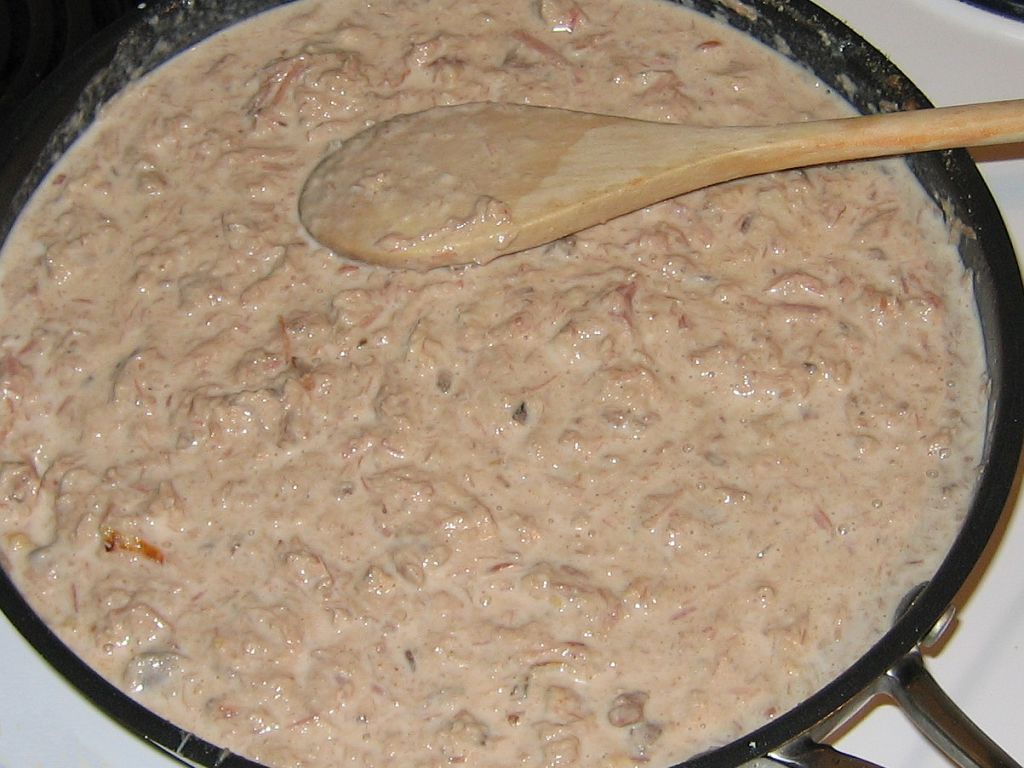
Now.. We stir. And stir and stir some more.
How much? Until it’s getting tough to mix.
Is it getting tough? Keep cooking and mixing.
“But…”
Keep at it.
“It’s looking pretty done.”
In that case, keep at it some more. And then some.
I’m talking that the mix has to become so tough that you can sculpt stuff with it. Like clay. That kind of thing.
Okay, maybe I’m exaggerating slightly. But when my mom makes cheese croquettes, she always lets the mix go so tough that she cannot move the spoon inside. And she’s no wimpy girly woman, let me tell you!
Anyway, once the mix is nice and tough, throw it on a tray:
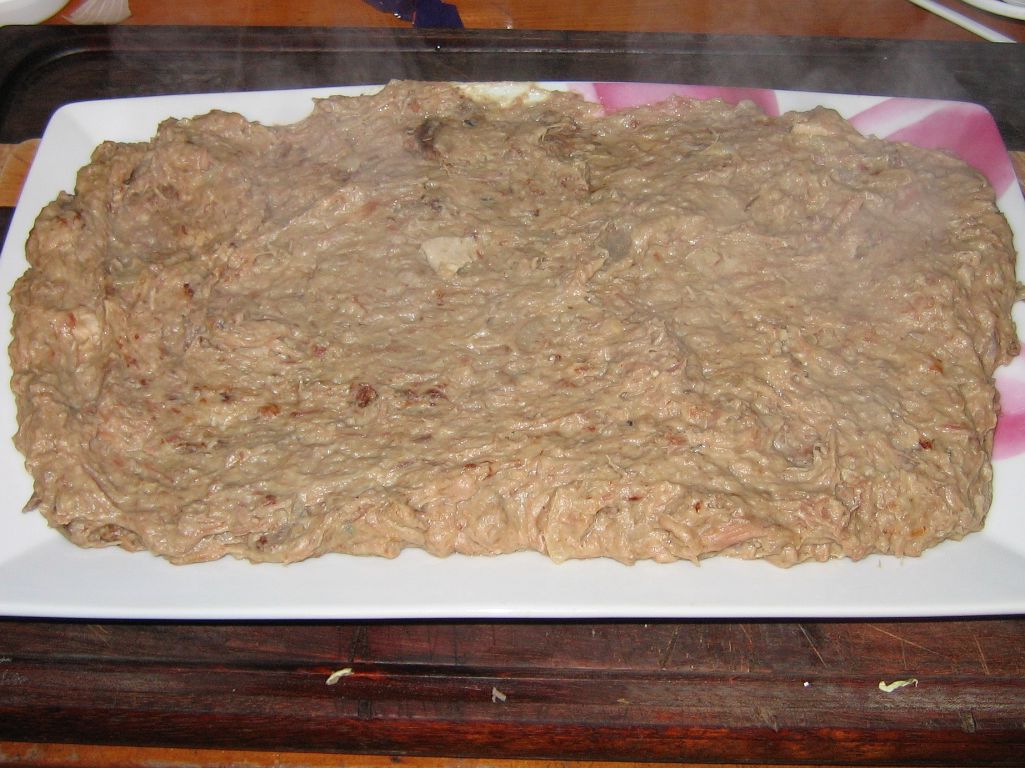
Let it sit for a few hours or a day or so. Put a cloth on top while you let it cool outside at first, then put some tinfoil and into the fridge it goes.
We will be using that later!
Okay, so we have a huge amount of leftovers from the cocido. Usually you eat the cocido for lunch and start having the leftovers for dinner. Anyway, let’s start with the simplest stuff.
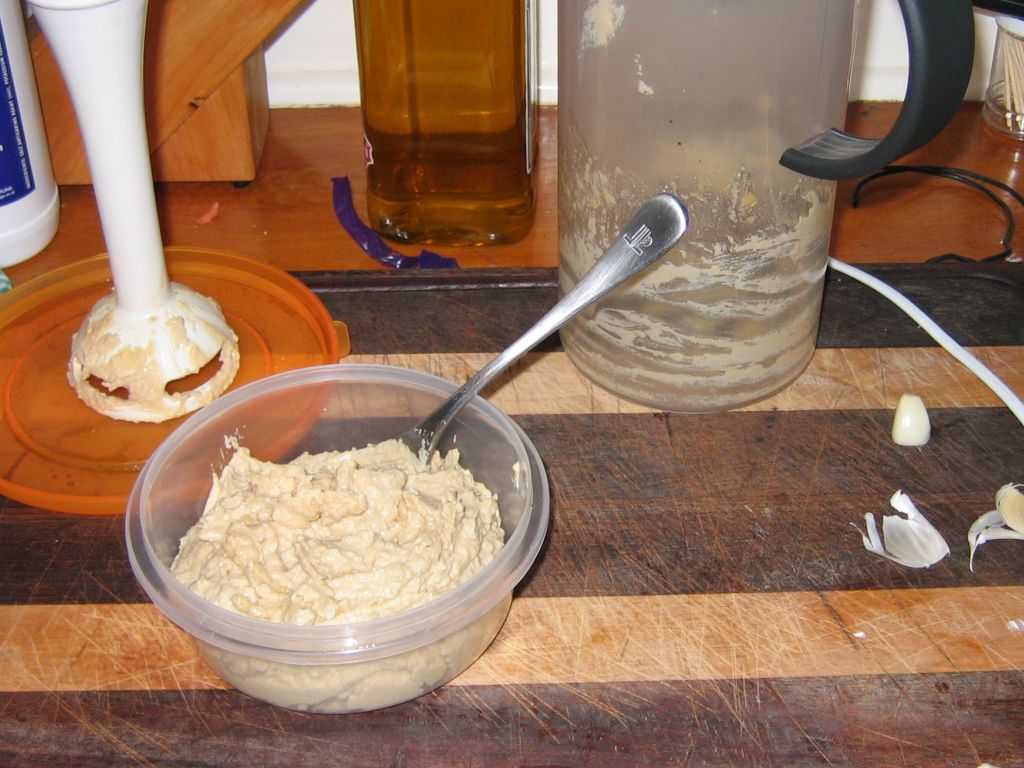
So, what’s that? That’s hummus! We had a ton and a half of chickpeas, and what’s best to do with them? Well, you can refry them and they’re pretty good, but hummus is nicer!
You need:
So, this is the simplest thing to do with the leftovers, throw all the ingredients into the blender and process until smooth. I’m putting it in a tupperware for the fridge, but you can instead serve straight away with some carrots/celery/crackers. Add some parsley and off you go.
Easy!
Hilariously, considering how it was cooked, this is quite likely the only non-vegetarian recipe for hummus you can find on the net.
Whew! It’s been quite a while without an update! Well, that’s okay, because the one coming is definitely a big big big one. Cocido.
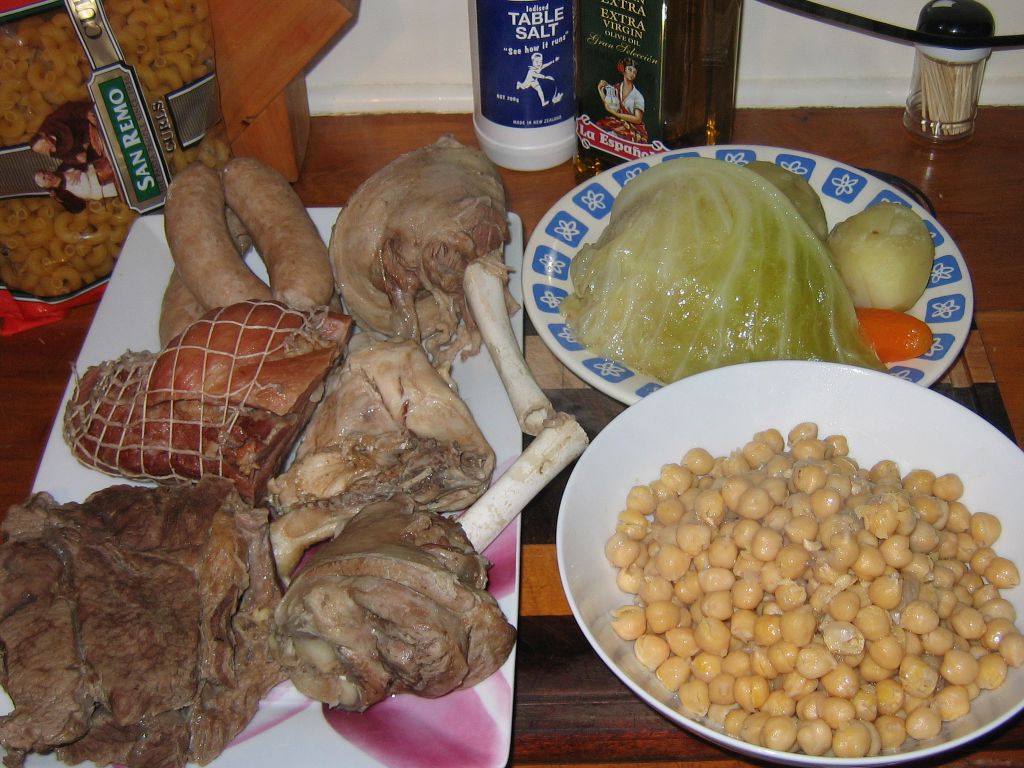
What is Cocido? It is, quite simply, a huge dish of boiled meats and vegetables. Quite simple to describe, huh? Well, let’s take a look at what we’ll be using:
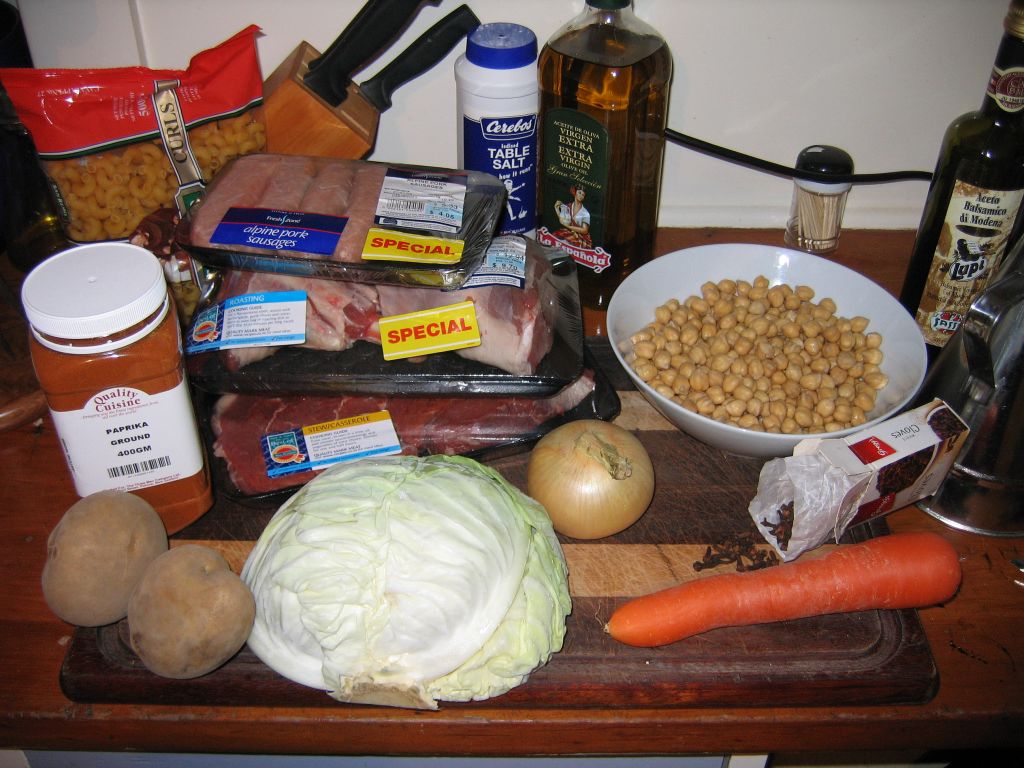
So whatcha need?
- Some sort of pork. Bacon hocks or some hard (old) raw ham works.
- Boned beef, or just a big beef bone.
- Some spicy sausage and/or black pudding.
- Any other meat that happens to be handy. Like chicken, lamb, venison… you name it.
Really, just throw in anything you have handy. You can’t see the boned beef or the piece of pork because they were already in the pot (whoops!).
Anyway, fill a big pot with the meat and warm/hot water, and put on the stove on high (to begin with). As the water rises in heat, you’ll see some foamy scum rising to the top. Remove it with whatever kitchen tool you have handy, it’ll do so for a few minutes until it starts really boiling.
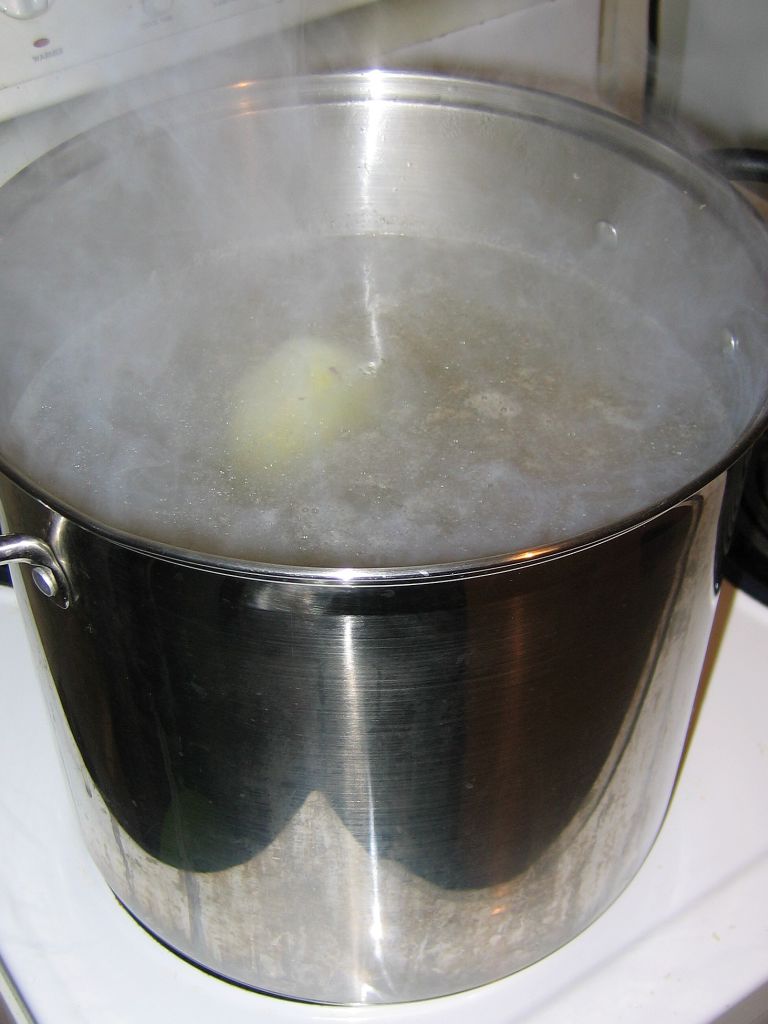
I use the “no more foam rising” mark to know when to add the chickpeas and the onion with the cloves – and the salt if you want salt. After you add them, put on medium/low, cover, and leave it for about an hour or so.
After an hour, get the vegetables ready and, if you’re adding them, the sausages and other “softer” meats like chicken.
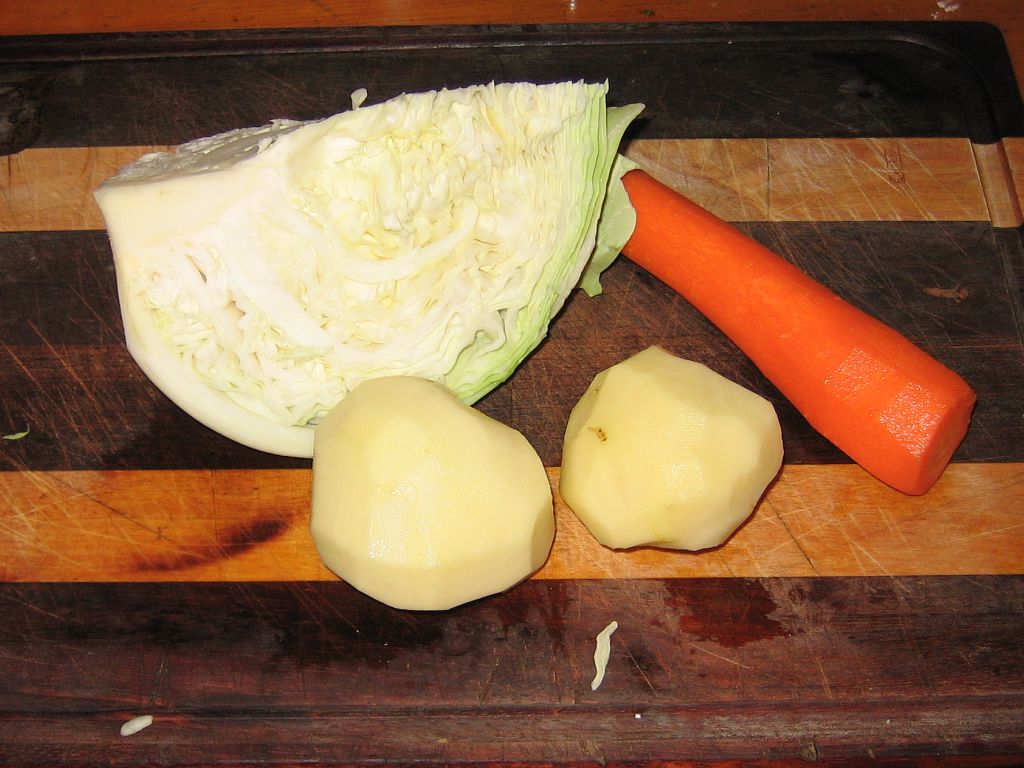
If you have meats, throw them in, leave for 15 minutes, then add the vegetables. Some people recommend boiling the vegetables separated from the meat, but I can’t be arsed. And they taste better if you put everything in there.
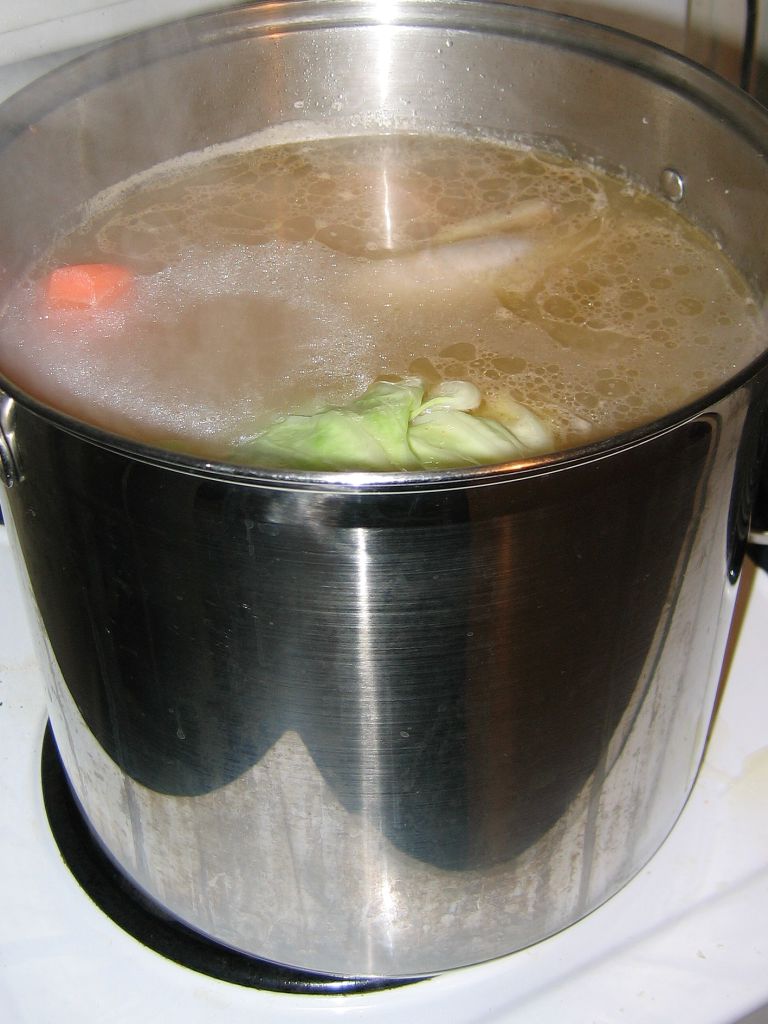
So, leave for another 20 minutes or so (until the potatoes are cooked) and take out the stuff. Serve the things separately:
So, do I really have to puit a picture of how to make the soup? Put the stock through a colander/strainer to get rid of the little bits of stuff (mostly bone splinters), then add rice or pasta and that’s it. Lemon goes very well with that soup.
Also, you may want to spice up the cabbage a bit. To do so, chop it up and throw it in a frying pan with some oil, and after a bit add some paprika powder and garlic:
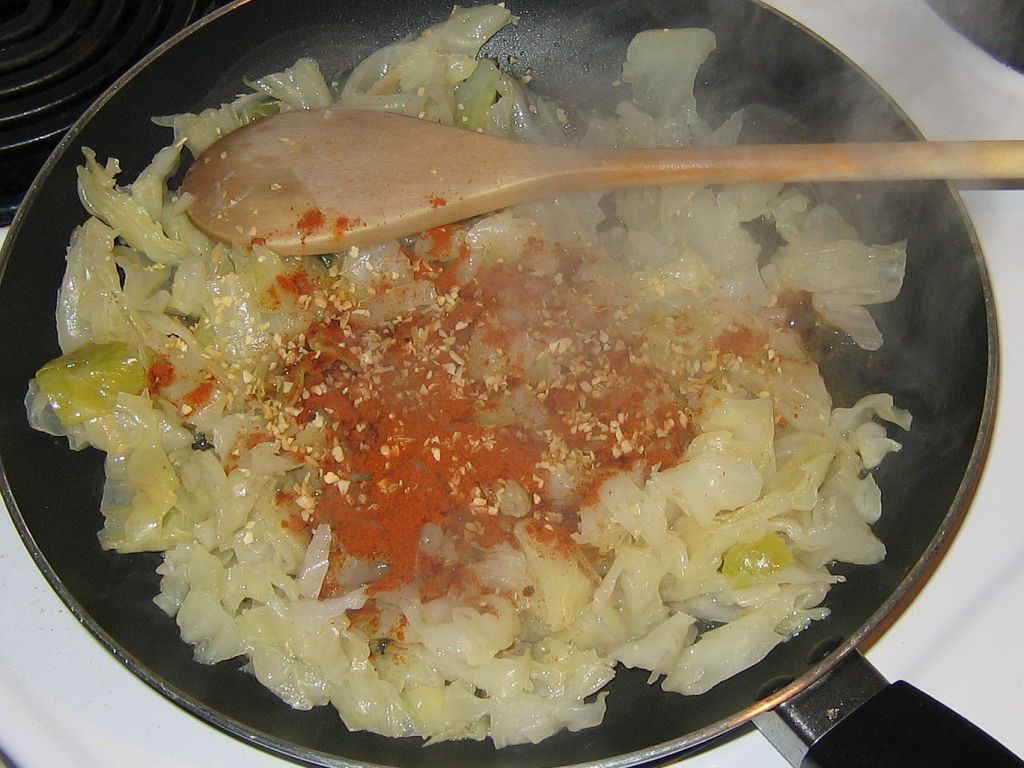
Stir quickly and efficiently so that you get a very consistent red through it all.
And that’s it!
…
Actually no, that’s not it. That’s it as far as the cocido goes, but! But the best part of the Cocido is the leftovers! Which is why I made cocido enough for like 6 or 8 meals. You’ll see how I’m going to get 6 or 8 meals out of it!
It sure has been a while! I have had a very busy week, with section meetings and, erm, “other” stuff (which I shall post in the near future) that basically meant lots of eating out and not being and home and, thus, little cooking.
Eventually, though, one has to go back to eating proper food at home. And so, here is the next little thing to add to the collection. We have a kind of red pepper in Spain called “Piquillo”, it’s a robust, tasty pepper that is very popular for a variety of dishes. It’s strongly flavoured, and the meat is “tough” (not tough as in chewy, but tough as in being able to take manipulation without falling apart). There are countless recipes for how to make stuffed Piquillo peppers, and here is but one of them.
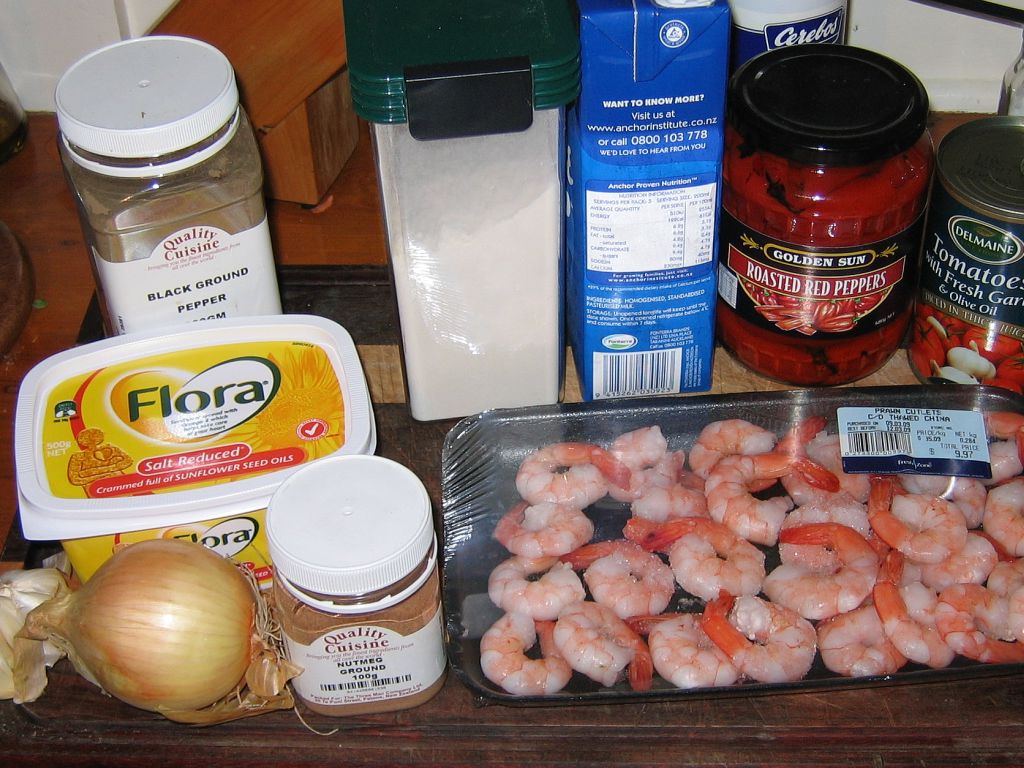
In no particular order:
So, to start with we’ll cook the prawns. Start by chopping up an onion and a couple of cloves of garlic, then fry gently in a pan with a bit of oil. Let the onion go a bit soft, then add the chopped-up prawns.
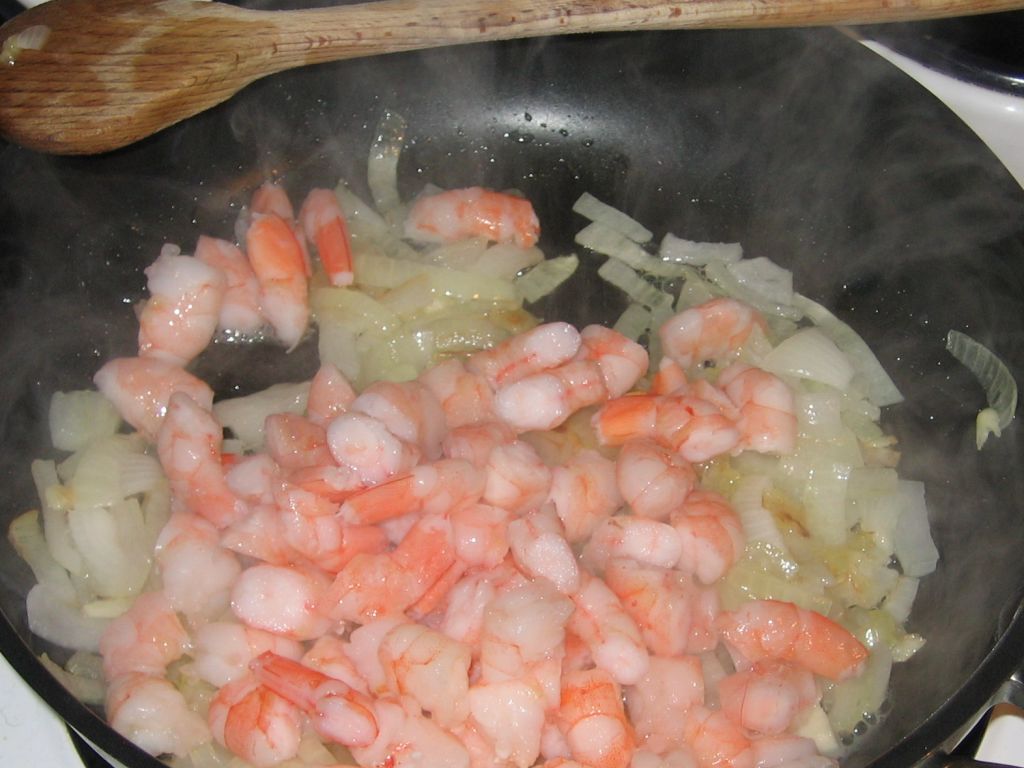
Fry until the prawns have first released most of the water, then the water has been mostly consumed. Prawns tend to cook fast!
Now, the second step is to make a Bechamel sauce. You can even use the same pan. First chop up a bit of onion (I used an extra half), and put it in the pan with some butter/margarine. Give it a gentle fry.
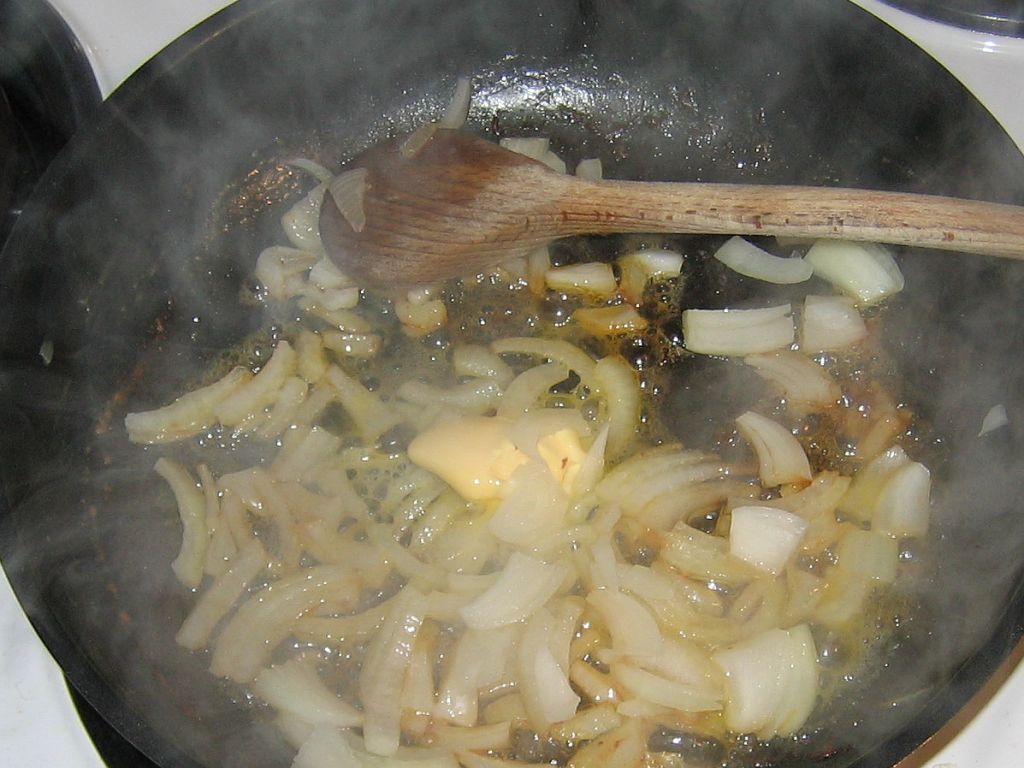
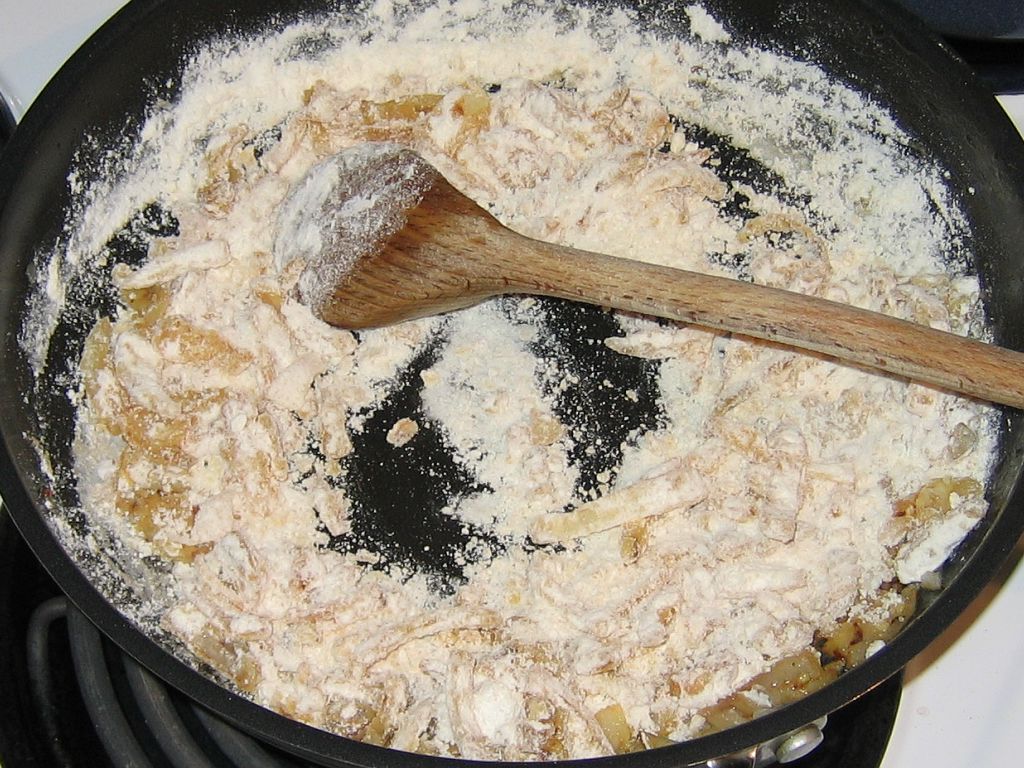
When the onion’s mostly ready, add a couple of spoonfuls of flour, give it a quick stir, so that you toast it a bit. Don’t let it burn!
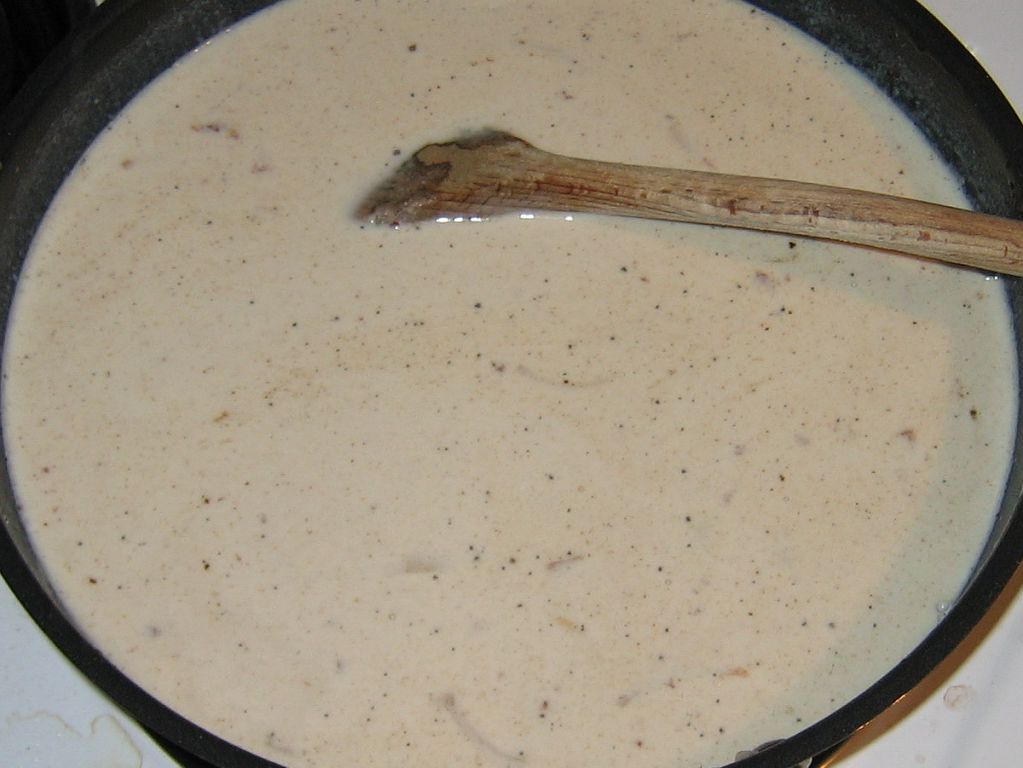
Afterwards, it’s a matter of adding the milk, and stirring constantly to make sure you leave no flour lumps. Add the nutmeg and pepper at this point, and salt if you want too.
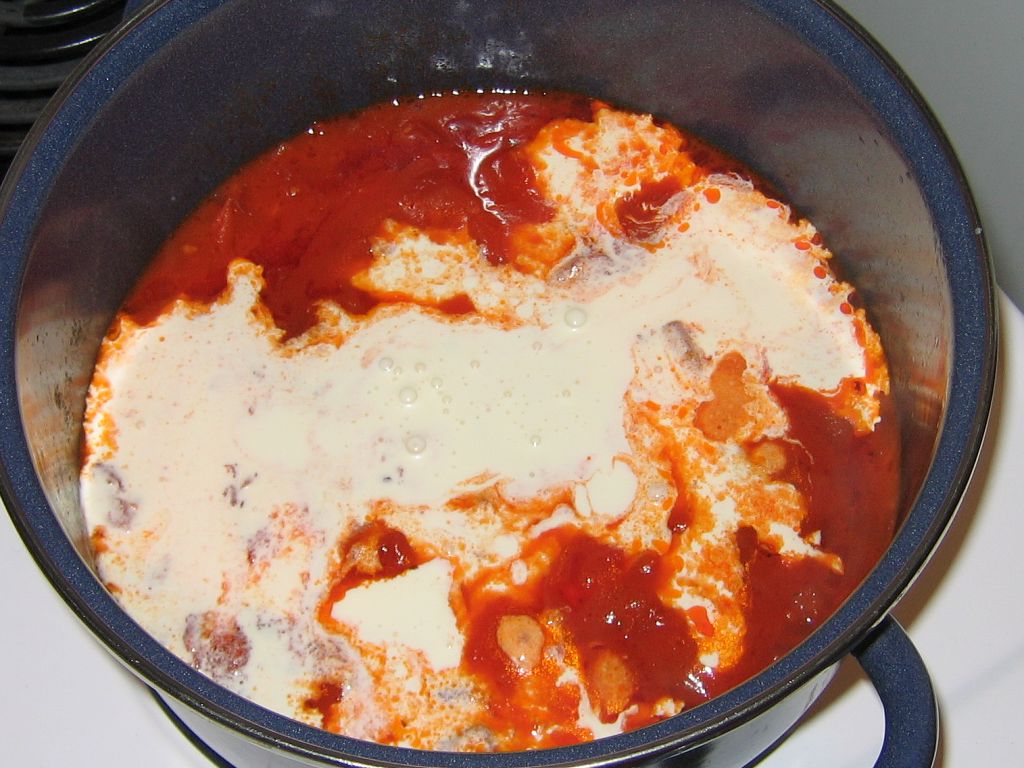
In the meantime, I am making a simple creamy tomato sauce to add to the peppers later on. In a pot, fry the tomato puree/chunks on mid heat, stir every so often, and when it’s mostly done, add a bit of cream, or milk, or both, or even some Bechamel sauce. It’s up to you, I used cream.
When the Bechamel is looking halfway done – starting to feel thick -, add the mix of fried onion/prawns to it, and now stir and stir and stir more so that it won’t burn, it’ll reduce, and it’ll be homogeneous.
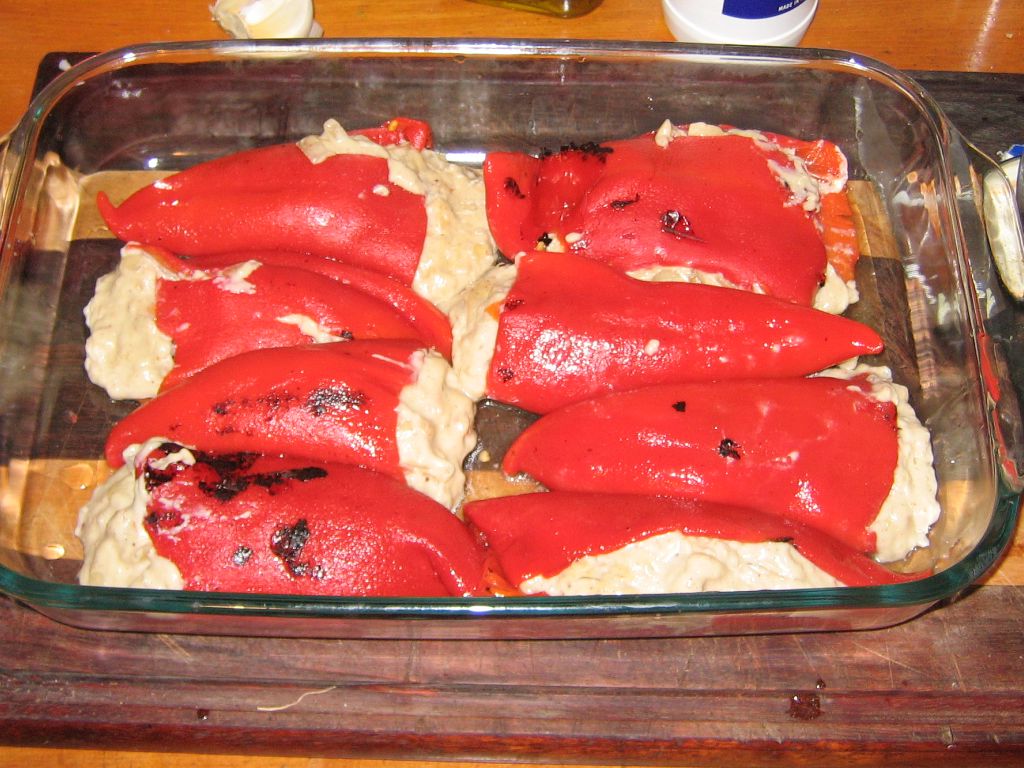
Now for the final touch, you cover them with the sauce (you can put it through the blender/processor if you want to make it smooth, I left it chunky as I like chunky vegetables… As I think I’ve mentioned already), and throw them in the oven, 200°C for 5-10 minutes.
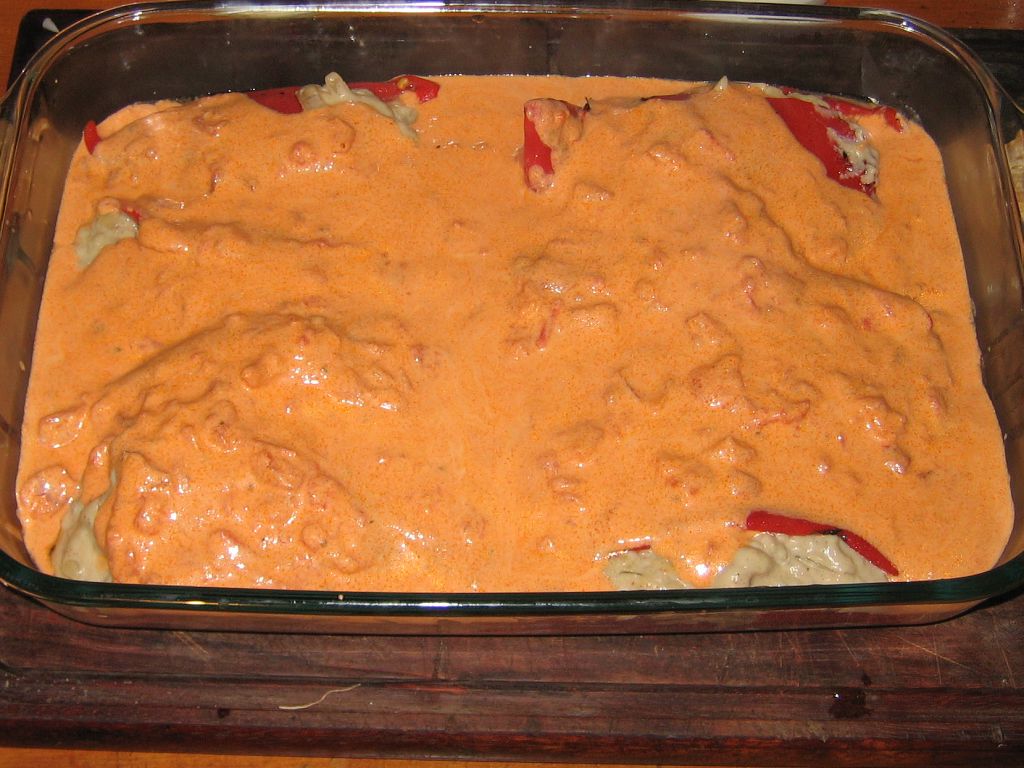
Serve hot, don’t be stringy with the sauce, and let it roast a bit nicely.
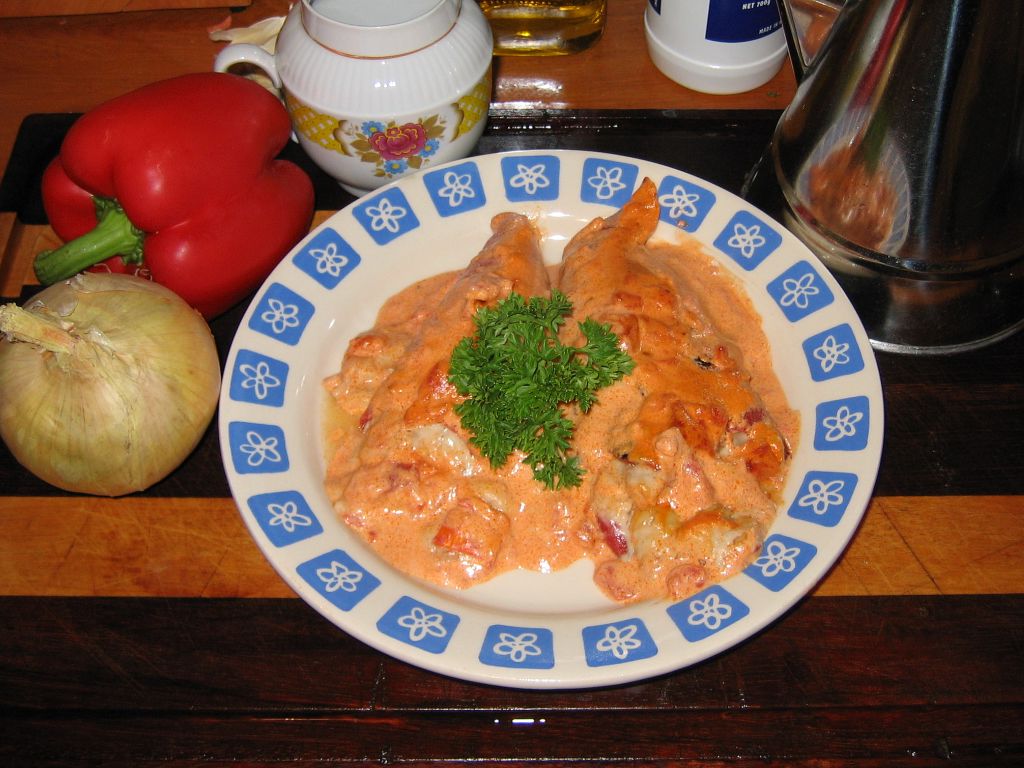
There are countless variations, use your imagination! Mushrooms go well, you can have prawns + fish too (Monk Fish or Cod work well), a very popular one in Spain is calamari, usually with a dark sauce with squid-ink. You can vary the stuffing and the sauce, it’s a flexible dish!
They are probably not Russian, but that’s what we call them in Spain, “filetes rusos.” Apparently the more literal translation, “Russian Fillets,” doesn’t sound right, go figure!
This is one of my mom’s favourite dishes, as she likes the fact that one can convert meatballs to Russian steaks if anyone complains about not liking meatballs. Anyway, on to the cooking!
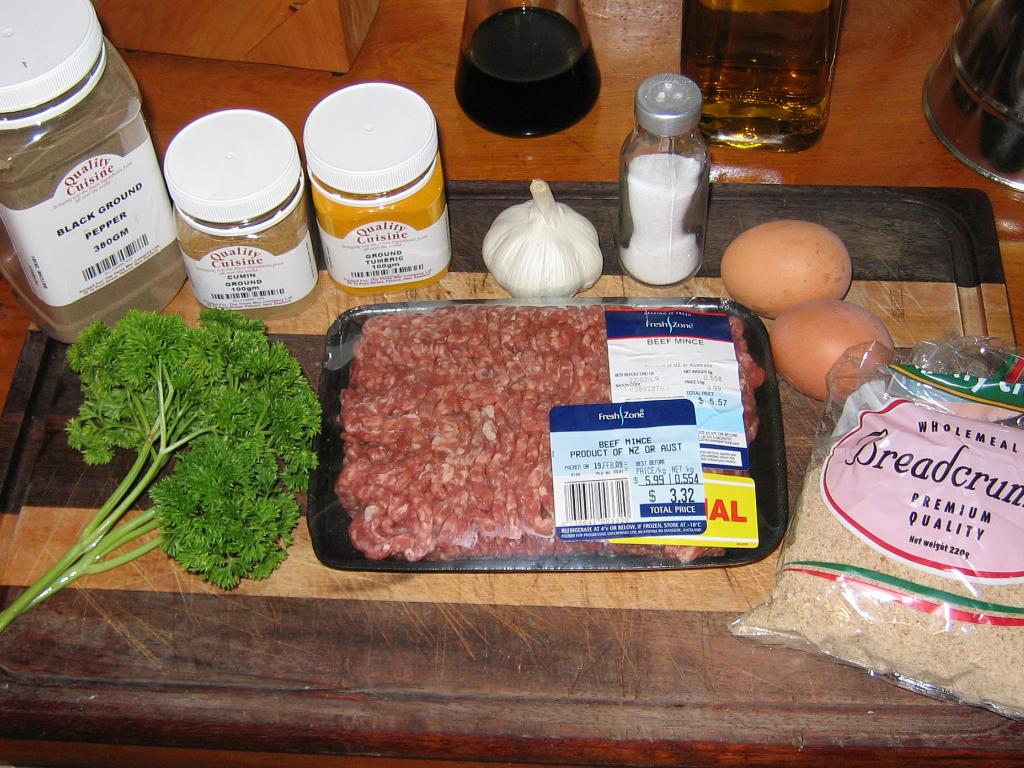
So, you will need:
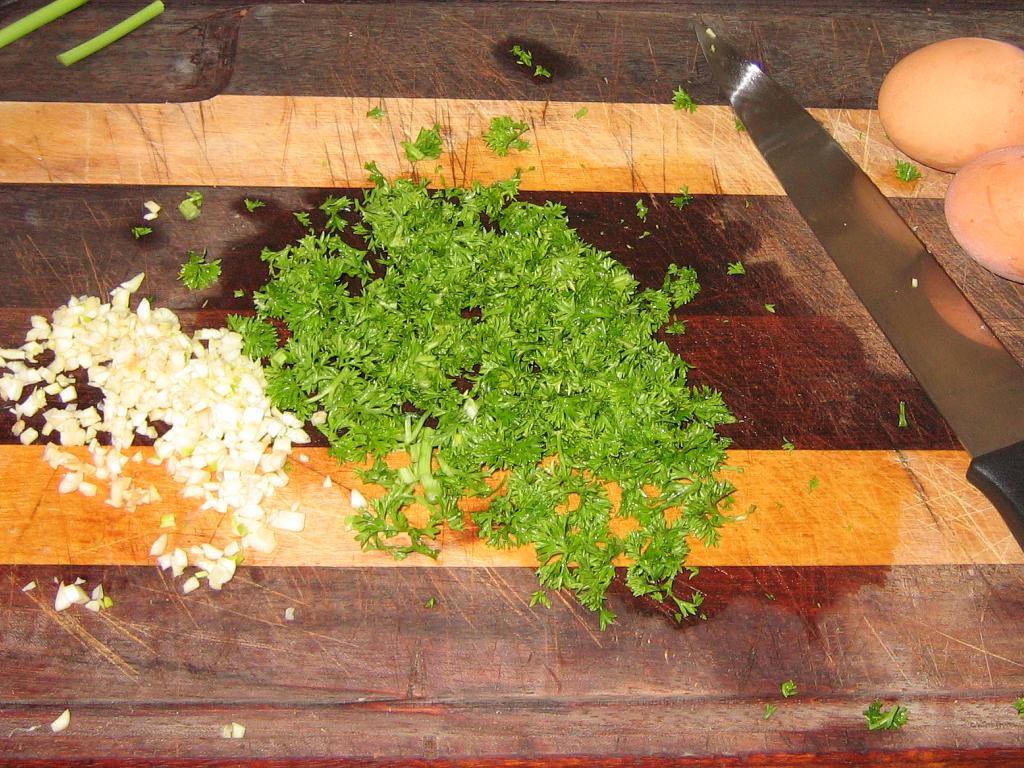
The process is simple. Start by finely chopping up the garlic (I used four big cloves for a pound of beef) and the parsley. LOTS of both, as you can see.
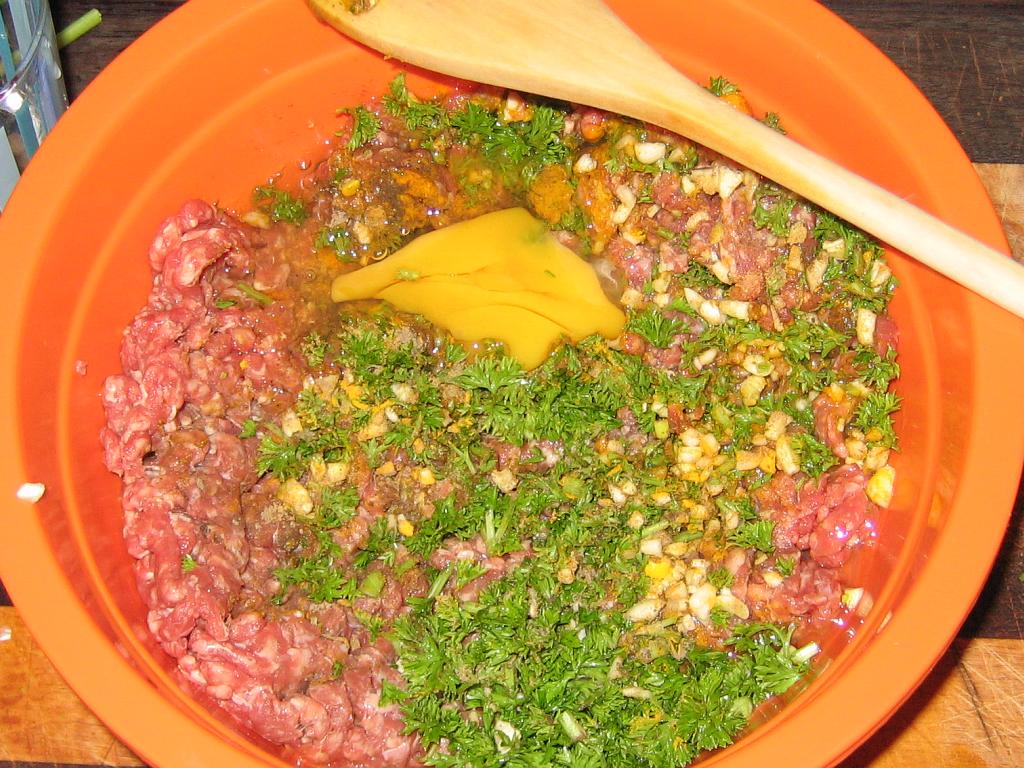
Now, in a bowl, put the meat, the garlic, the parsley, the eggs (I ended up using three), and the spices you want to add to the mix. Grab a spoon or your own two hands, and mix very thoroughly.
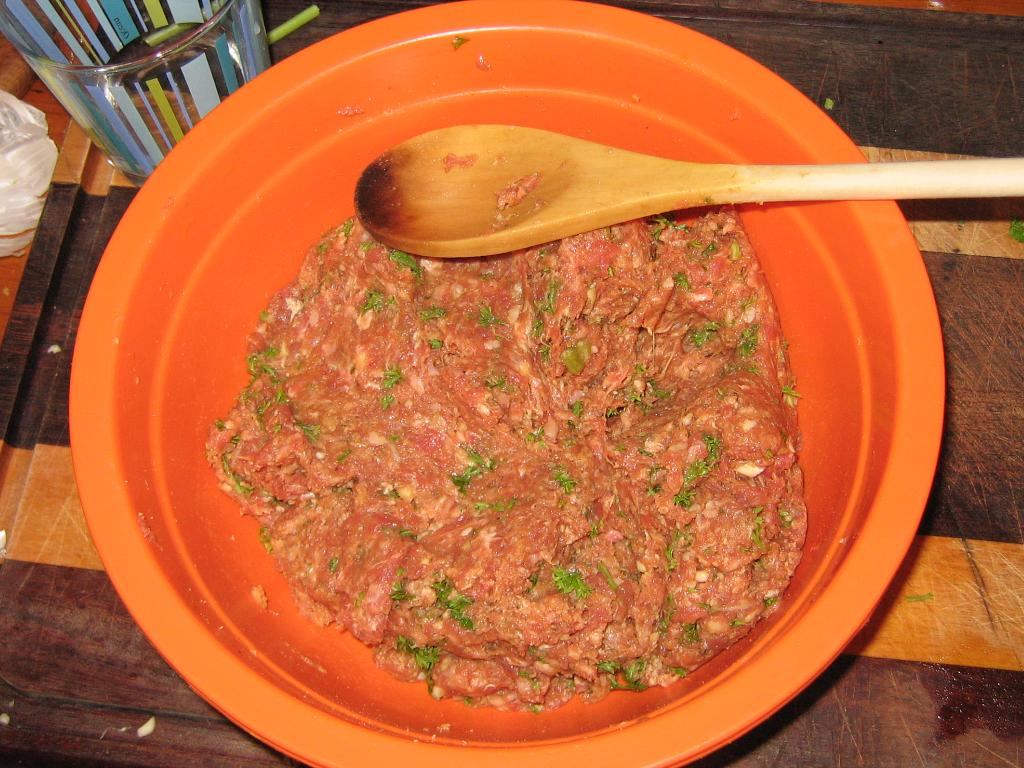
When the mix is homogeneous and ready – and don’t worry if it’s a bit too juicy – add the breadcrumbs, and mix again thoroughly. It’ll be harder as the breadcrumbs will make it go “dry” so to speak, but they add a nice touch to them.
Now, to make the actual steaks. As I hinted in the beginning, these are “almost” interchangeable with meatballs. So, start by making a meatball, then when it’s ready, slap it on top to squash it. Fun!
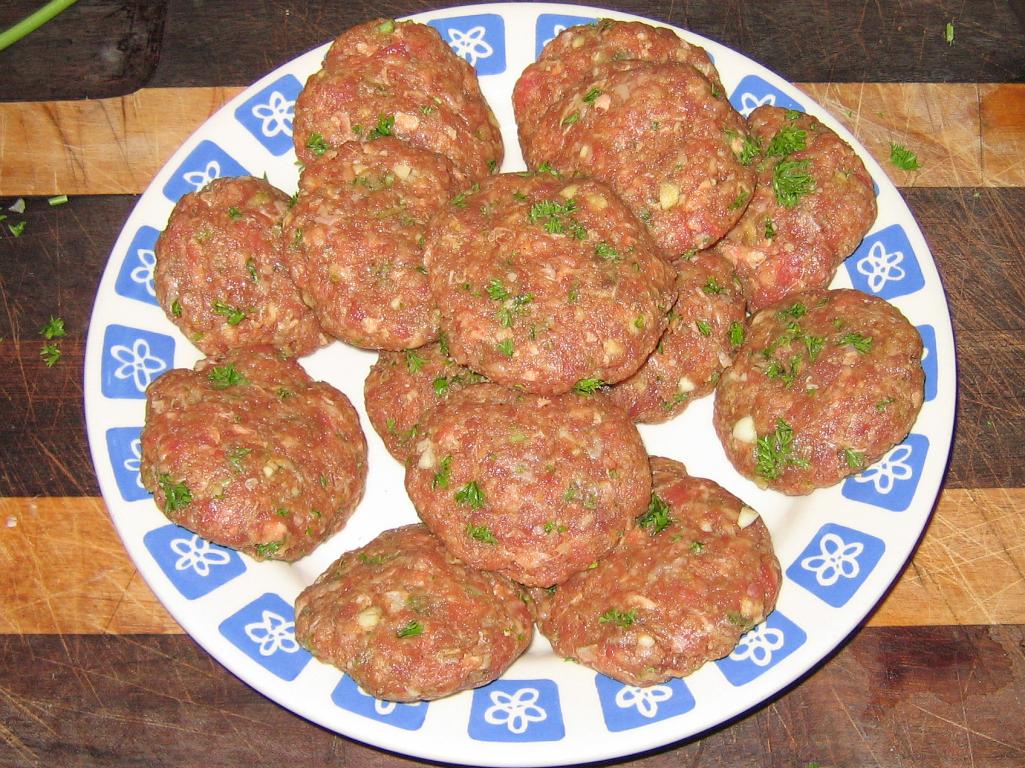
Now we want to fry them! Some people like actually crumbing them before this, but I think they have enough “stuff” as is to make it straight to the pan. Put some oil, heat it well, then give them a quick fry. They’ll go dark very quickly, thanks to all the non-meaty stuff in them!
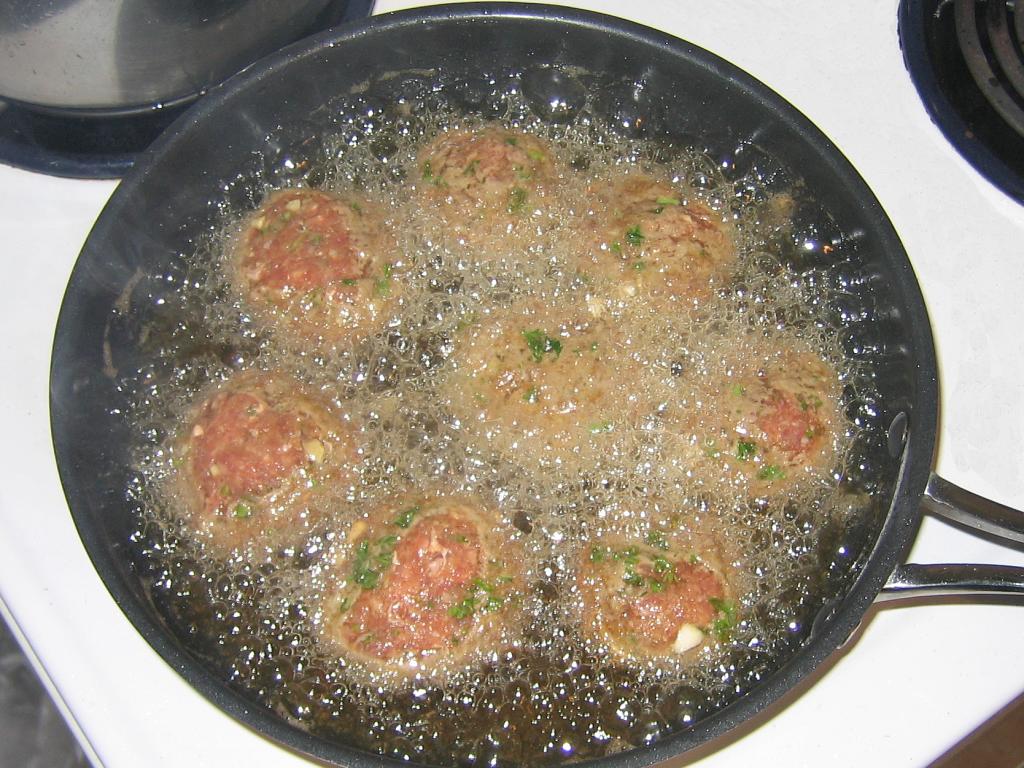
And as usual, if you want to remove the excess oil, just put them on a piece of kitchen roll paper before serving, and it’ll absorb the excess oil.
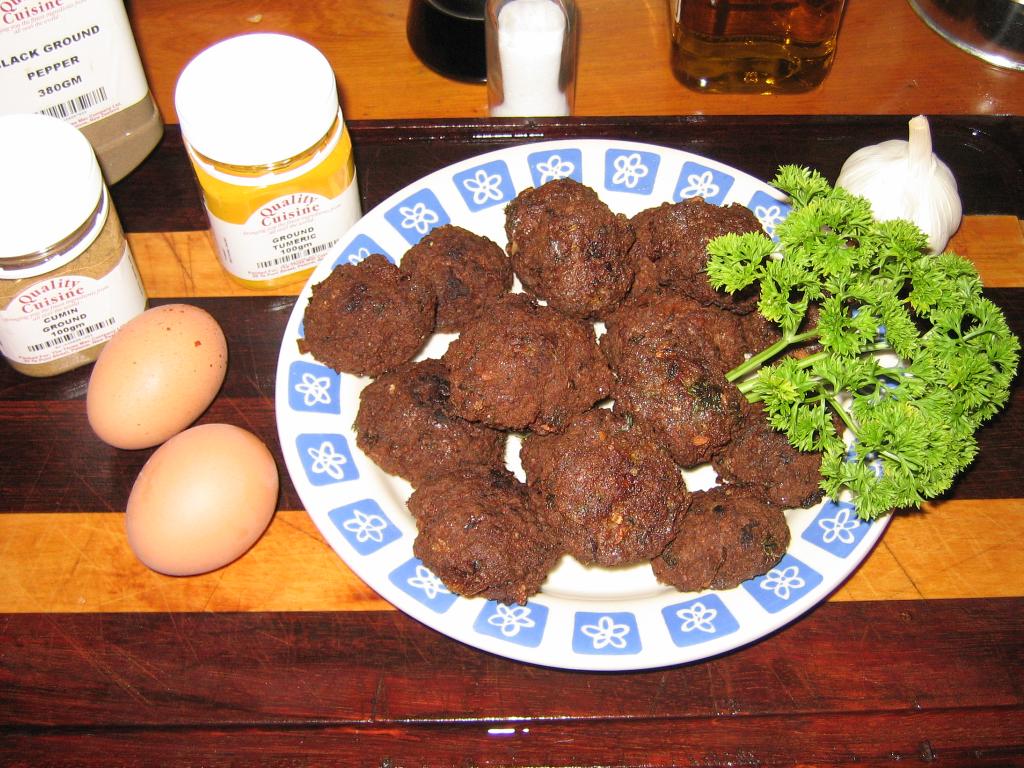
What does it go well with? Depending on how healthy you’re feeling, some salad or some potato fries. You can vary the kind of meat you use (mixed beef and pork goes well), you can add other bits inside (popular ones include: bits of bacon, chopped tomatoes, pine nuts), and you can make them bigger or smaller as you prefer.
I wonder if the fact that I’m making this post during my lunch hour points to some sort of dissatisfaction with the sandwich I had for lunch, heh.