So! Quite a few days since I posted anything. Well, that’s what happens when one is busy, has a stash of frozen goodies prepared for just such occasions, and spends afternoons in places such as Himatangi beach (with pics to follow – once I find a decent gallery software I can run on this server!). But! Eventually one cannot live off the reserves forever, and has to go to the market to buy things. Which brings me to the following recipe.
Pisto. A traditional Spanish dish made with vegetables from the nearest vegetable garden, a marvelous dish for the summer days. As I go along, you may recognize the dish. Ask a French, and he’ll claim this is actually a “ratatouille”. Ask an italian, and he’ll tell you this is a “ciambotta di magro di verdure”. And so on. That’s because we are all, basically, from the same Mediterranean region and, at the end of the day, we all eat the same! So, such a simple dish with “whatever is handy from the vegetable garden” is, unsurprisingly, easily found in a variety of places in a similar fashion.
Let us begin, shall we? First, grab all of this stuff:
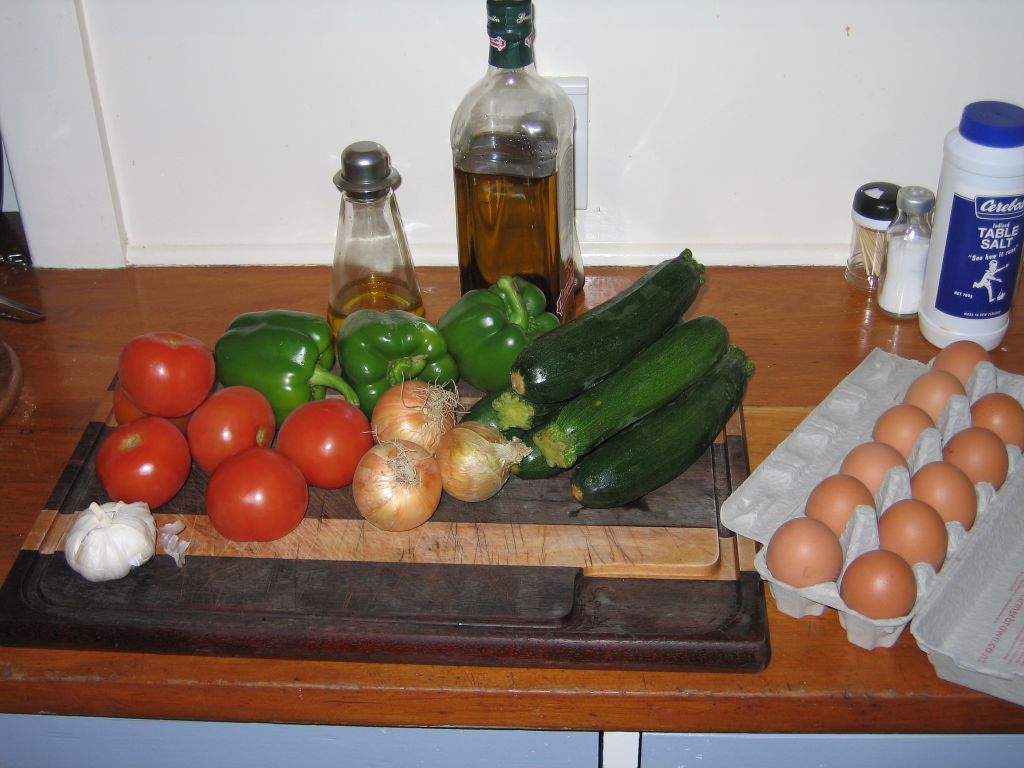
The text-only version:
- Tomatoes.
- Green peppers, paprika, capiscums, whatever you call them.
- Zucchini.
- Onions.
- Garlic.
- Some olive oil.
- Eggs.
- Anything else that cooks in a similar fashion that you may have handy in your vegetable garden!
So, start by chopping the onion and whatever vegetables take the longest to cook.
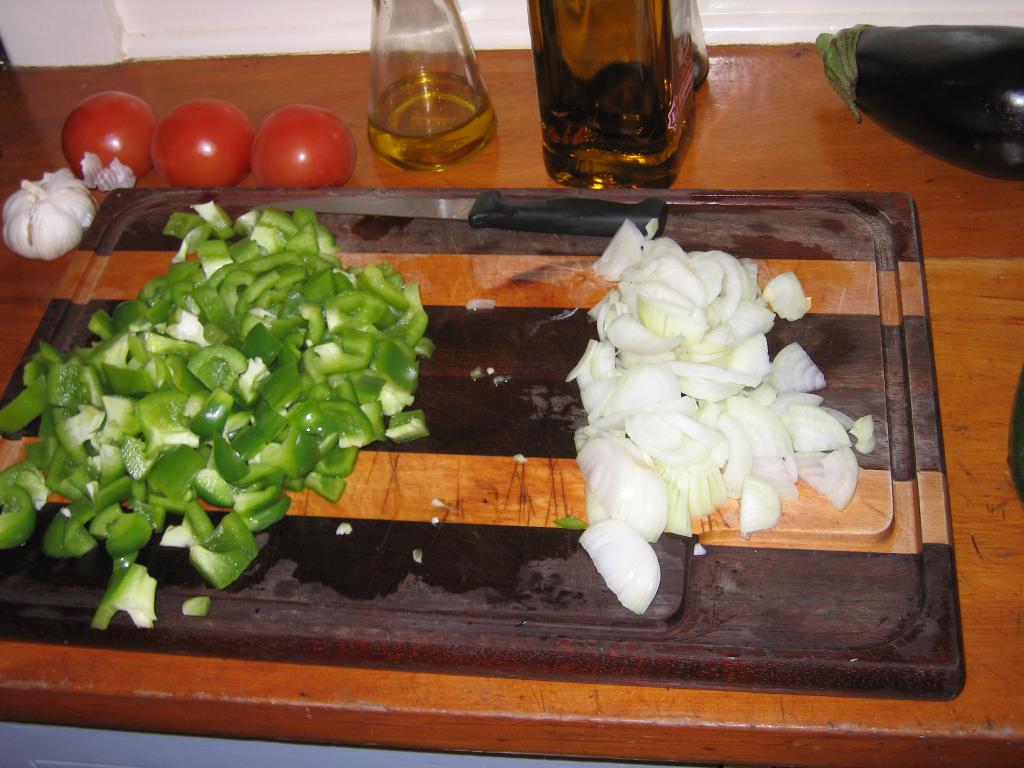
Then add some oil in adeep frying pan or a pot (best if it’s non-sticky), put it on medium-low heat, and start by frying the onion and the garlic. While it fries slowly, get chopping the rest of the stuff.
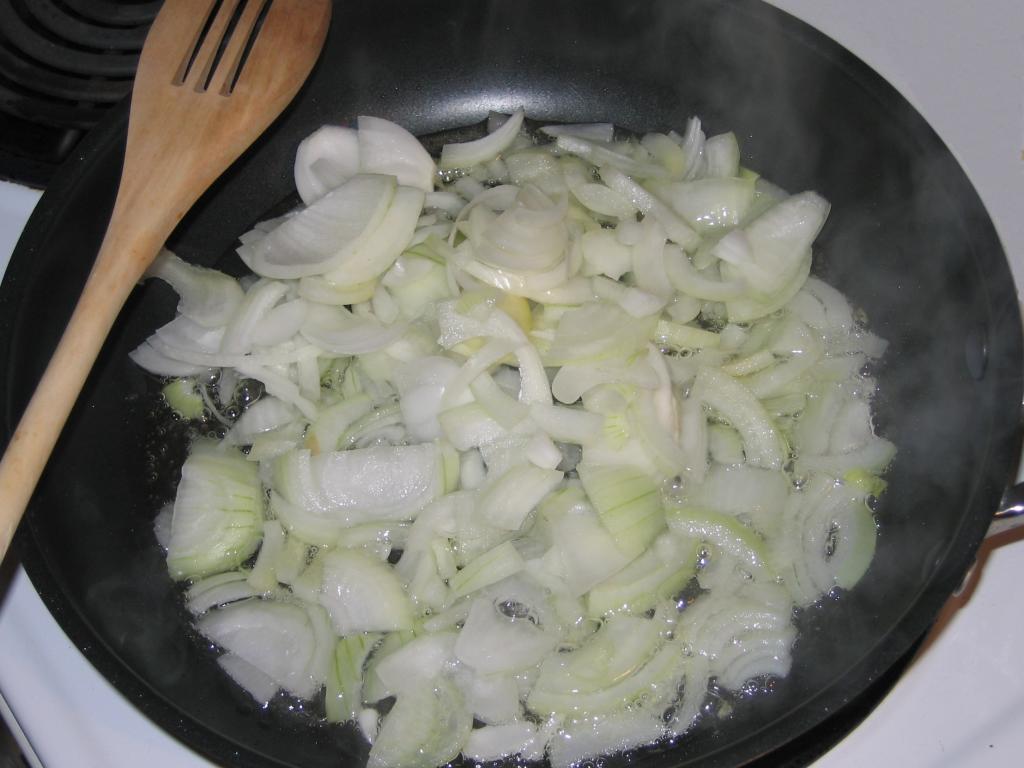
As you can see, the chopping of the onions is a bit irregular, there are some rather large chunks in there. The reason is personal taste, I chopped one of the onions rather finely, so that it’ll mix well with the whole rest of the ingredients, and chopped others a bit more “chunky”, because I like chunky vegetables.
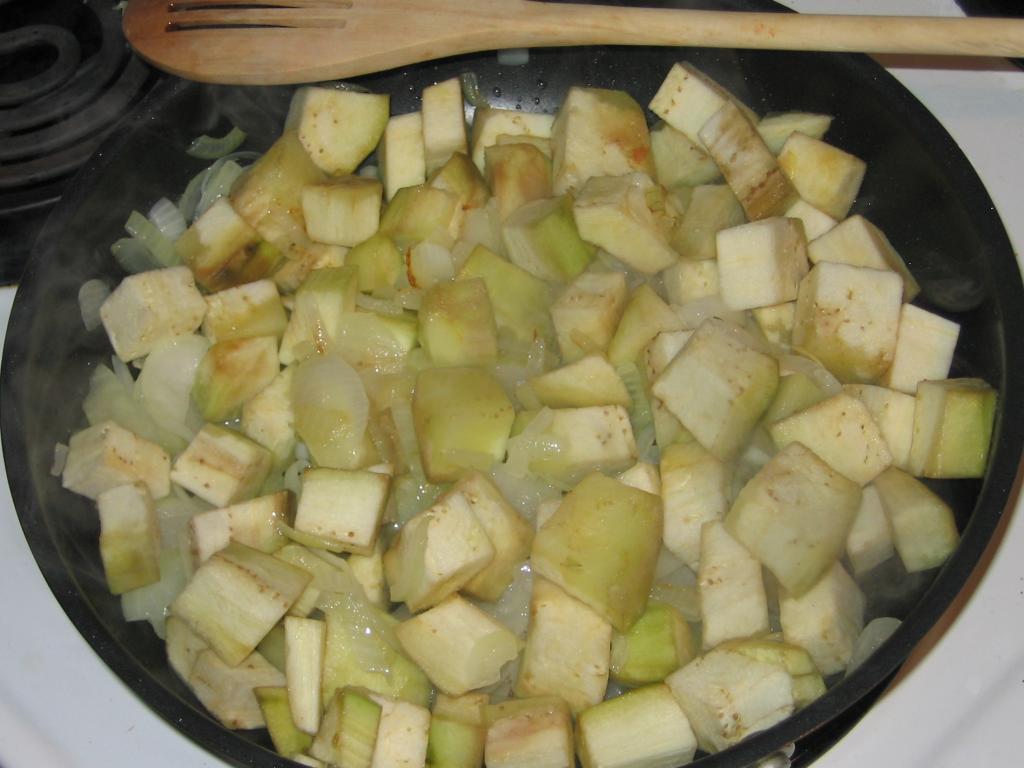
I had an eggplant kicking about. Now, if you bother to look in the net for recipes, you will see many “Eggplant stuffed with Pisto” ones, but to be honest, that seems like a lot of bother for little return. Rather, I peeled it, diced it, and added it straight to the pan. Much easier!
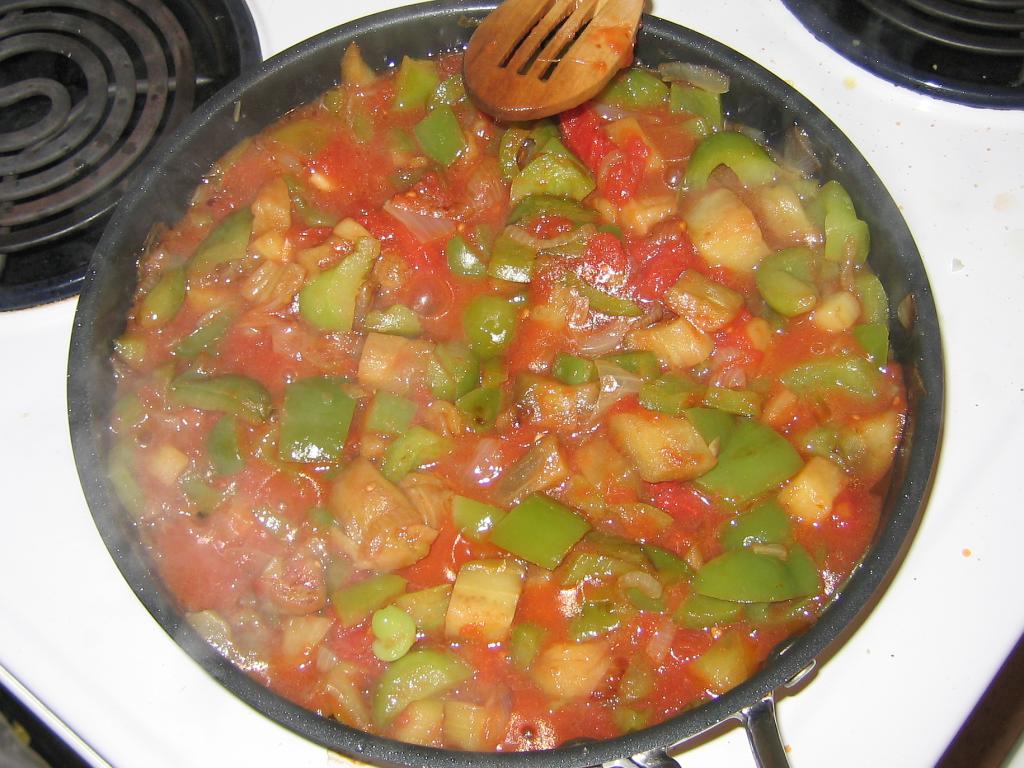
After some minutes, I added the green peppers, let them fry for a bit, and then added the tomatoes. At this point I raise the heat to exactly medium in my stove – check yours before being too hash!
You’ll notice that the tomato seems to be exceedingly juicy and red, that’s because I added, on top of the natural tomatoes, some tomato puree I had, leftover from the pasta I cooked yesterday. While good natural tomatoes are undoubly best, if you happen to be in the wrong season or the local tomatoes where you happen to live are bad (or expensive!), or you have some leftovers that you don’t want to throw away, don’t hesitate to use tinned diced or crushed tomatoes. The taste is slightly less good, but it works fine!
In the picture you probably noticed another wonderful thing about frying tomatoes: spillage! Bop, bop, bop, you’ll have little droplets of tomato all over the place. At this stage I usually cover the pan, let the whole thing simmer and cook. It protects the stove from spillage, and makes sure that the whole thing cooks, not just burns at the bottom while leaving the top raw. Stir every so often too!
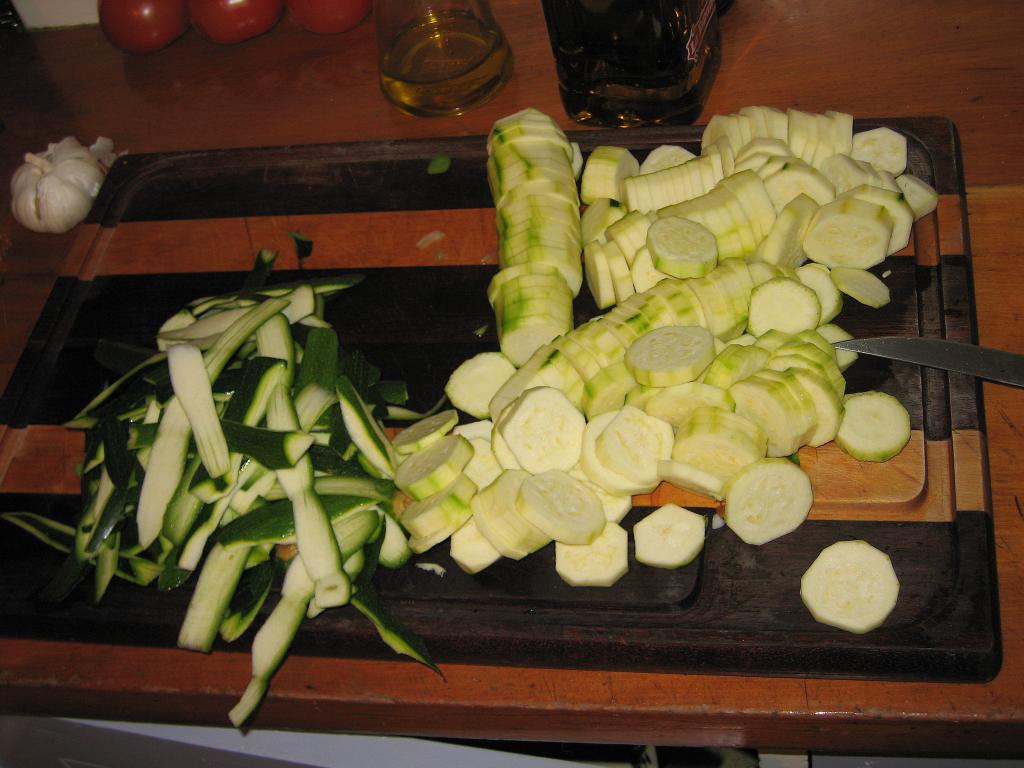
In the meantime, I have a whole bunch of zucchini I had to slice. These particular ones happen to have a rather tough skin, so I peeled them before adding them to the mix. It’s always better – and more nutricious – if you don’t do this, but there you go. If the zucchini is of the “much bigger” variety, dice it instead of slicing it like I did. Give the tomato and peppers 10-15 minutes, then add the zucchini.
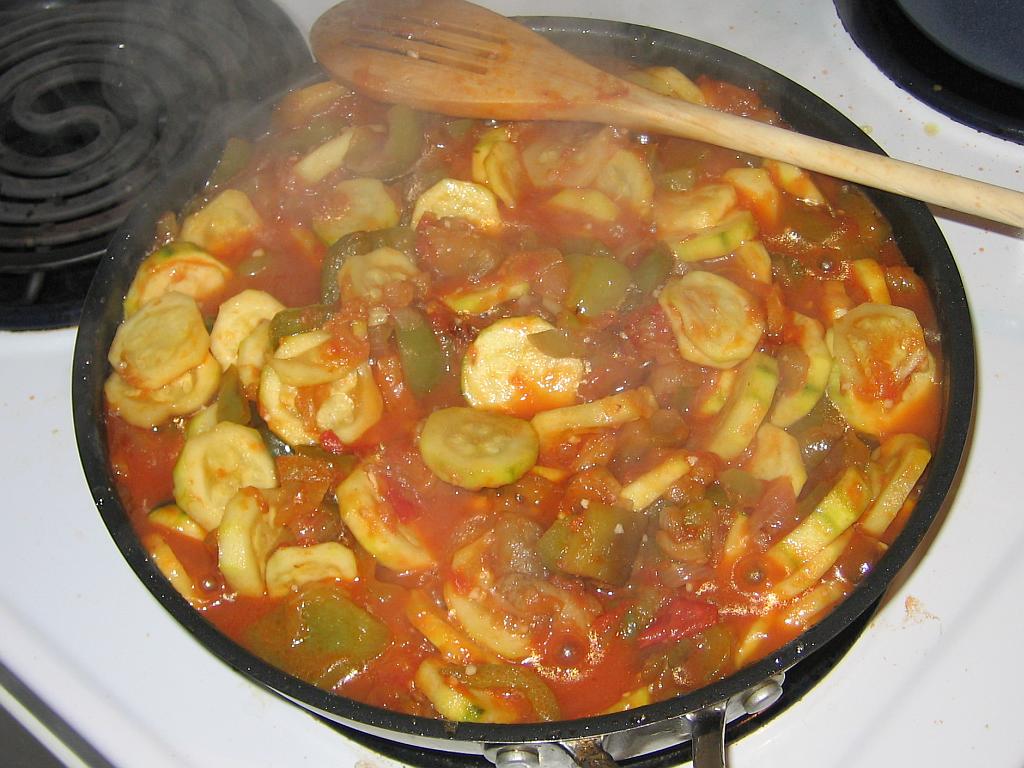
This is the perfect chance to correct the salt! That is, add some salt if you want to. Now, we want to cover it for a while, stir every so often, then when the vegetables start to go soft, remove the cover completely and cook it to reduce the juices. When will it be ready? When the vegetables are soft, and the juicy look of the picture above changes into something like the one below:

So, that’s ready to serve! The traditional way is to serve a portion topped with a fried egg or two. I’m not a fan of fried eggs, mostly it’s the runny yoke thing that puts me off, but I like eggs otherwise. In my case, I added a couple of hard boiled eggs.
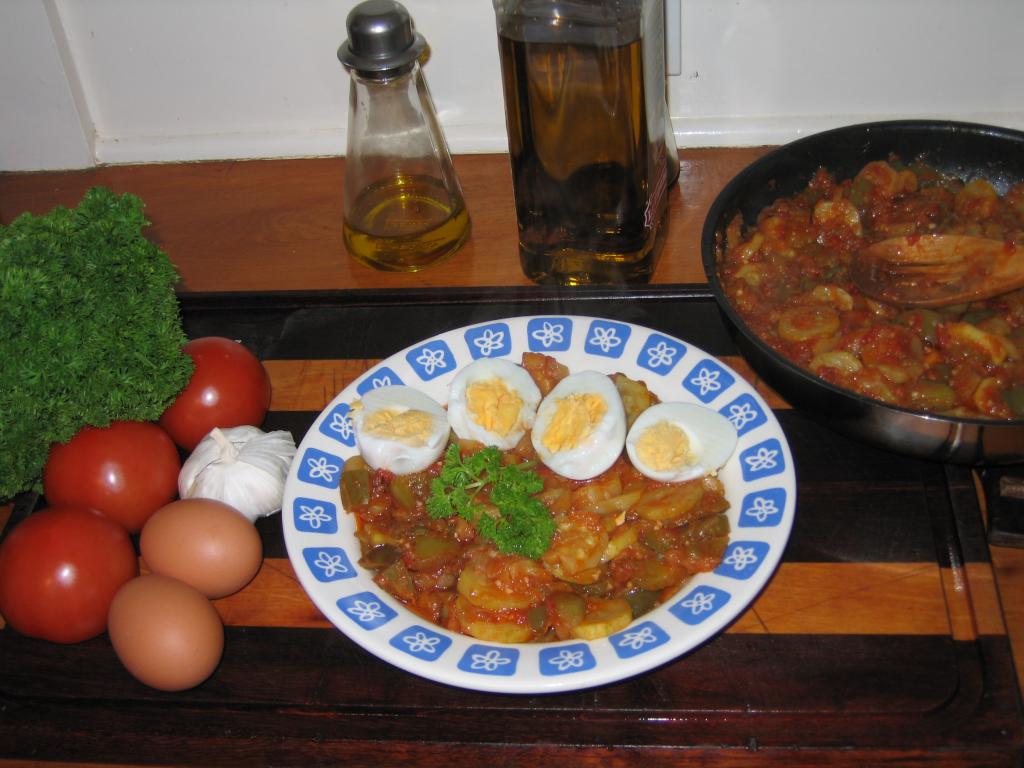
Other things that can be added are croutons, or poached eggs. Pisto is a flexible dish, you can put it inside a puff pastry and make a wonderful treat that way, and it freezes well – do as I did, cook a big pot, then freeze individual portions for later use. You won’t regret it!
At this rate it’ll look like I’m a vegetarian or something. Next entry will be a more “meaty” one, enjoy your Pisto!
Hello from Brisbane, Australia. Thanks so much for the great content. It helped me a lot with my school cooking research 🙂