Right! So I was running low on supplies and I didn’t feel like going to the supermarket. When I mix rice and banana, I usually make “Arroz a la Cubana” (“Cuban style rice”, more or less), which is of course not cuban in origin or anything like that, but I had a lot of cheese in the fridge and decided to go for this instead. This is a “survival” recipe, i.e., something you can do when you don’t have much in your fridge.
Ingredients for Baked Banana Rice
So, you need very few things:
Rice.
Bananas.
Fresh Parsley.
Cheese. Lots of cheese.
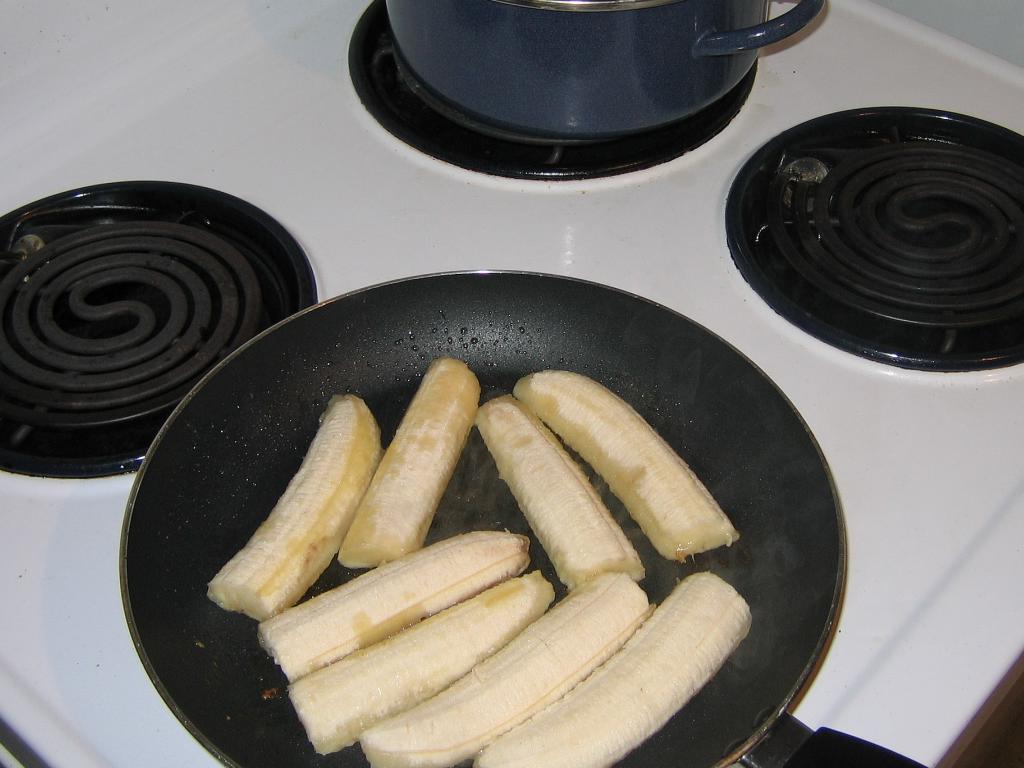
To start with, slice the bananas in half and fry them while you cook the rice.
Frying the bananas
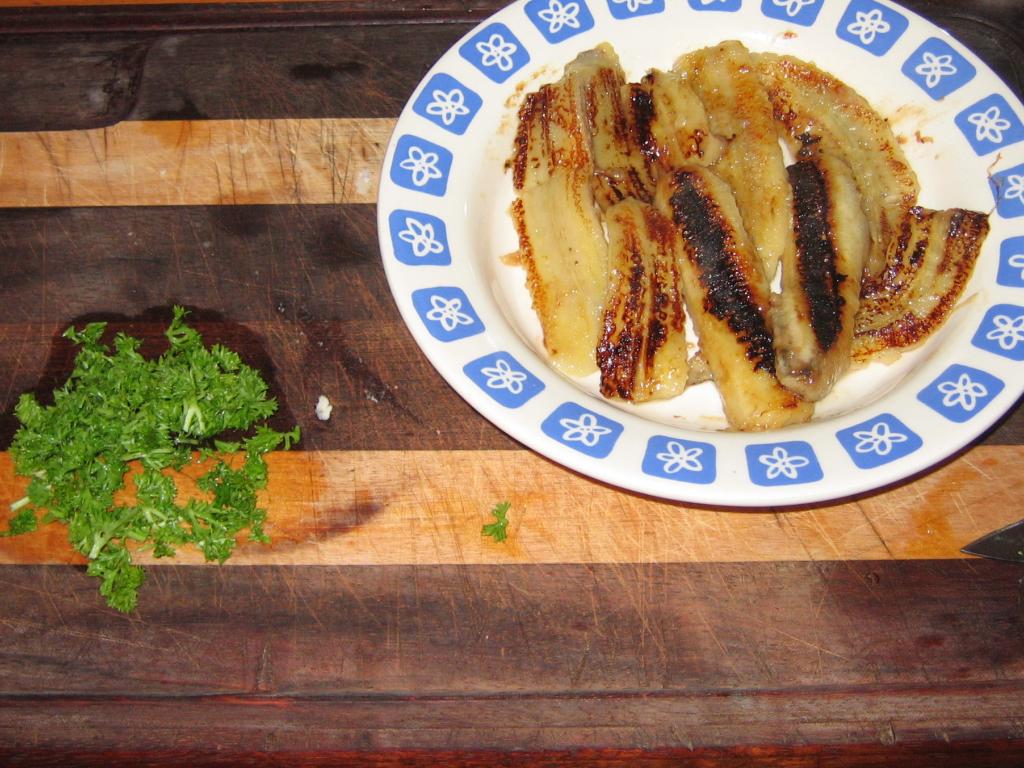
Meanwhile, you’re going to get a generous amount of parsley, and chop it up thoroughly. Save the bananas once you’re done with them.
Parsley and bananas
Now, once the rice is ready, put the chopped parsley on the rice and mix it thoroughly. If you want to mix some other spice or ingredient to the rice, go for it! Salt it a bit if you want, I tend to put a bit of salt on the water and cook the rice using the absorption method.
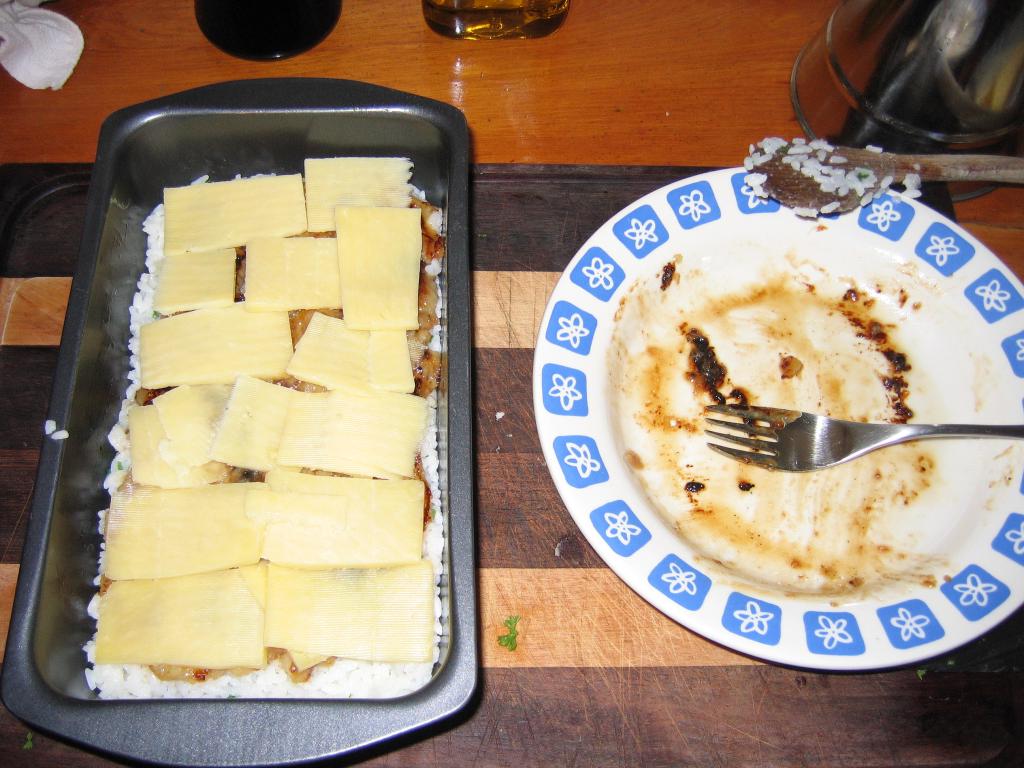
Once the rice is done, you want to get a deep oven cooking pot and start preparing the dish like this: Place a layer of rice, on top a layer of bananas, then a layer of cheese, and repeat as much as you want. The number and thickness of the layers will depend on how many bananas and how much cheese you want to use, in my case I put a layer of rice at the bottom, only one layer of banana, and two layers of cheese (one on top of the bananas, one at the very end on top of everything).
Layering the dish
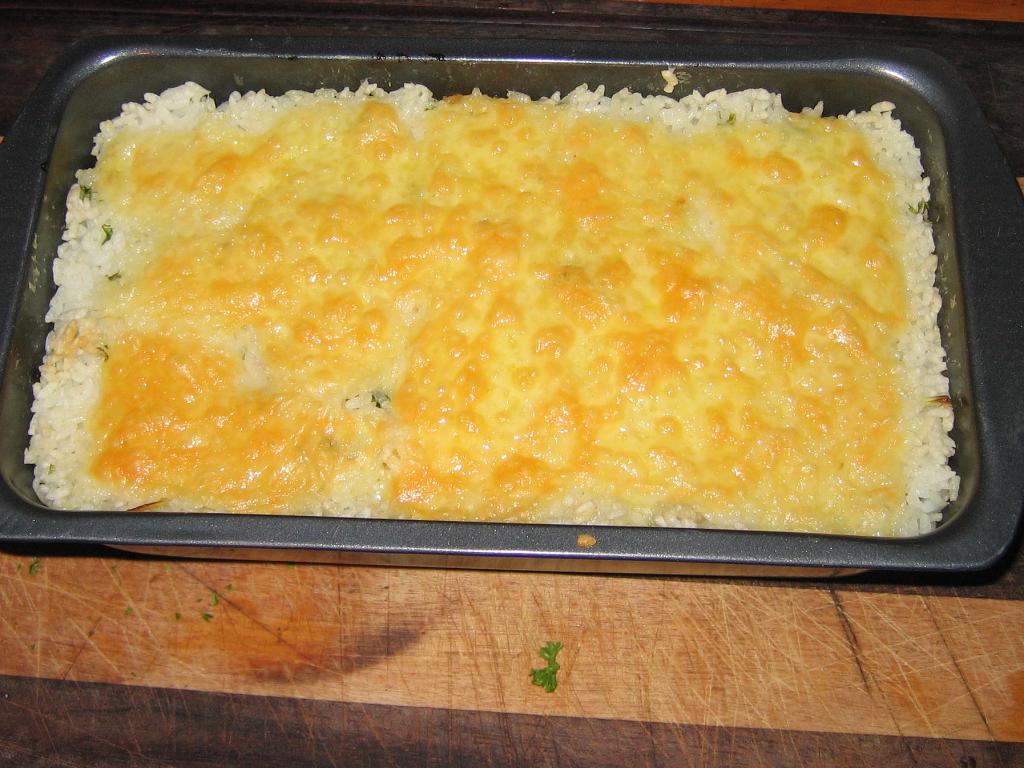
Finally, heat the oven at, say, 108, and in it goes! 15-20 minutes will do, until the cheese at the top is well melted and as darkened as you want.
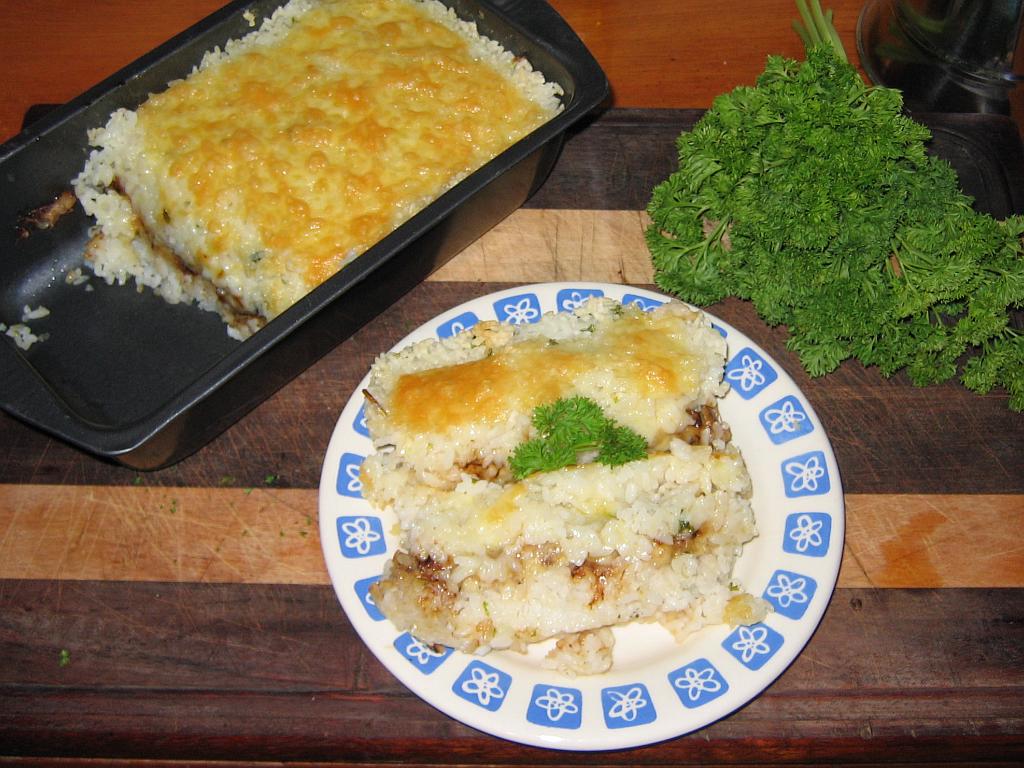
The rice is ready!
Serve in slices and serve it hot! You want the cheese to be all melty.
Looks tasty!
Simple and tasty “survival dish”. Maybe I’ll show what the “Cuban Rice” is supposed to be next time.
So, while we’re at simple dishes, here’s another one that is simple, just takes some time to make. Migas. This is a traditional meal of shepherds in Spain, made with old bread and a few things to make it edible. There are as many recipes as you can imagine, and then some, so I’ll just put a basic one here and you can wing it from there. The biggest problem is, around here old bread doesn’t get dry and hard, as it should. It doesn’t even get rubbery. It just gets mouldy.
If you ever want to grow mold for some reason, move to New Zealand. You’ll love it.
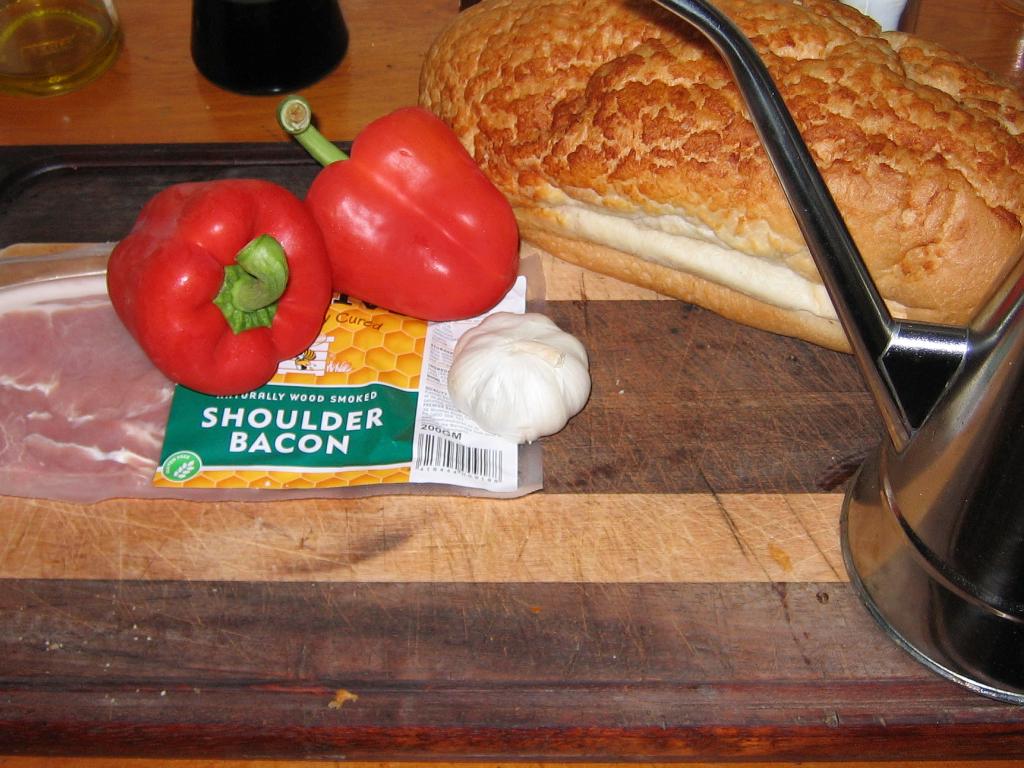
Anyway! Let’s start with some not-so-old bread and some extras.
Ingredients for migas.
Basically, we need:
Bread.
Garlic.
Water (do I really have to show that in the picture?).
Oil.
Bacon.
Red paprika.
Something that also goes really well with this is sprout garlic. Chopped up sausages work as well. Some people use milk instead of water. And raisins as well – or plain grapes, usually added at the end when everything’s done.
The first thing to do is to get rid of the crust of the bread. Usually, when the bread is hard and dry – as it should be -, I grate the outside to make crumbs, useful for later use, and just heep the white inside. After this, cut the bread into small pieces, by hand or with a knife if the bread is hard. Afterwards, you want to get them wet.
This is the delicate part, you want the bread wet enough so that it becomes kinda sticky, and the pieces start to stick together, but not so wet that it becomes a soapy mess. What I usually do is, after washing my hands thoroughfully, use them to get it wet. Put some water in my wet hands, mix with the bread pieces, do it agan, then keep at it until the texture is right. It’s very noticeable, the bread will be sticky.
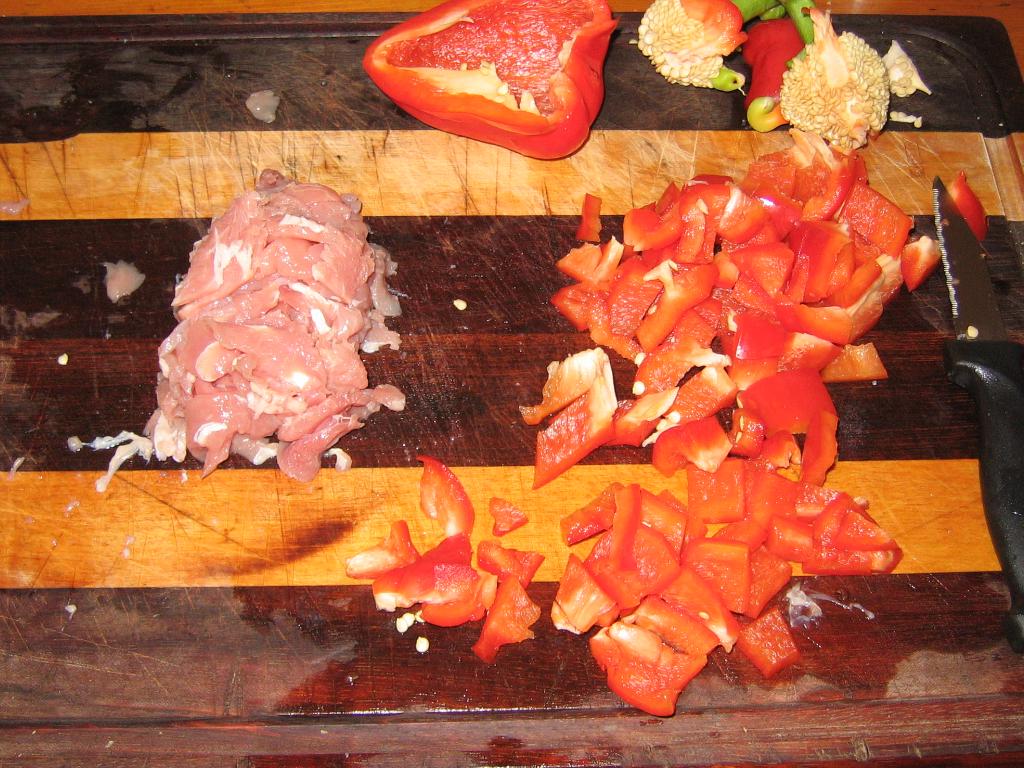
After that, chop up the non-bready ingredients. Time to get started with them!
Additions!
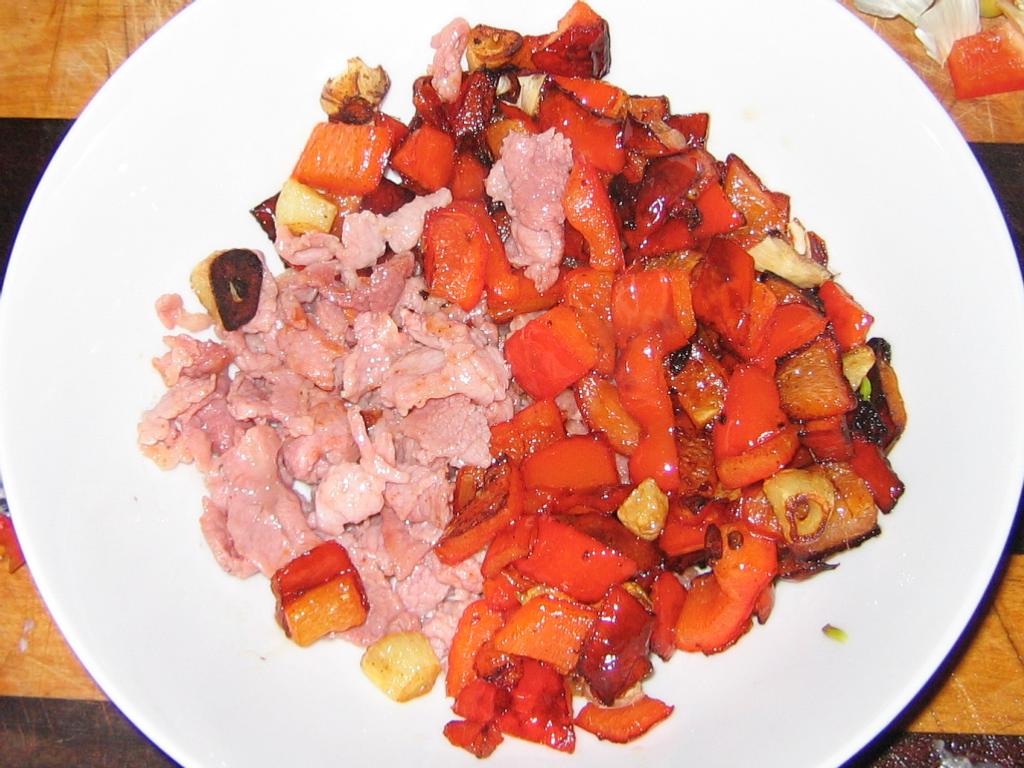
Now, put three spoonfuls of oil in a pan, and start frying them. I fried the bacon first, then the paprika mixed with four cloves of garlic, chopped into big pieces – the garlic, not the paprika. Reserve the frying ingredients, keep the oil in the pan.
Sidestuff fried.
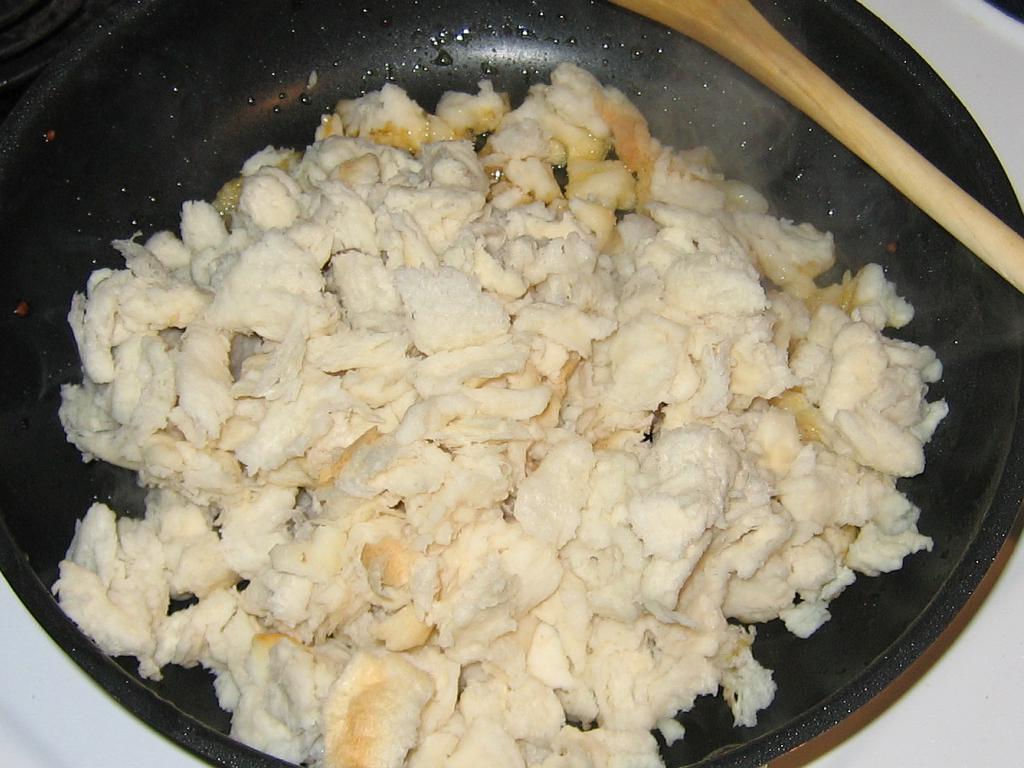
We’re ready for the last part. Now put the bread on the pan, and start mixing! The bread should come together in bigger clumps, and you have to keep stabbing at it and cutting the clumps into smaller chunks. keep at it! It’s a very active thing. IF the bread didn’t clump together after a bit, you may need some more water. Use a spatula or a wooden spoon, and keep breaking the lumps, until you turn this:
Start of the bread cooking.
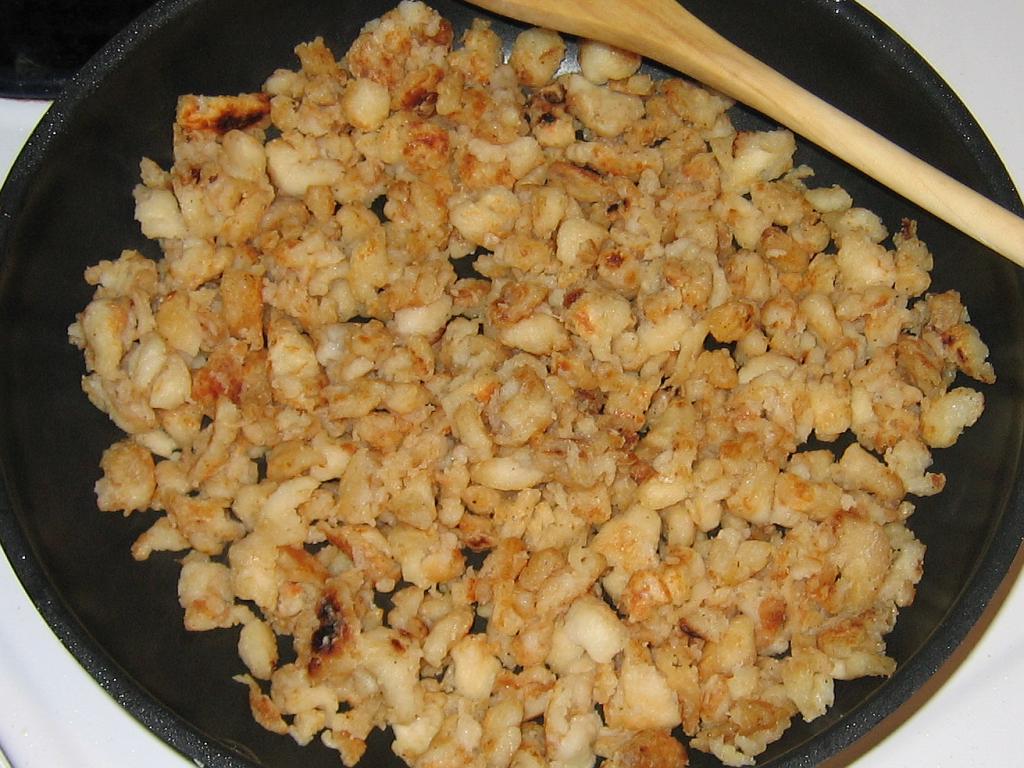
Into this:
Almost ready migas
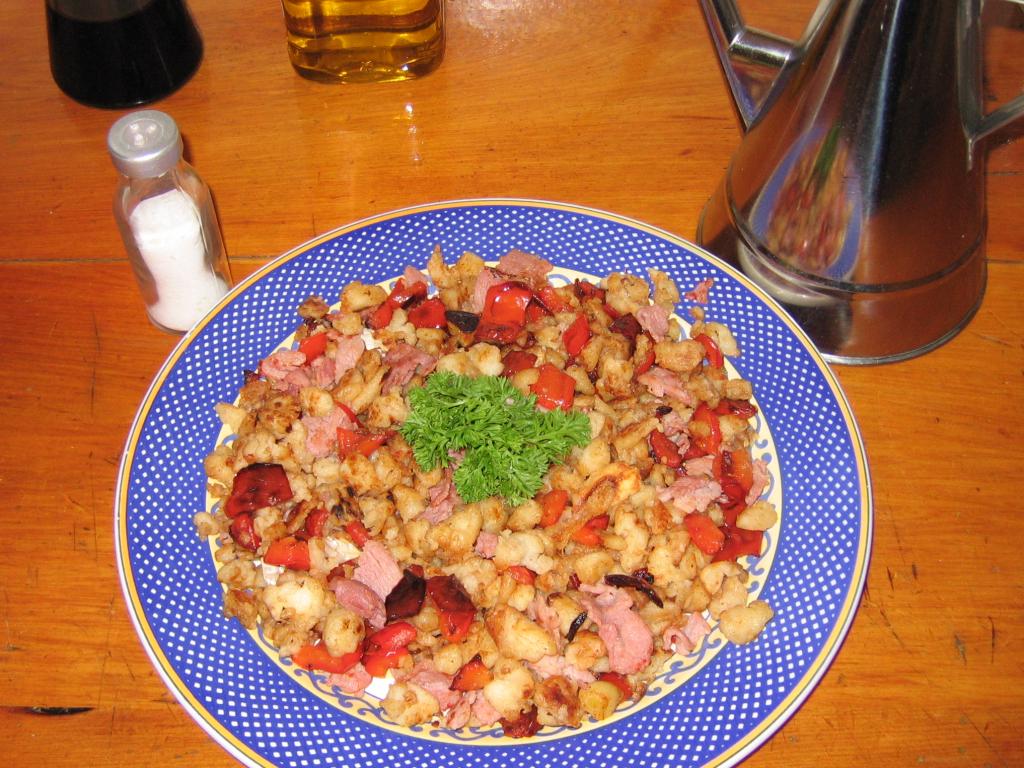
At this point, I add all the ingredients I had fried before, and mix it and fry it for about 10 more minutes. And we’re ready to eat!
Serving suggestion.
This is a high-calorie dish, so that plate up there should actually be enough for several people (I mean, consider just how much stuff we’ve put in there, including a big loaf of bread). If now you add grapes, it’ll combine greatly.
They work cold, too. And you can even make it a sweet dish, with milk and chocolate instead of garlic.
Simplicity is a great thing. All three people who may have been checking my page have probably noticed that, while tasty, the recipes I post aren’t exactly complicated. I like simple cooking, specially when it’s really really tasty. Not to put down more creative foods – specially from better cooks than myself -, but good simple recipes are very satisfying.
So, in that spirit, one of the simplest recipes I know, and one of the most popular and successful when I cook it for friends. Onion Tortilla, as in Spanish Tortilla – omelette -, and not the mexican one for making fajitas. What will we need?
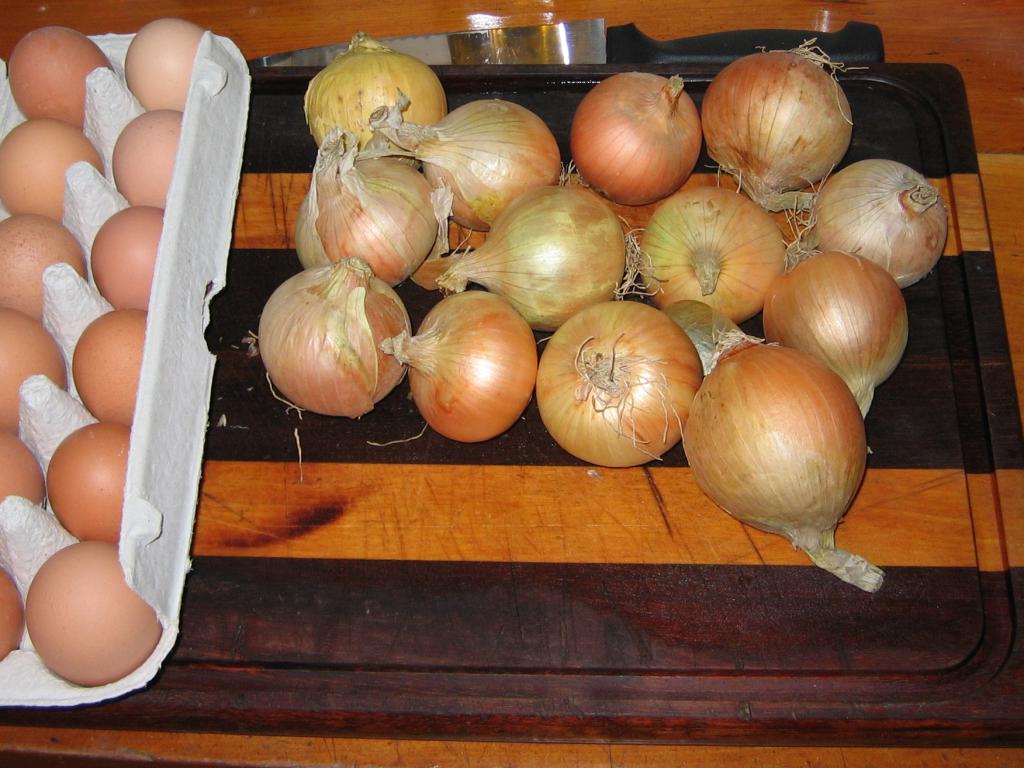
Ingredients for the Onion Tortilla
What do we need?
Onions.
Eggs.
Salt.
Cooking oil.
That’s it.
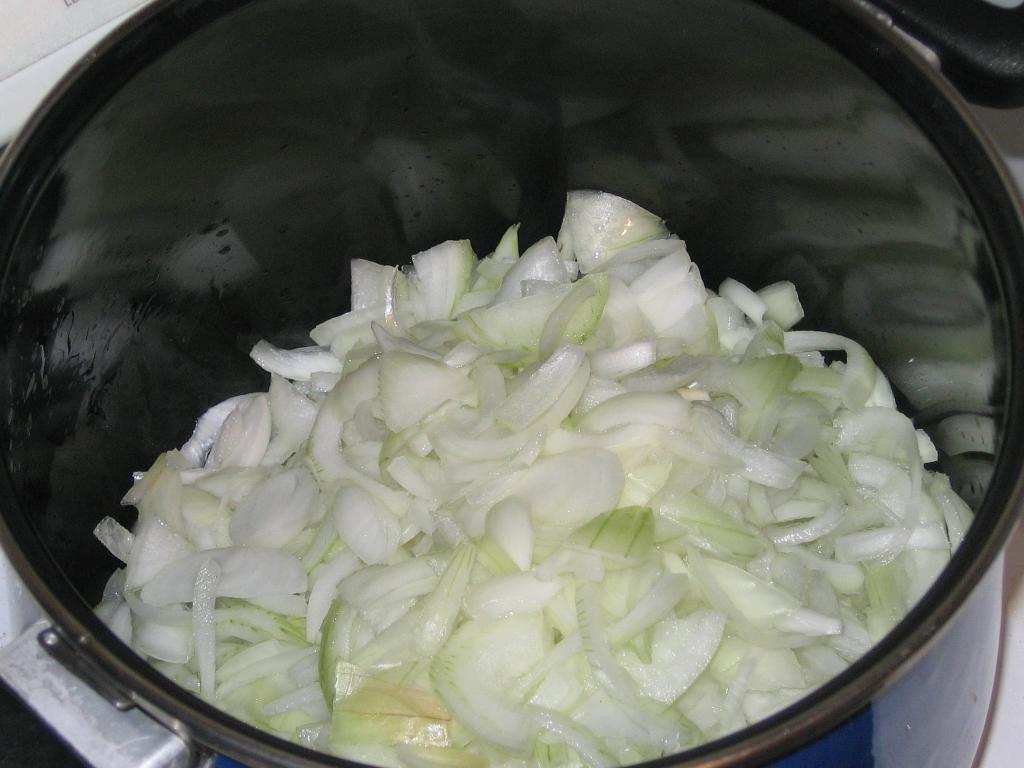
No, seriously, that’s it. And what we don’t have in exciting ingredients, we make up in cooking! Chop up the onions in the following way: Remove the roots and top, cut across the onion – if the onion was the world, the roots would be Antarctica and you want to cut across the Equator. Then just slice the halves top to bottom. This is because the onion cells run lengthwise from the roots to the top, so slicing this way maximizes the cell surface you expose to the heat. You get more juices out, and the result is a better cooking!
Onions in the pot
Now, put a bit of oil in a deep pot – two or three spoonfuls -, medium heat, and in the onions go. Now, pay attention, you’re going to cook them slowly. And I mean it, slowly. You start at medium heat, then lower it to low. To know how low I mean, use your ear. You want not the typical sizzle of frying, but almost like the bubbling of boiling.
At first you have to stir and stir constantly, because you don’t want the onions at the bottom to burn while the ones at the top stay raw. Soon, they’ll start softening up and losing juices (see? Cutting lengthwise following my instructions pays off!) At this point you still want to stir, but doesn’t have to be constant. Cover the pot with a lid when not stirring. This is when you can lower the heat to the point you want it, with all the juice the noise will be more descriptive.
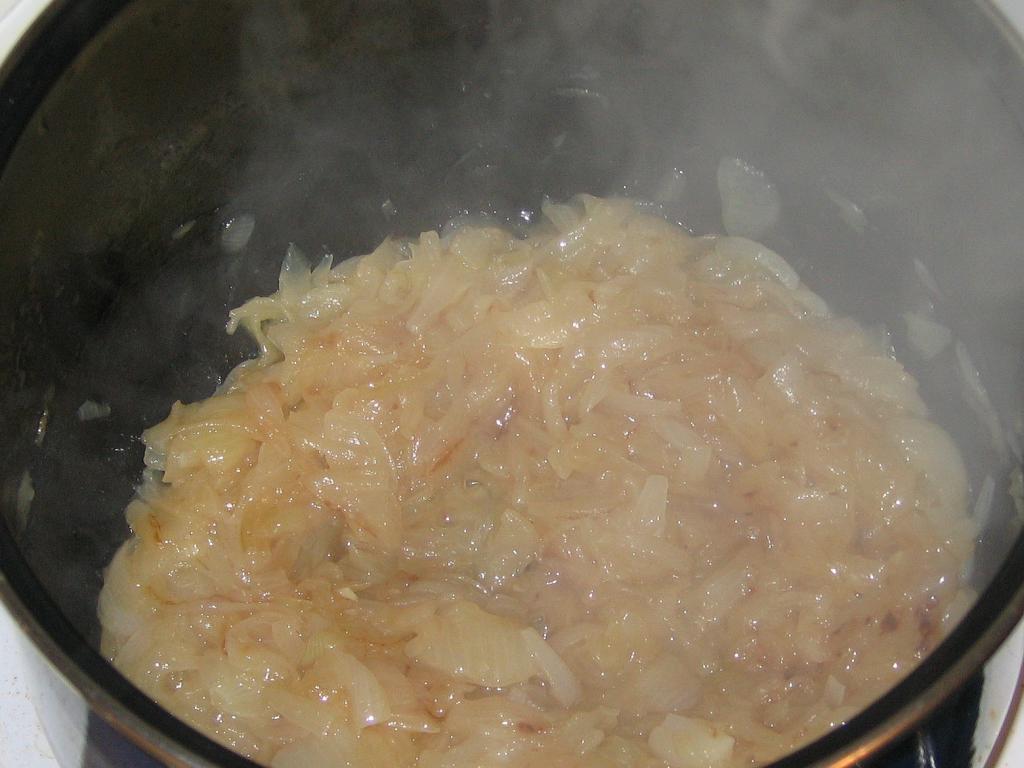
Keep stirring until the juices are mostly gone – we’re talking between half an hour and an hour here , or more if you have more onions -, you’ll be down to frying again. Keep the heat low, and stir more often, because at this point the onions may burn, and we don’t want that! You’ll be ready when your onions look like this.
Fried onions ready.
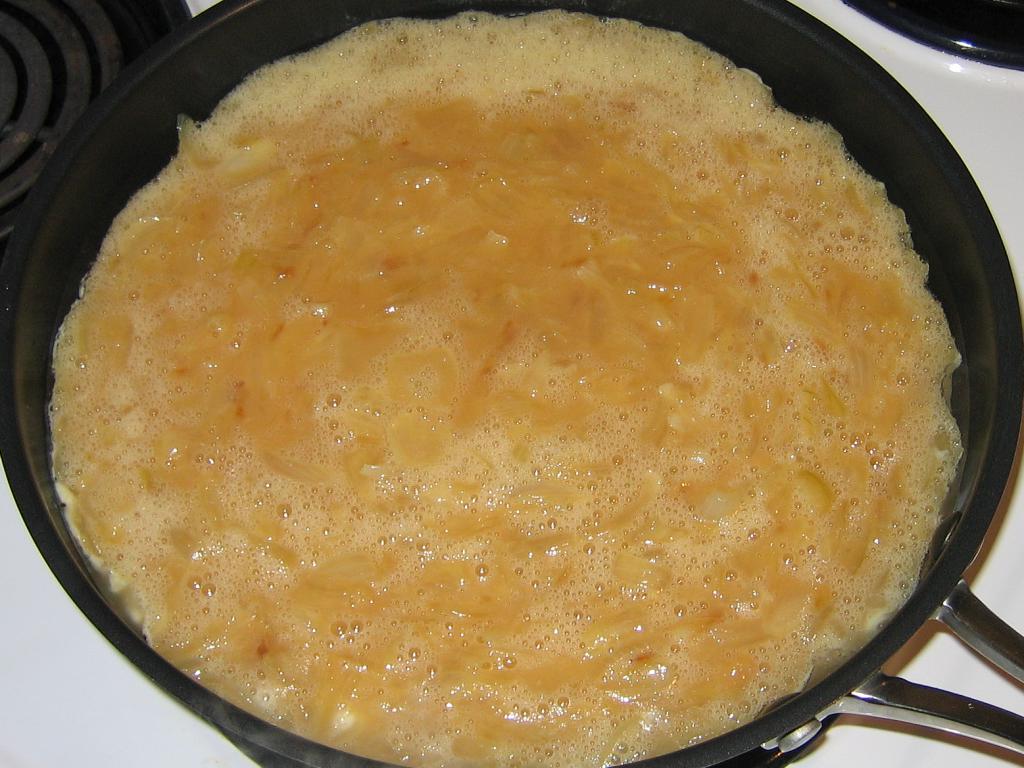
Don’t overdo it, the onions are nice and soft and slightly brown, but not crunchy or burned. Now, get them on a strainer and drain all the oil and juice left. After they are drained, you mix them with enough beaten eggs (in my example, I used about 2 kg of onions and 6 eggs), add some salt if you want, then into a pan with a little oil and heated enough.
Tortilla in the pan!
Now, to cook the tortilla, I recommend the following procedure. First off, you have heated the pan and a bit of oil – good heat this time. When you add the egg/onion mix, start by pushing the egg to the center from the bottom, and flip the bottom of the center so that it doesn’t burn. You want to solidify the egg a bit at first. After that, let it sit a bit, and with a plate, flip it!
Flip me!
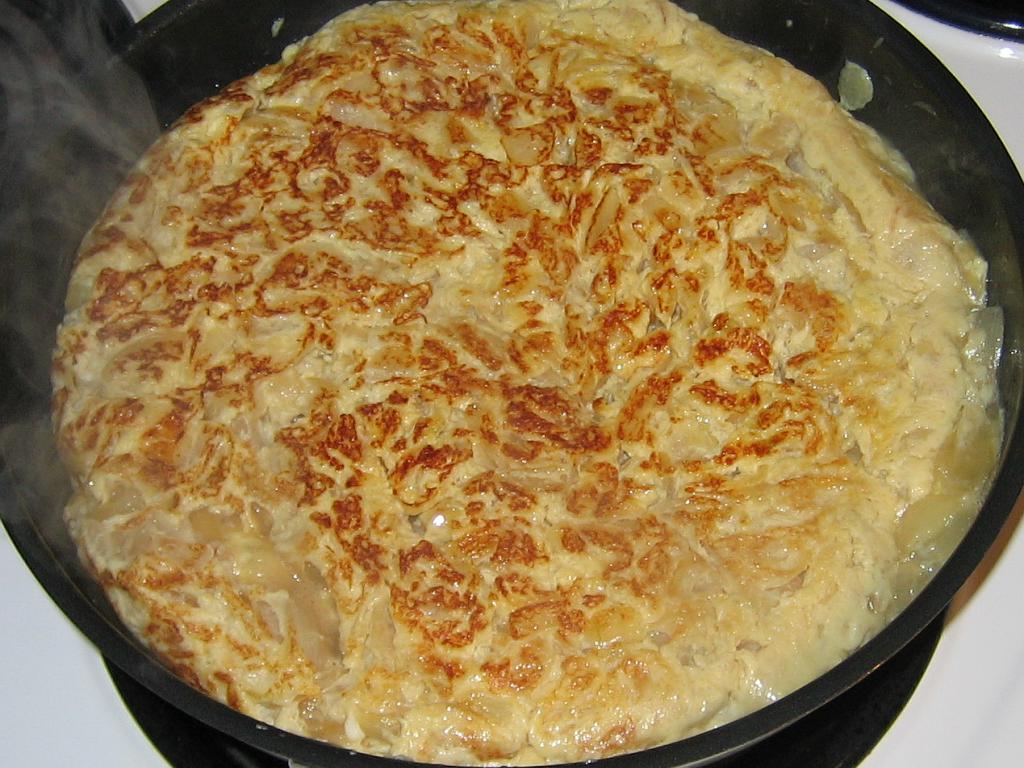
So flip it! And flip it, and flip it, and flip it again. The more you flip it, the better, because that way you get the whole tortilla to heat up, and the inside cooks properly without burning the outside. Flipping often improves the tortilla! Also, give the pan a circular motion so that the egg won’t stick. Even with a teflon non-sticky pan this helps.
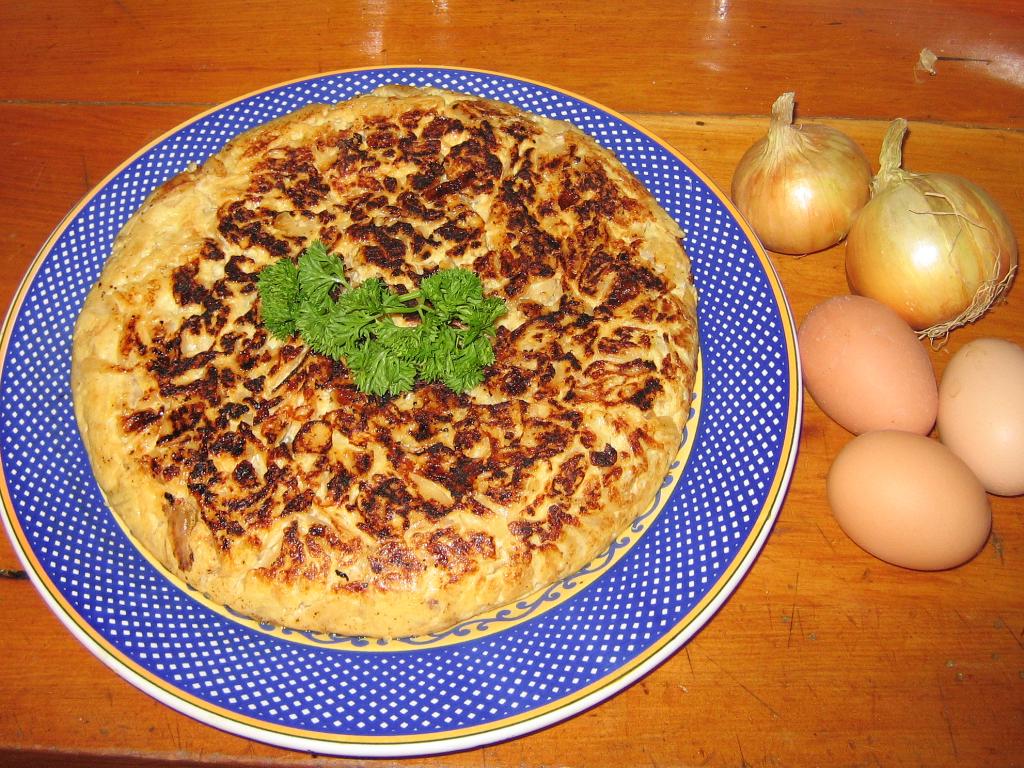
The result? A beautiful, and surprisingly, impressively tasty Tortilla! Seriously, this is delicious, just a lot of work.
Ready to be served.
Let it cool a little before serving, so that the egg will set well. Goes well with just about anything!
So! It’s time for the non-vegetarian entry! The stuffed meatroll, a delicious dish my mom taught me, and a heavy yet awesome dish. The one I am going to make is “junior-sized.” It is advisable that, if you have more people to feed, you make a bigger one. Much bigger one (you’ll see, this dish is easy to scale).
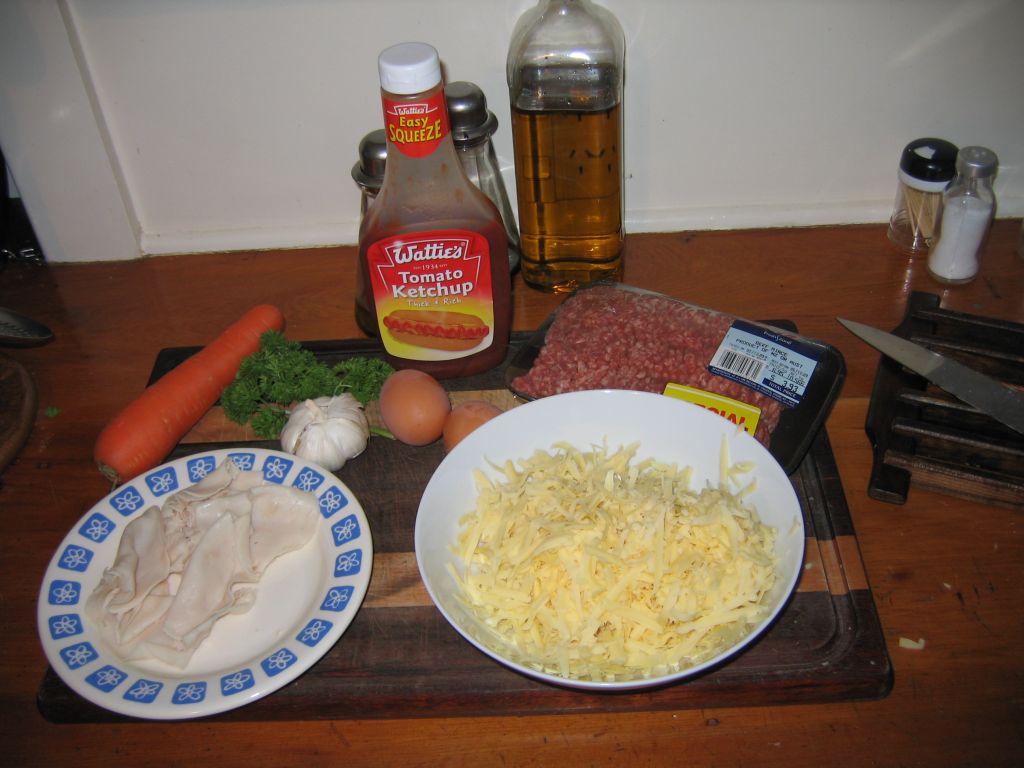
So, to start with, the usual picture of the ingredients!
Stuffed meatroll ingredients
If you are wondering:
Beef mince.
Eggs.
Garlic.
Fresh parsley.
Ketchup – or other tomato sauce.
Grated cheese.
Mustard. Not shown because I didn’t have any, but it really adds a wonderful zing to the meat.
For the stuffing:
More cheese.
Some deli meat (typically shaved ham, turkey or chicken works too)
Carrot(s).
Eggs.
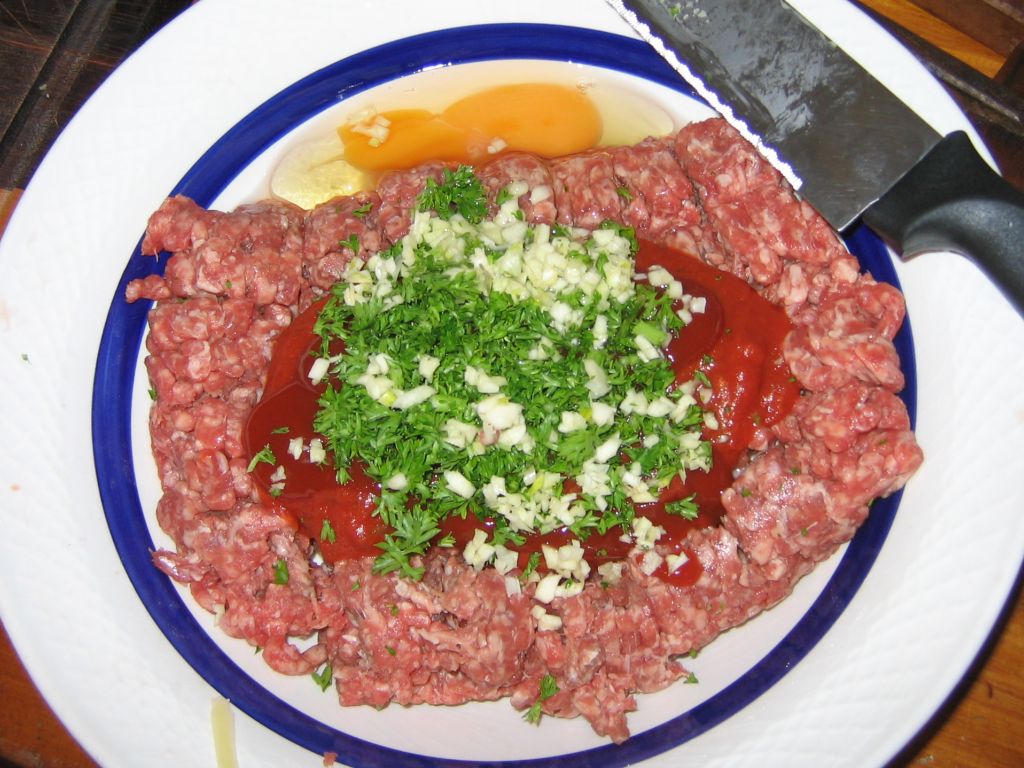
First step! You want to mix the meat with the tomato sauce/ketchup, finely chopped garlic (I put two cloves for that much meat), parsley, mustard, and one egg (or more if you have more meat). Be generous, and don’t worry if the resulting mix looks a bit too “juicy” since we’ll fix that in a second.
Mince and mixing thingies.
After the mix is thoroughly mixed (don’t forget the mustard if you have it!), add a lot of grated cheese, and mix once more. We add the cheese at the end for a reason you’ll notice immediately: If your meat mix before the cheese was juicy, after mixing the cheese in it’ll be just perfect. Cheese solidifies the mix quite a bit, and if you had added it at the same time as everything else, you’d have run into trouble trying to make a homogeneous mix.
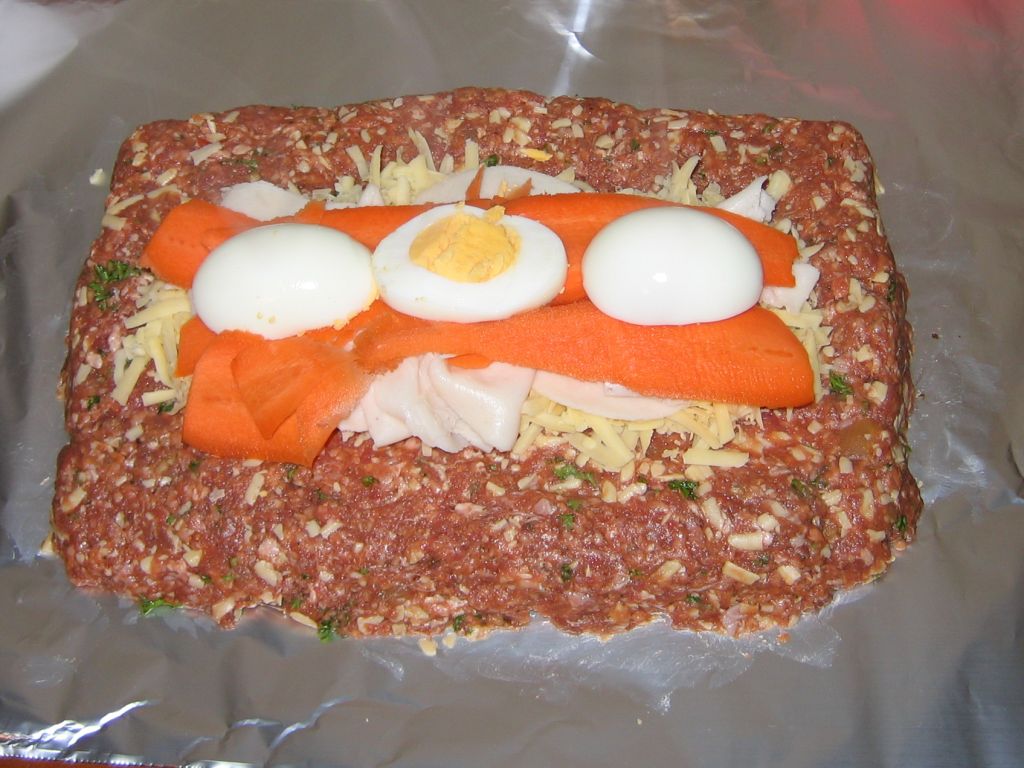
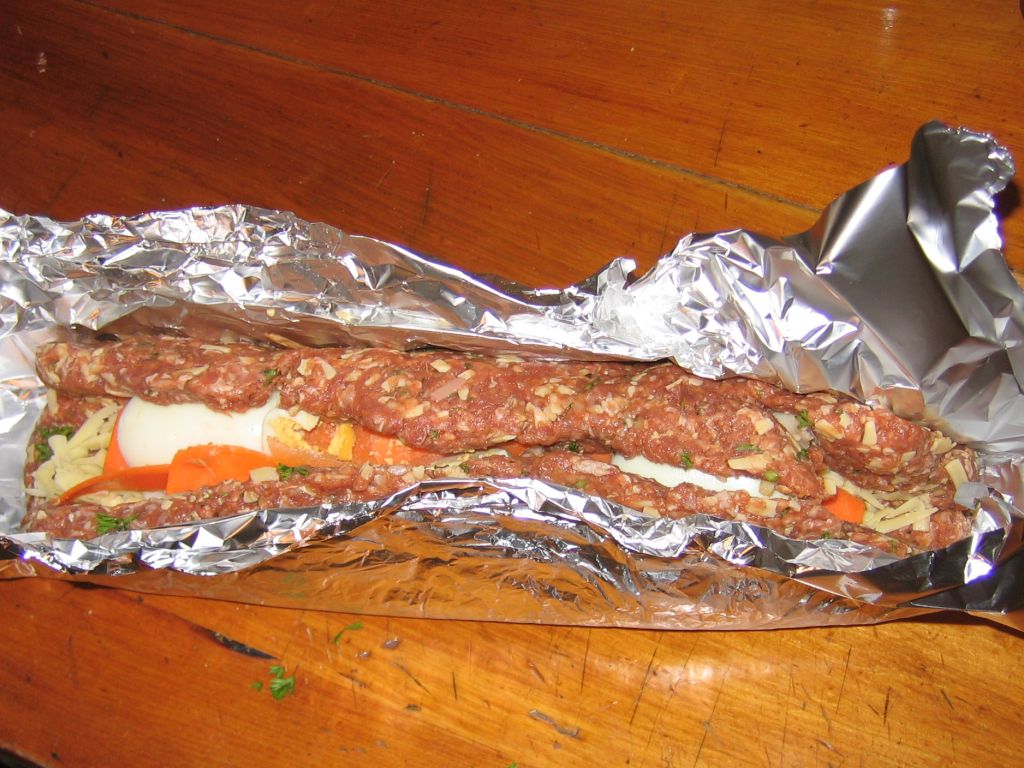
Once that is done, extend the meat on a piece of tinfoil and put the stuffing ingredients on top. The cheese (could be sliced, could be more of the grated cheese you used before), the deli, the carrots sliced thin and lengthwise, and one (or more) hard boiled eggs. You can be more creative with the stuffing too, you can add bacon – which works really well if you like porky stuff -, you can add capiscum or other “hard” vegetable, it’s really up to you!
Meat and stuffing
As I said before, this is a “junior sized” roll. Don’t hesitate to make the roll thicker, by making the meat extension wider. For that you will need an “extra-wide” roll or tinfoil, or to turn the tinfoil 90° and make a “stubbie” roll – shorter but thicker.
Now, the rolling part is the most delicate part of the operation. You want the roll to wrap around the stuffing well and to completely close over it. To aid yourself in this operation, don’t distribute the meat evenly over the foil. The layer of meat should be thinner in the center, where the stuffing is, and thicker on the edges. When you wrap the meat using the tinfoil, you’ll have to press more or less hard to make the meat come through, and finally, make doubly sure that the roll is properly closed everywhere, specially of course at the top. If you have to add more meat so that it closes, or redistribute the whole thing again, don’t hesitate to do it. If the roll doesn’t close properly, it won’t cook as well!
Closing the meatroll
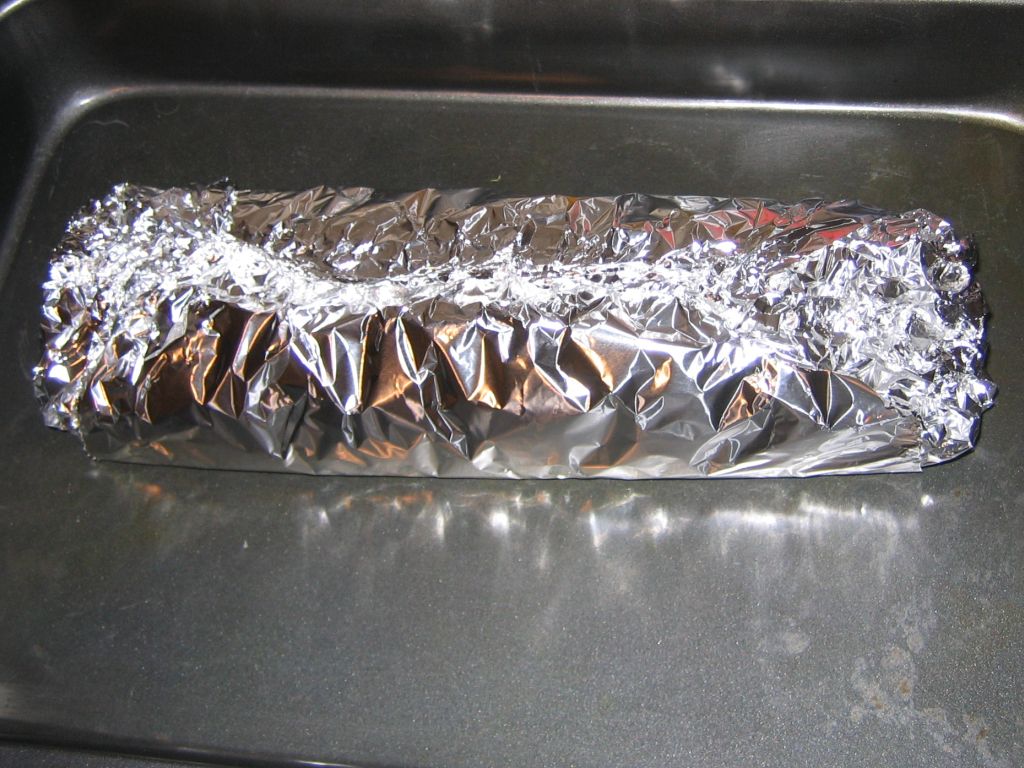
Finally, your roll is ready for the oven! 180-200°C pre-heated oven, and in we go!
Wrapped meatroll
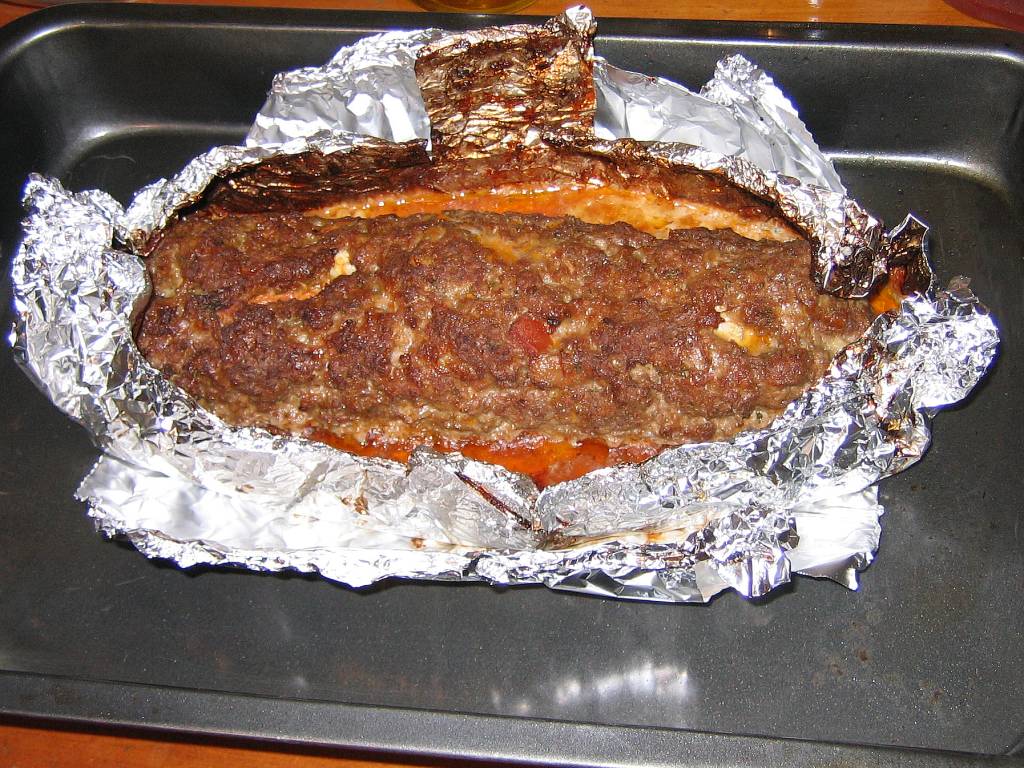
You want to let it cook for about 20-30 minutes (varies with the over, I left mine for 20 minutes), then bring it out and open the tinfoil. With the tinfoil open, lower the oven heat a bit, and put the meatroll in again for another 20-30 minutes (again, I used 20 minutes for my oven). Times will depend greatly on the oven you use, mine is a rather potent fan baking oven, so things cook fast. Leave it more time if you want, it should be juicy enough not to go dry!
Opening the tinfoil
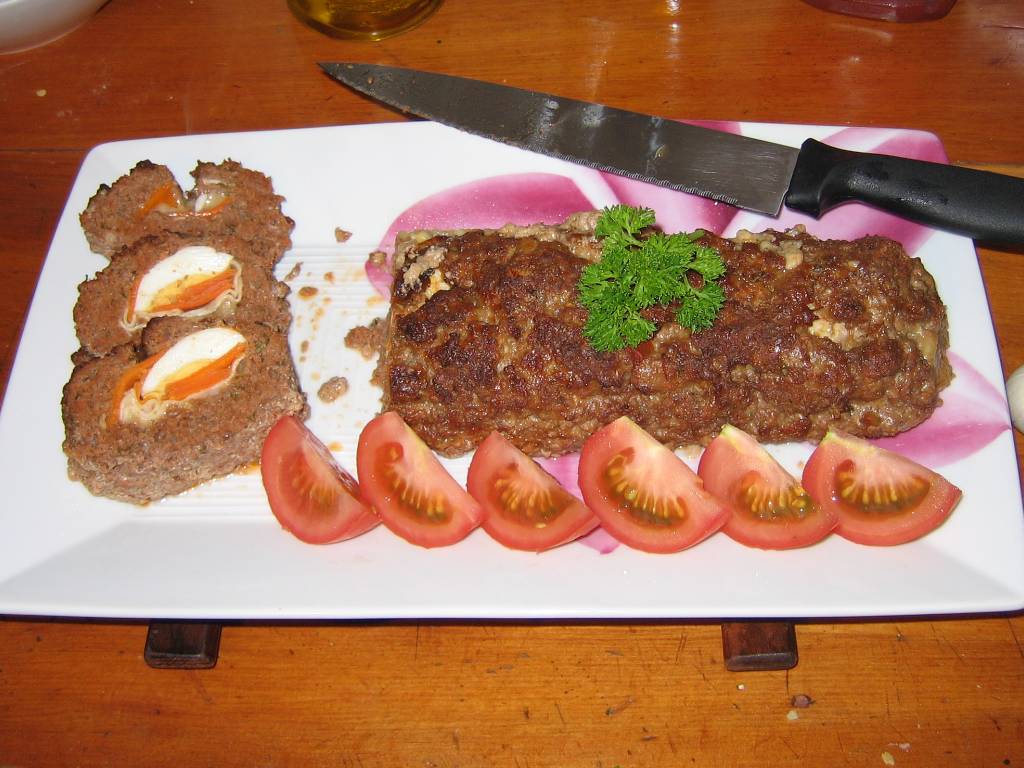
And it’s ready! Be careful when taking it out of the wrap. You’ll see that a lot of fat (mostly from the cheese) has come out, which is a good thing. Serve hot or cold, slice it up, make lots of it and freeze the slices in individual portions if you have too much. It freezes and de-freezes well.
Serving the Meatroll
As you can imagine, this isn’t exactly a light meal. Put something light like a salad or some steamed vegetables to go with it.
So! Quite a few days since I posted anything. Well, that’s what happens when one is busy, has a stash of frozen goodies prepared for just such occasions, and spends afternoons in places such as Himatangi beach (with pics to follow – once I find a decent gallery software I can run on this server!). But! Eventually one cannot live off the reserves forever, and has to go to the market to buy things. Which brings me to the following recipe.
Pisto. A traditional Spanish dish made with vegetables from the nearest vegetable garden, a marvelous dish for the summer days. As I go along, you may recognize the dish. Ask a French, and he’ll claim this is actually a “ratatouille”. Ask an italian, and he’ll tell you this is a “ciambotta di magro di verdure”. And so on. That’s because we are all, basically, from the same Mediterranean region and, at the end of the day, we all eat the same! So, such a simple dish with “whatever is handy from the vegetable garden” is, unsurprisingly, easily found in a variety of places in a similar fashion.
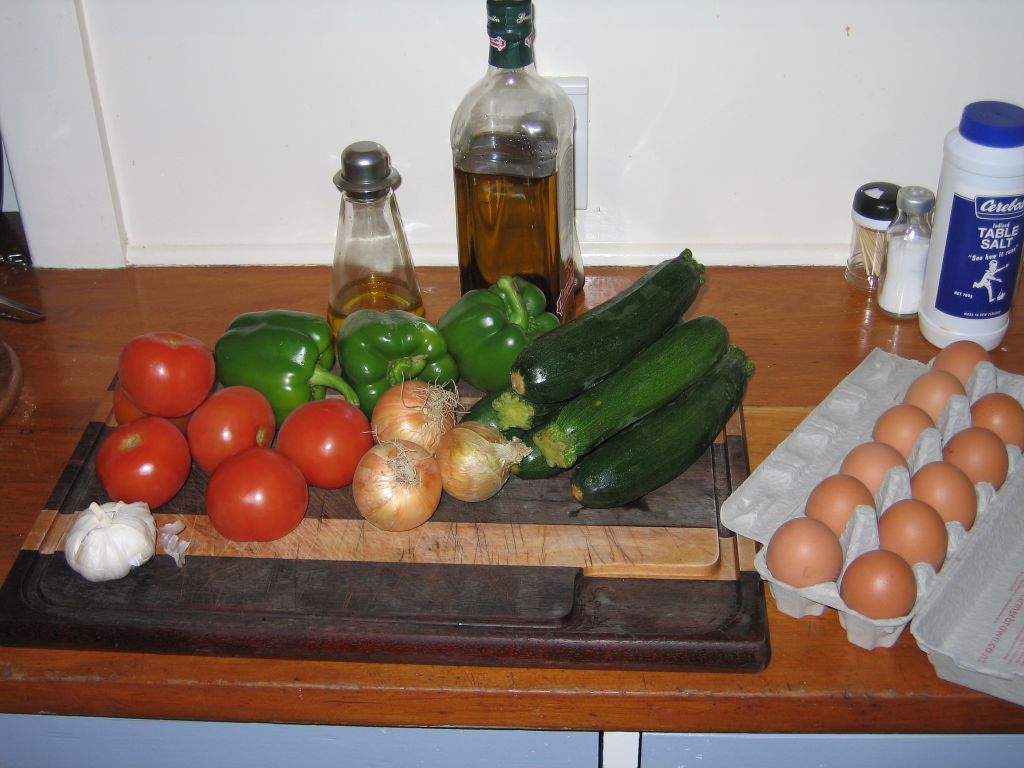
Let us begin, shall we? First, grab all of this stuff:
Ingredients for Pisto
The text-only version:
Tomatoes.
Green peppers, paprika, capiscums, whatever you call them.
Zucchini.
Onions.
Garlic.
Some olive oil.
Eggs.
Anything else that cooks in a similar fashion that you may have handy in your vegetable garden!
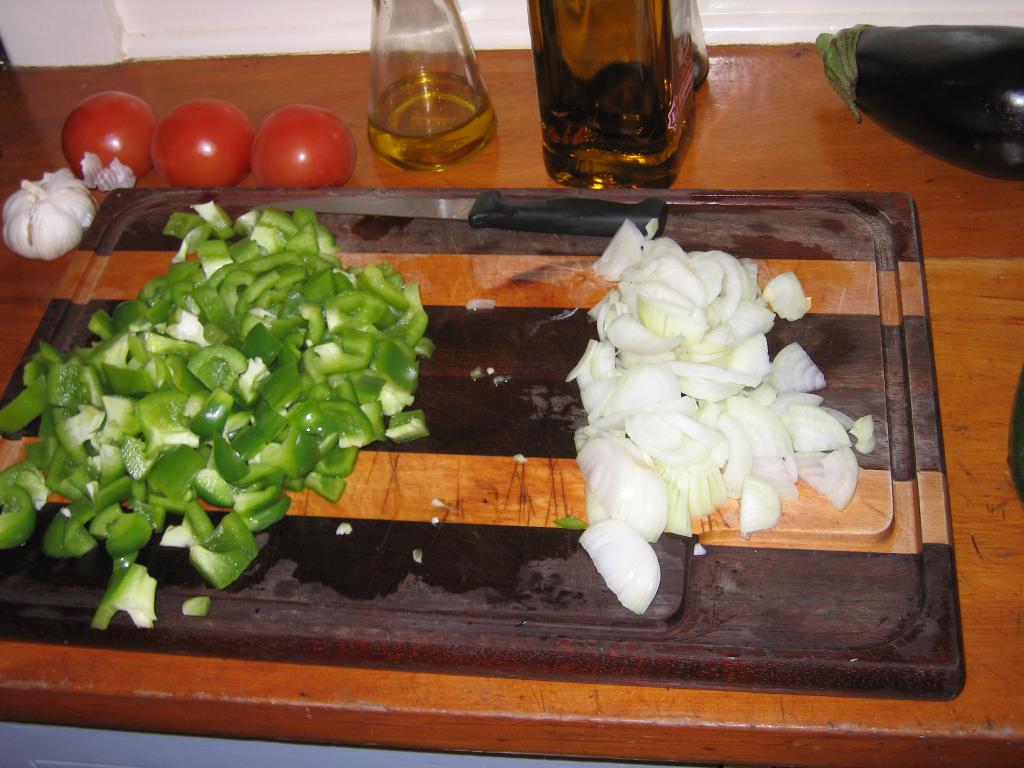
So, start by chopping the onion and whatever vegetables take the longest to cook.
Chopped onions and green peppers
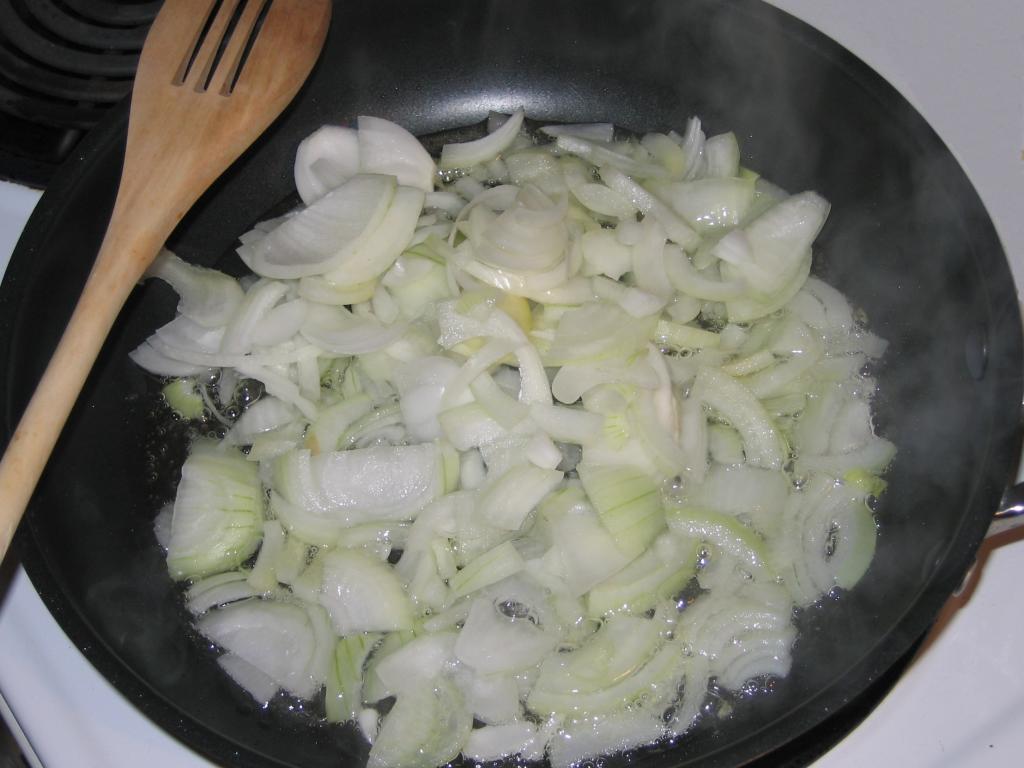
Then add some oil in adeep frying pan or a pot (best if it’s non-sticky), put it on medium-low heat, and start by frying the onion and the garlic. While it fries slowly, get chopping the rest of the stuff.
Frying onion
As you can see, the chopping of the onions is a bit irregular, there are some rather large chunks in there. The reason is personal taste, I chopped one of the onions rather finely, so that it’ll mix well with the whole rest of the ingredients, and chopped others a bit more “chunky”, because I like chunky vegetables.
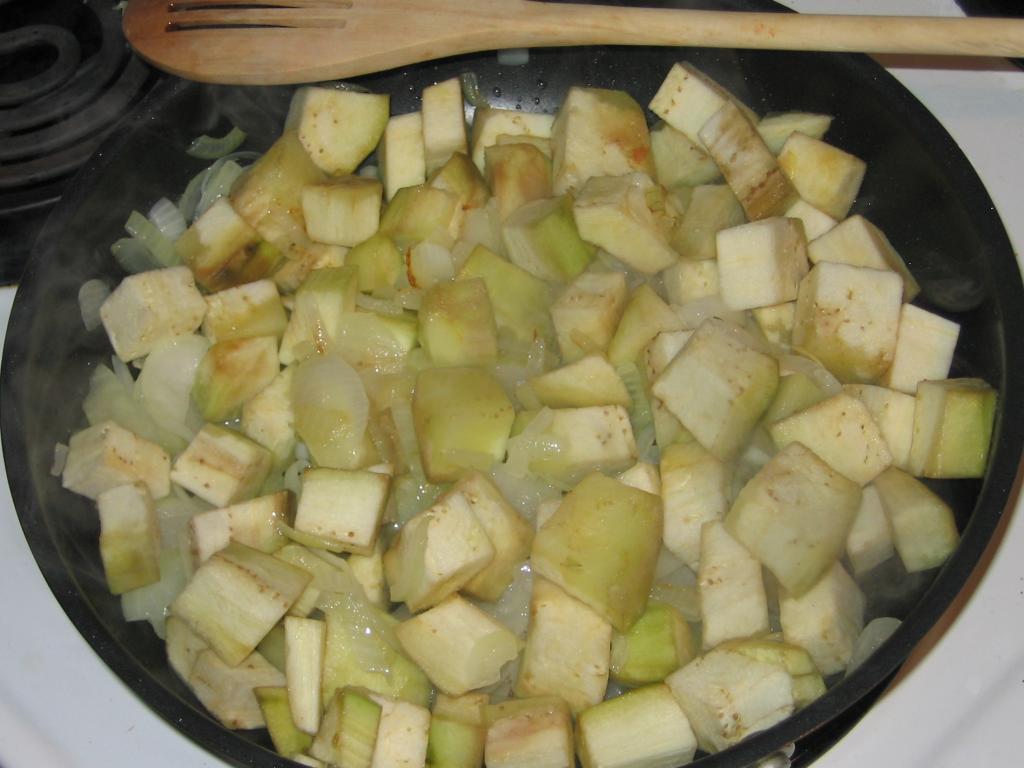
Eggplant added early
I had an eggplant kicking about. Now, if you bother to look in the net for recipes, you will see many “Eggplant stuffed with Pisto” ones, but to be honest, that seems like a lot of bother for little return. Rather, I peeled it, diced it, and added it straight to the pan. Much easier!
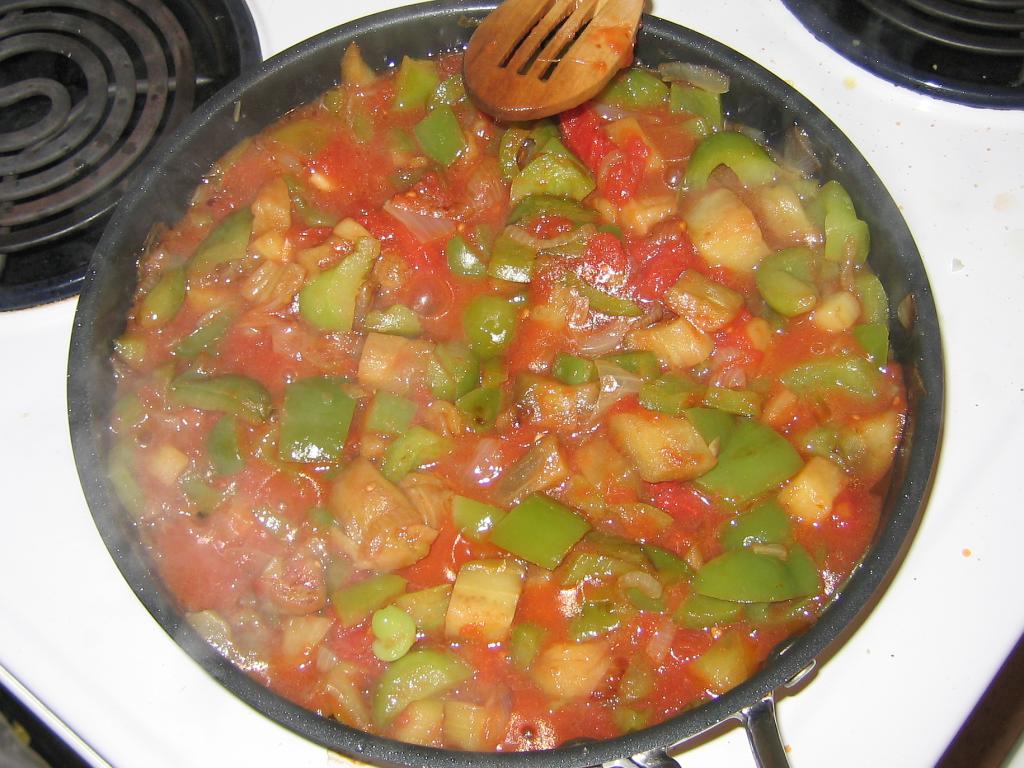
Peppers and tomato added
After some minutes, I added the green peppers, let them fry for a bit, and then added the tomatoes. At this point I raise the heat to exactly medium in my stove – check yours before being too hash!
You’ll notice that the tomato seems to be exceedingly juicy and red, that’s because I added, on top of the natural tomatoes, some tomato puree I had, leftover from the pasta I cooked yesterday. While good natural tomatoes are undoubly best, if you happen to be in the wrong season or the local tomatoes where you happen to live are bad (or expensive!), or you have some leftovers that you don’t want to throw away, don’t hesitate to use tinned diced or crushed tomatoes. The taste is slightly less good, but it works fine!
In the picture you probably noticed another wonderful thing about frying tomatoes: spillage! Bop, bop, bop, you’ll have little droplets of tomato all over the place. At this stage I usually cover the pan, let the whole thing simmer and cook. It protects the stove from spillage, and makes sure that the whole thing cooks, not just burns at the bottom while leaving the top raw. Stir every so often too!
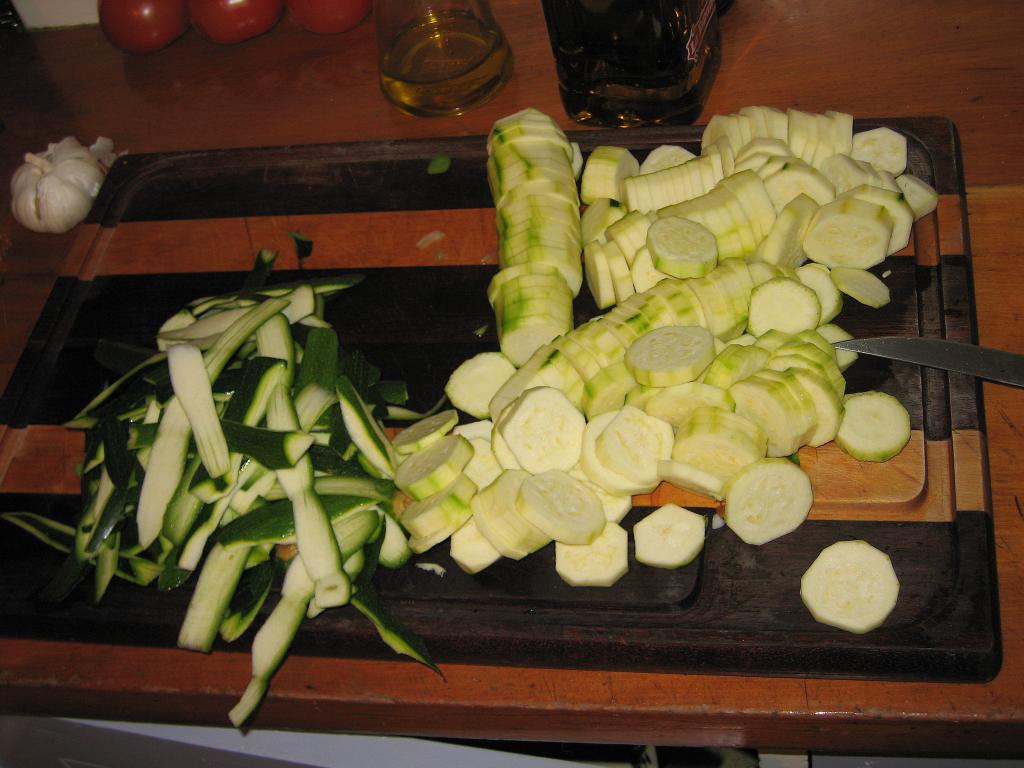
Sliced Zucchini
In the meantime, I have a whole bunch of zucchini I had to slice. These particular ones happen to have a rather tough skin, so I peeled them before adding them to the mix. It’s always better – and more nutricious – if you don’t do this, but there you go. If the zucchini is of the “much bigger” variety, dice it instead of slicing it like I did. Give the tomato and peppers 10-15 minutes, then add the zucchini.
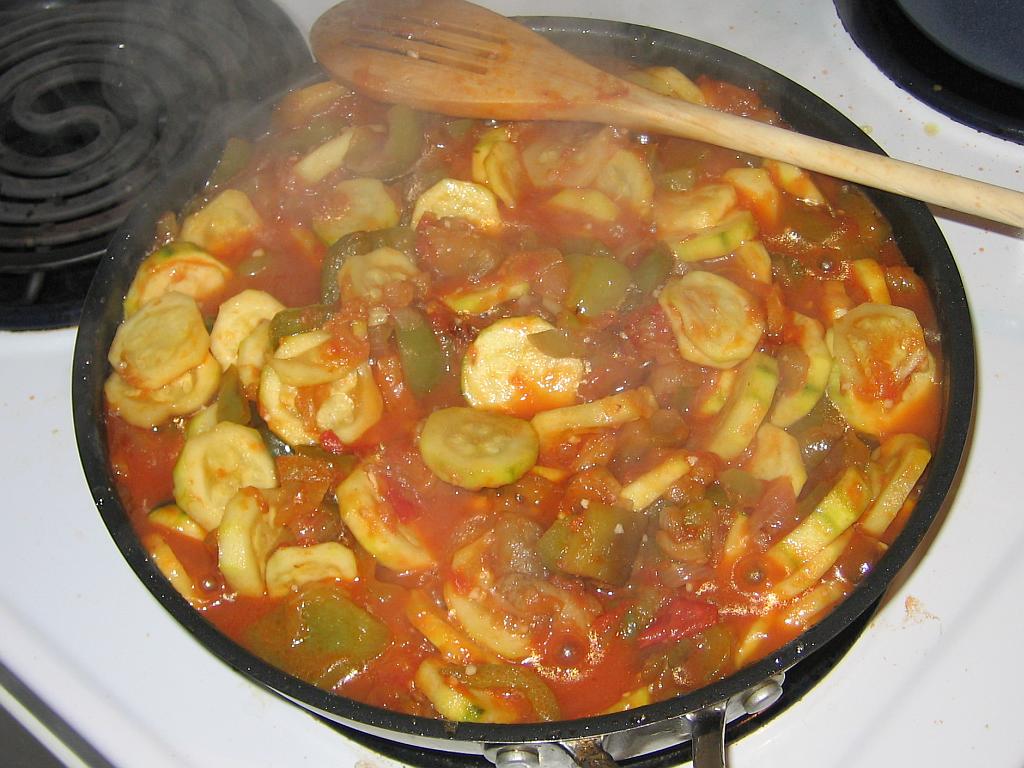
Last ingredient added!
This is the perfect chance to correct the salt! That is, add some salt if you want to. Now, we want to cover it for a while, stir every so often, then when the vegetables start to go soft, remove the cover completely and cook it to reduce the juices. When will it be ready? When the vegetables are soft, and the juicy look of the picture above changes into something like the one below:
That Pisto is ready!
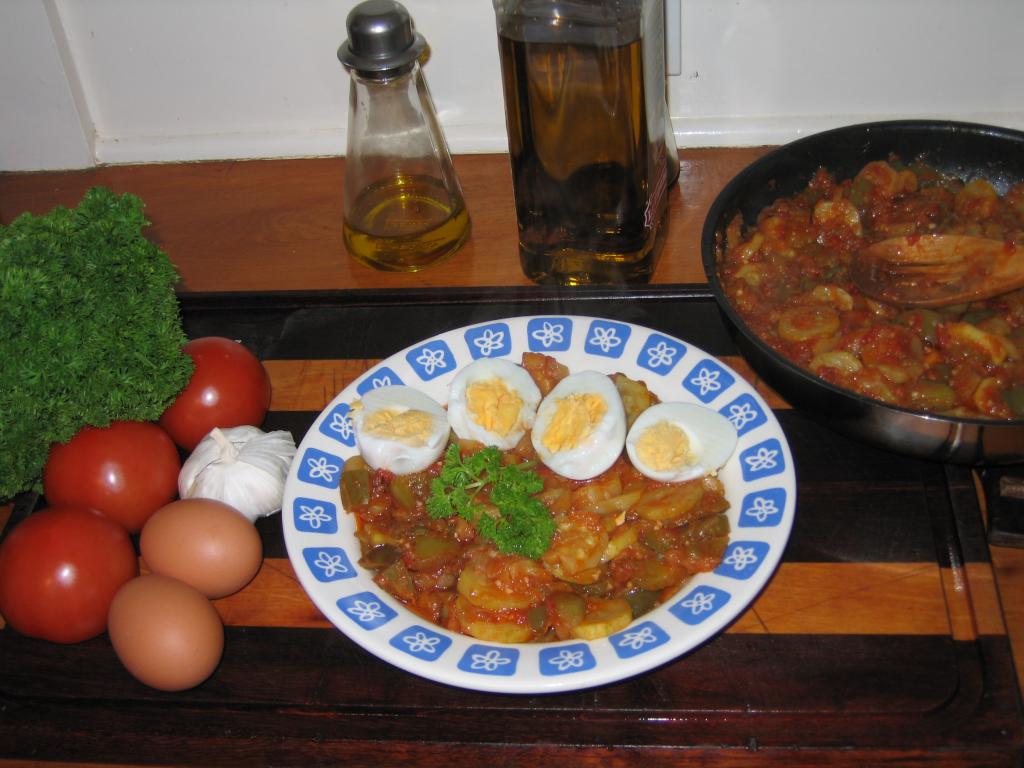
So, that’s ready to serve! The traditional way is to serve a portion topped with a fried egg or two. I’m not a fan of fried eggs, mostly it’s the runny yoke thing that puts me off, but I like eggs otherwise. In my case, I added a couple of hard boiled eggs.
A tasty plate of Pisto
Other things that can be added are croutons, or poached eggs. Pisto is a flexible dish, you can put it inside a puff pastry and make a wonderful treat that way, and it freezes well – do as I did, cook a big pot, then freeze individual portions for later use. You won’t regret it!
At this rate it’ll look like I’m a vegetarian or something. Next entry will be a more “meaty” one, enjoy your Pisto!
Of course, that’s a terrible translation of the original Spanish name, “patatas a la importancia” (roughly, “potatoes, the important way” or somesuch). But sounds so much better!
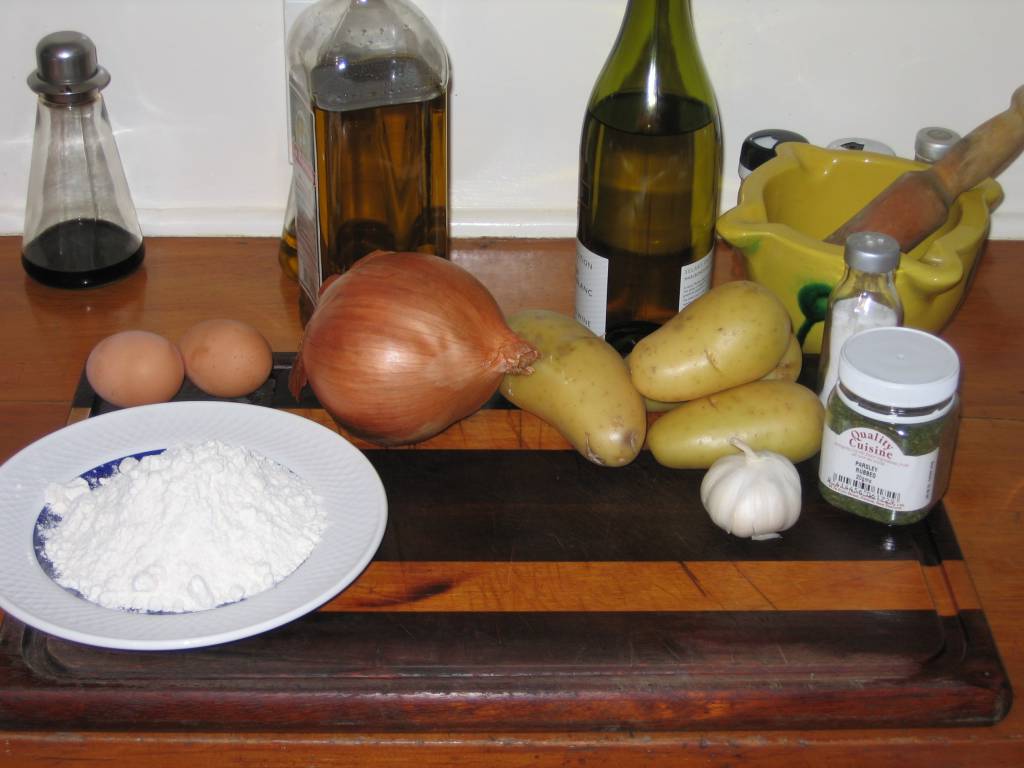
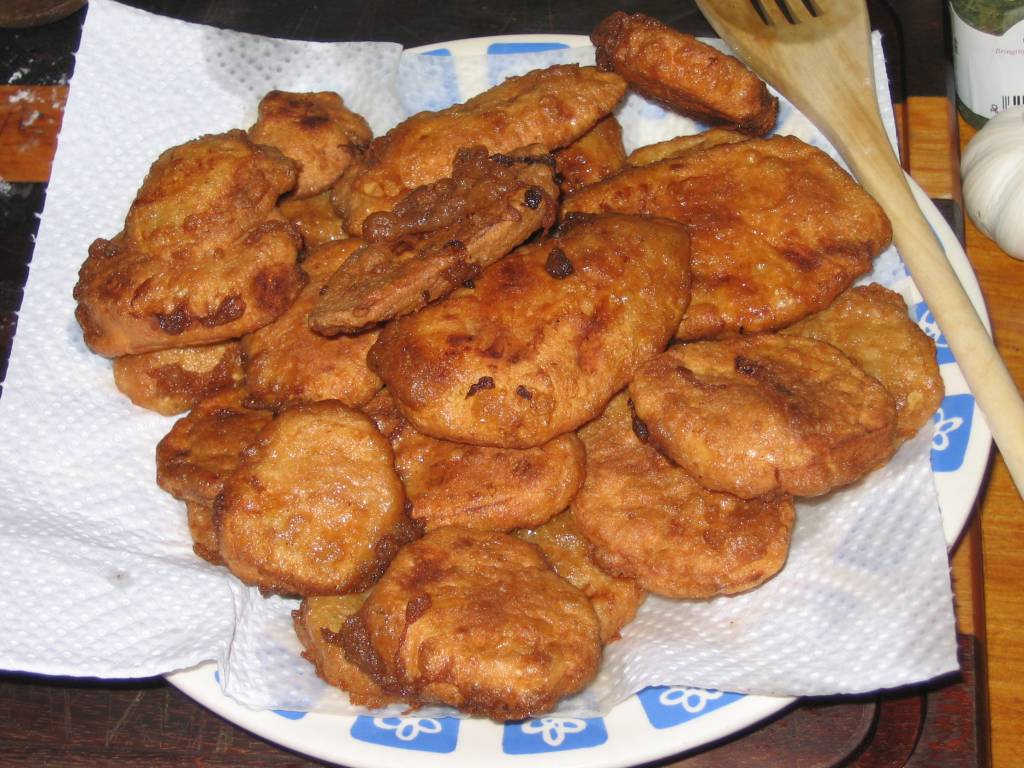
I love potatoes. I love fried potatoes. I specifically love fried potatoes the way my mom does them which, to be honest, doesn’t seem like a big deal when you see them, but she just has the touch to make them infinitely tasty. However, other kinds of potatoes work too, and here’s one of them. It’s not too complicated, it’s original, it’s cheap, it’s quite a dish, and turns the humble potatoe into the queen of the table – for a short while, before it’s savagely devoured. Say, imagine that you have this:
Potatoes with self-importance, ingredients
For the text-only record:
Some potatoes.
An onion.
A couple of eggs.
Garlic.
Parsley (fresh would be better, but I have a pot of dried rubbed parsley always handy).
Olive oil.
Some wine.
Flour.
So! The whole thing about these potatoes is to give them a wrap of batter, fry them, then make them into a stew. Sounds like a lot of torture for that poor potatoe, does it not? It’s not so bad, pay attention!
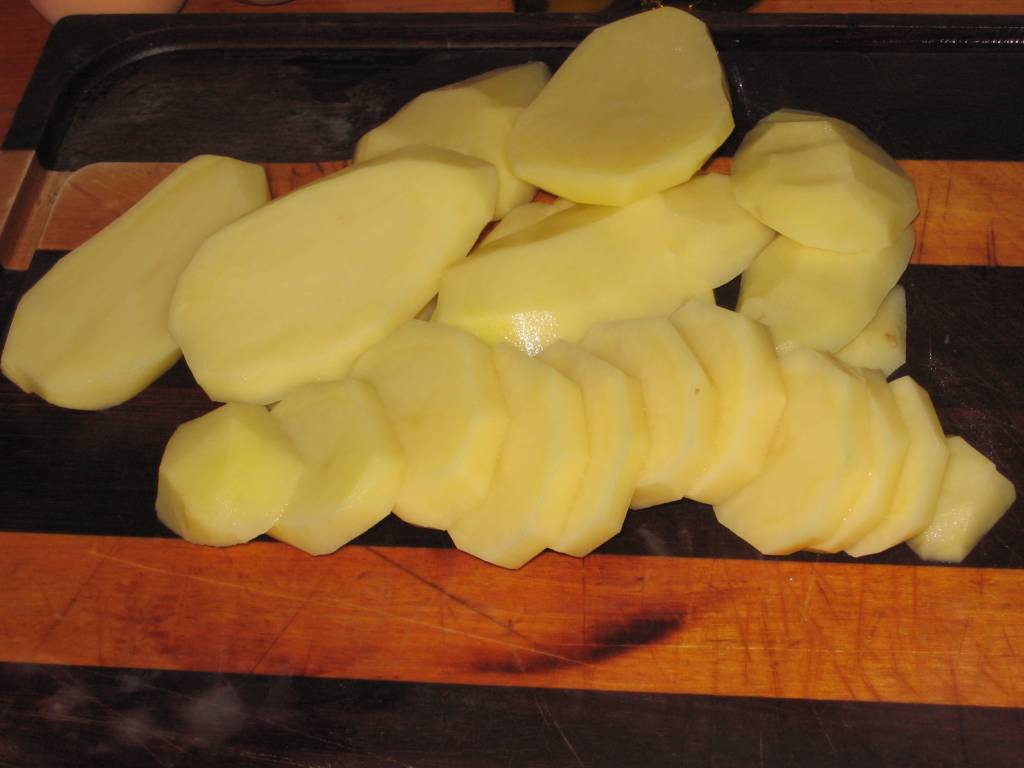
Sliced potatoes
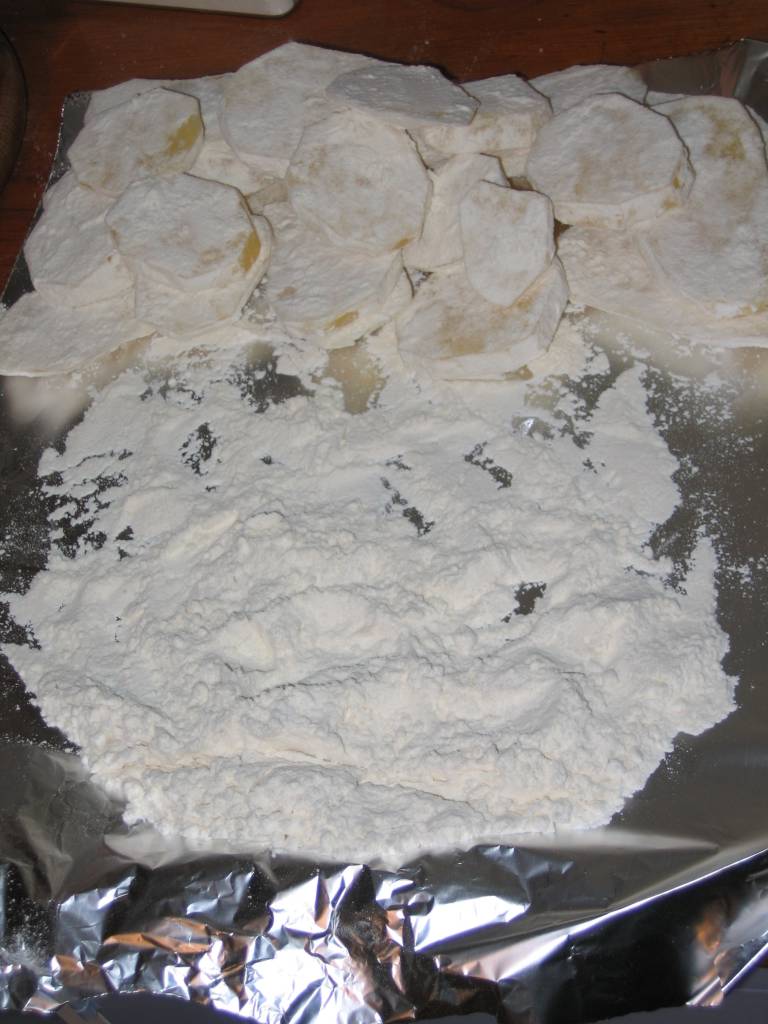
Peel and slice those potatoes. Slice them more or less thickly (everyone will suggest a different thickness, use your own imagination, and your own criteria – not all potatoes cook in the same time!). Don’t let them sit there for too long tho, as soon as they are sliced, while they’re fresh and moist, you want to pass them over the flour to give them a nice floury coat outside. Like this:
Floured potato slices
Now, grab a couple of eggs and beat them thoroughly. The more thorougly and “fluffy” they are, the better. If you are skilled enough at egg-beating (hi mom! Thanks for teaching me!), beat the whites first with the yokes to one side, and when they start looking fluffy, mix in the yokes. Fluffy is good! After they are beaten, you want to pass the floured potatoes through the egg so that they get a nice eggy coat. Do not underestimate the amount of egg a potato slice covered in flour can take, and make doubly sure they are thoroughly coated with egg! You don’t want any open spots with just flour, as the coat will fall apart easily later on if there’re holes.
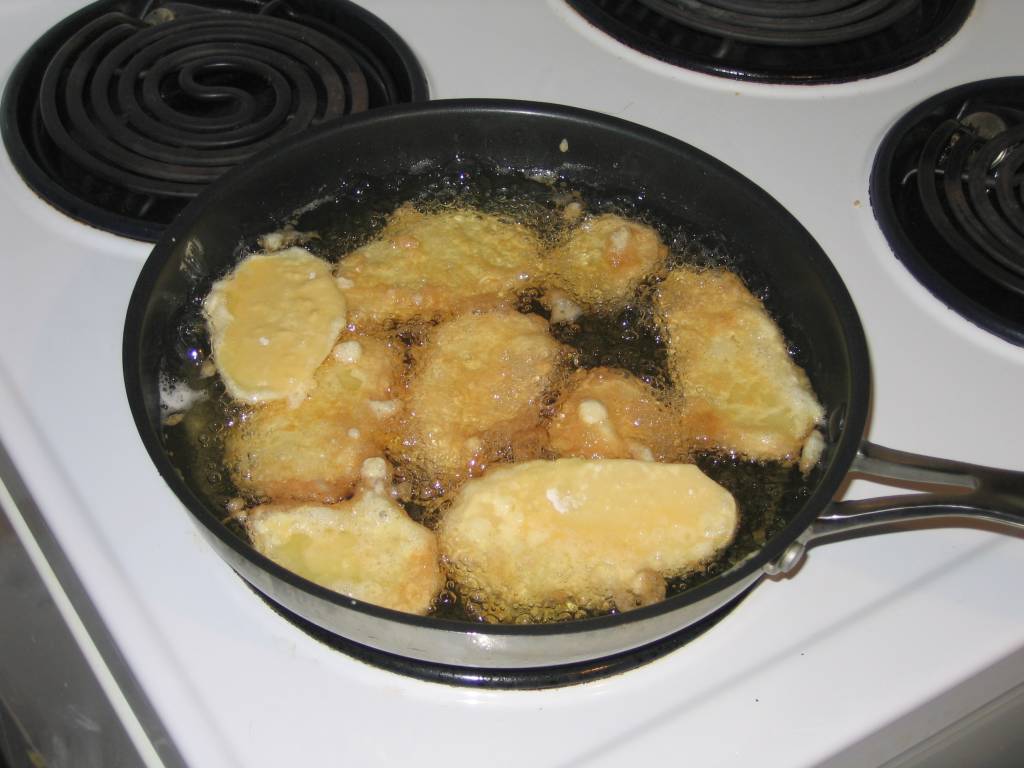
After this you want to fry them in abundant hot oil – I use sunflower, canola or corn would be good too. What I do is, after I have all the potatoes nicely floured, I put the frying pan with the oil on the stove, and when it’s hot enough I start passing the slices through egg and putting them directly in the pan. By the time you put the last slice in the pan, the first one will be ready to be flipped over.
Frying the battered potatoes
Take them out as they fry and put them on a separate plate, you will be saving them for later. If you want, you can put some absorbant paper on the plate to get rid of some of the fat.
Fried battered potatoes
Now, chop up the onion, and throw it in a deep pot with two or three spoonfuls of oil. Fry it slowly, and while it fries (stir often), put two or three cloves of garlic in a mortar with some salt, and crush it thoroughly. Add the parsley afterwards (you’re still stirring the onion, aren’t you? Just checking…), mix well, and when the onion is starting to get transparent and a bit soft, add the parsley-garlic mix. Stir a bit, add a spoonful of flour, stir some more, and quickly add a glass of water (so that the flour doesn’t burn).
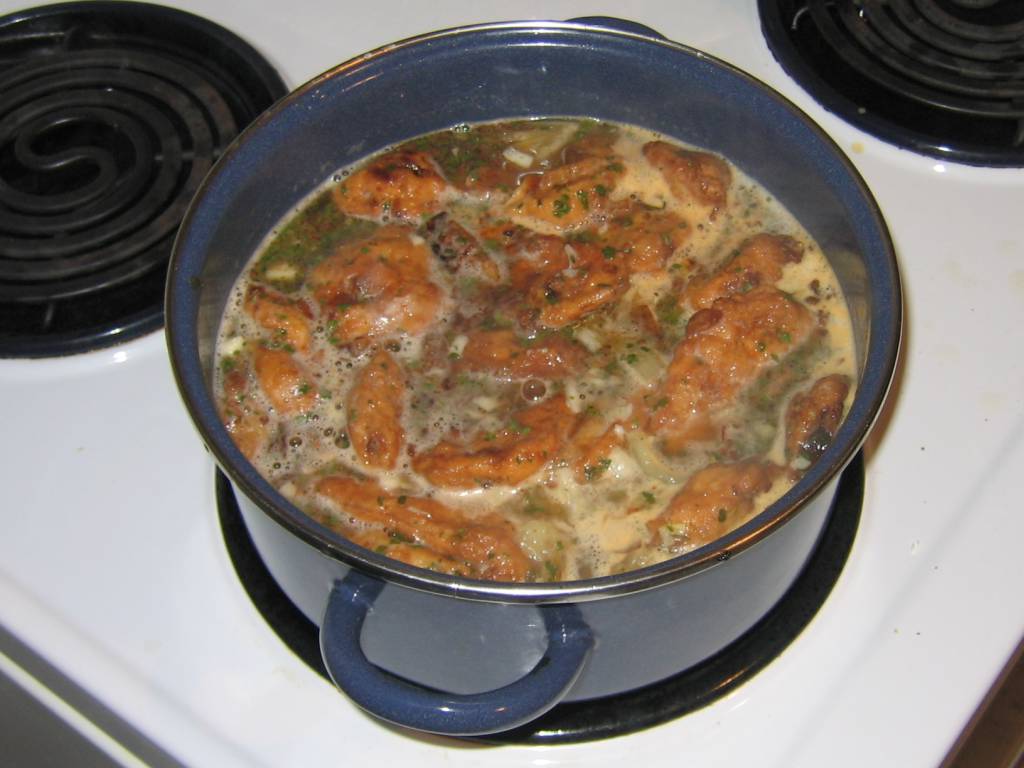
Put the potatoes in the pot, top up with another glass of water and a glass of wine – if you want. For the amount shown above I used 2 1/2 (admittedly not too big) glasses of water and 1 of wine. One thing some people recommend is to add a bit of saffron too, for taste and colour. In my opinion, that’s adding a silly extravagantly expensive element to what is a cheap and already tasty dish. I add a bit of paprika powder – different taste, nice colour. you can skip the saffron, the paprika, or the wine if you want to.
Potatoes ready for boiling
If you want some extra salt, this is your last chance! When the water starts boiling, put on med/low, cover (tip the lid a bit so that the water reduces a bit), then let it sit for about 20 minutes. If it looks too dry for your taste, add a bit more water during the 20 minutes.
You have some time to kill, go do the dishes. No, really, you have used 2 or 3 plates and the chopping board for this – at least -, as well as some tools. You have enough time, may as well get it out of the way!
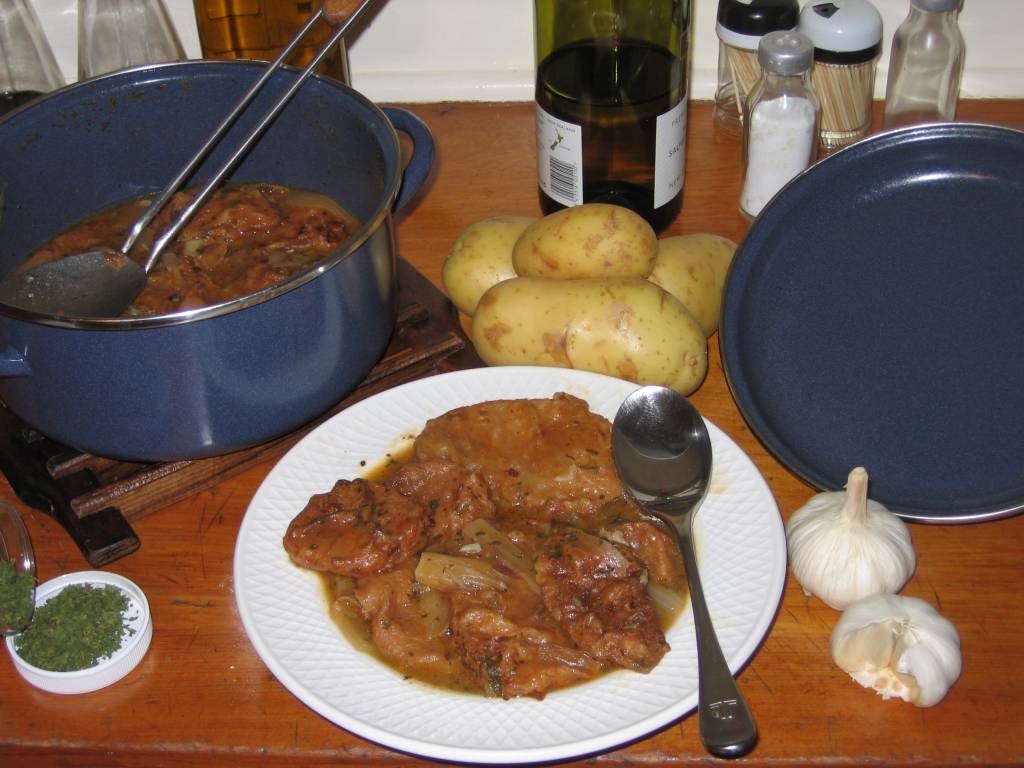
When the potatoes are soft, the dish is ready. You may need more (or less!) time depending on your local potato variety. You will notice that the sauce is quite thick – you added battered stuff and a spoonful of flour, what were you expecting? Serve with care, making sure the batter doesn’t come off. If it does too easily, you need to practice more with the flouring/egging step, that’s the key for a consistent and solid batter that will last through the whole cooking.
Tasty!
A simple dish with simple ingredients, and a wonderful treat to eat. This is by no means a light meal, it’s great in Winter to warm your belly. You can serve it straight from the pot you used to cook!
And I made enough to hav leftovers to take to the office tomorrow, as you can see.
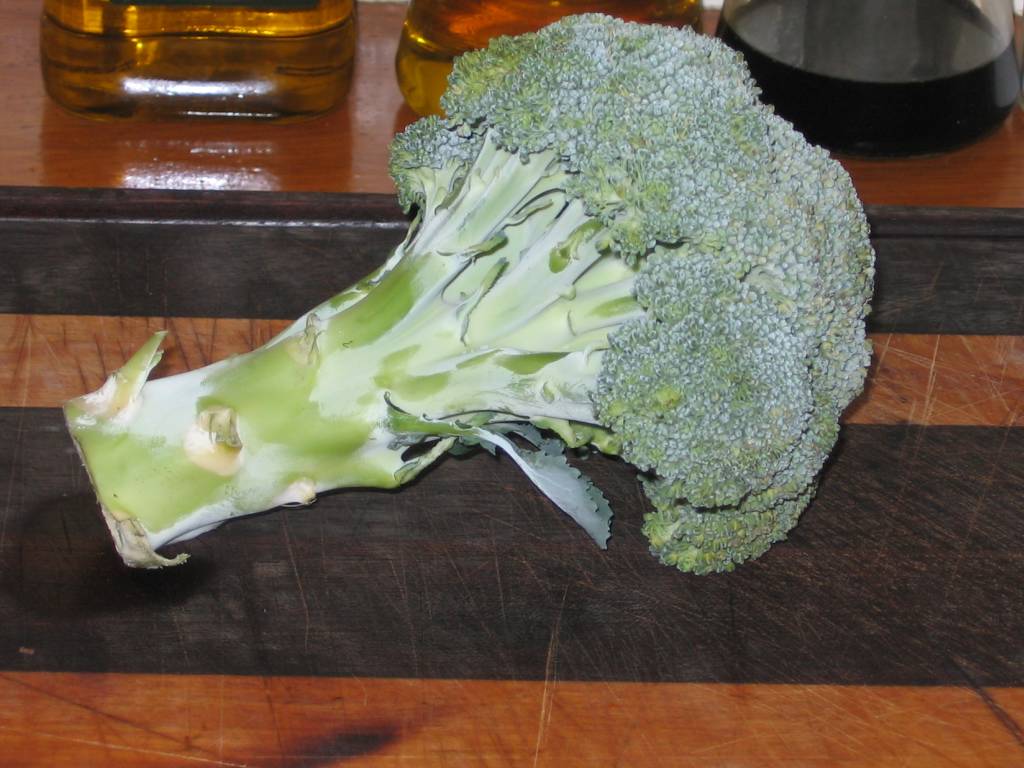
Say, imagine you have that piece of broccoli in your fridge. Now, for some reason, broccoli has a very bad reputation when it comes to tasty foods. Typically this refers to plain unadorned broccoli boiled or steamed, or somewhat dressed up broccoli… boiled or steamed, just with some extra sauce. It’s kind of silly really, when it’s so surprisingly easy to make broccoli taste good, with minimum effort too.
What you should do with that chunk of green stuff is:
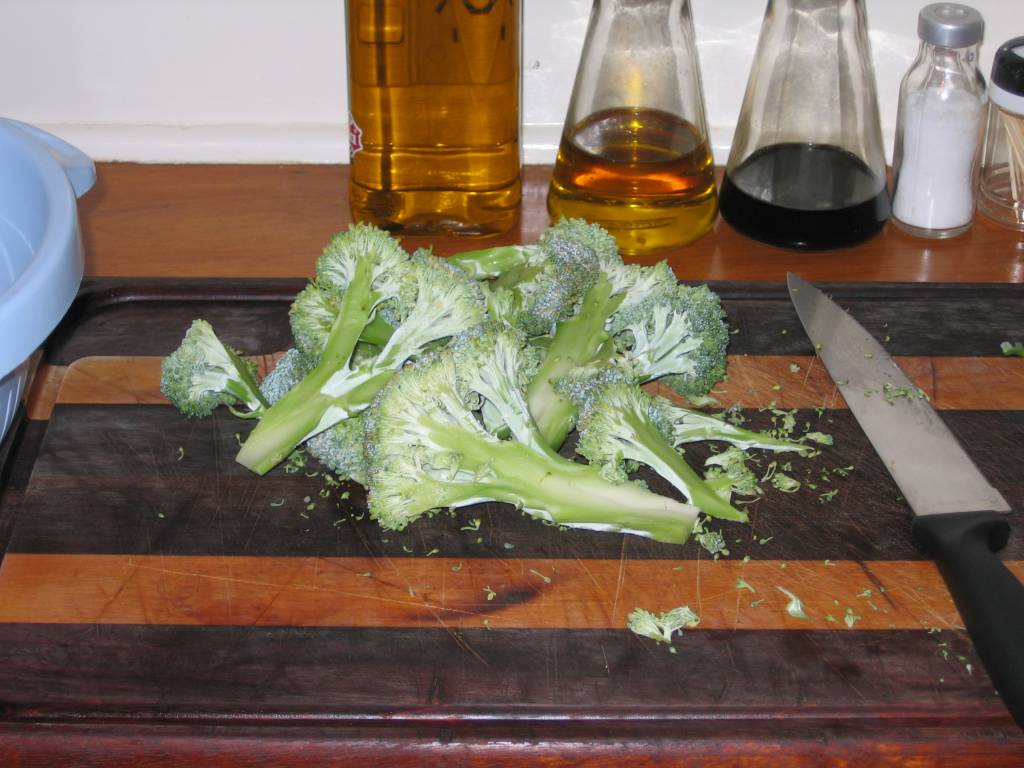
1. Slice it. Make big slices where you can, and the small pieces just cut them in half or so.
Sliced Broccoli
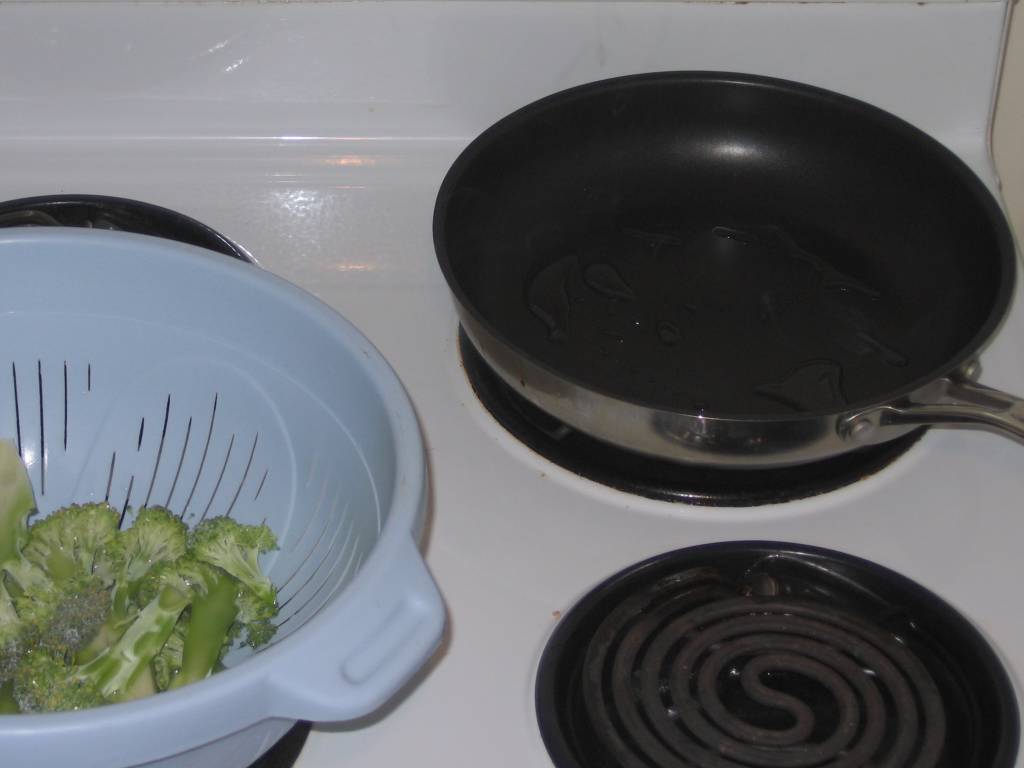
2. Give it a good wash, then drain excess water. What you’d want to do with these, actually, is to grill them. However, we will make do with a frying pan, with a minimum amount of oil at medium heat.
Broccoli about to be cooked.
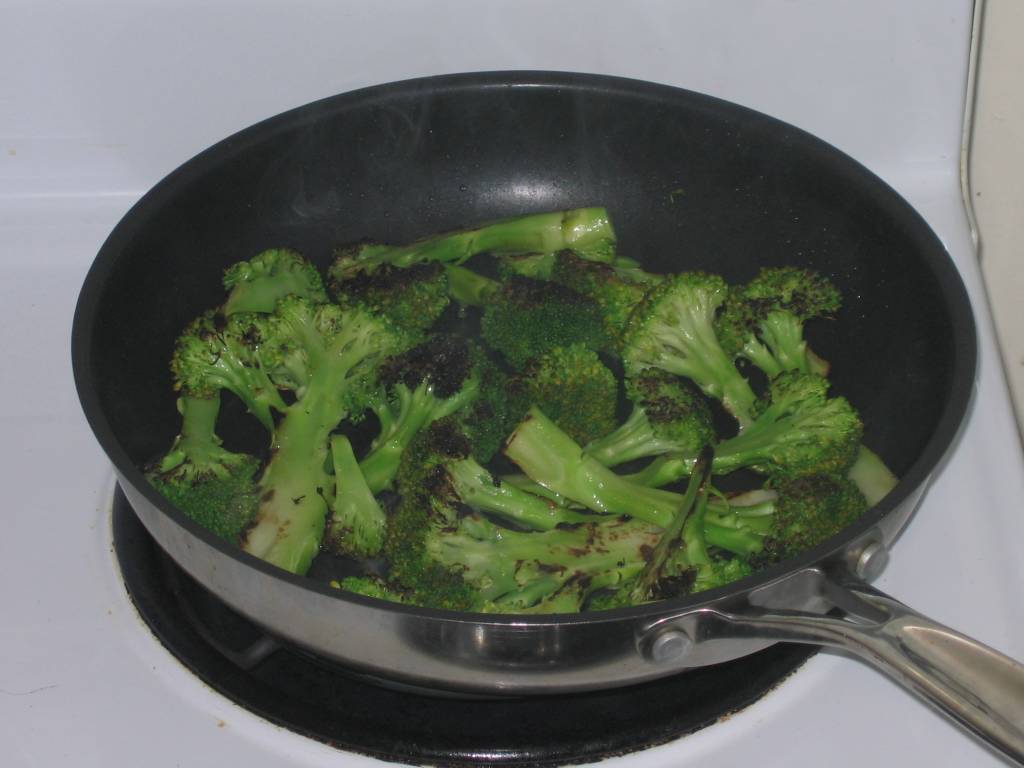
3. Leave it there for a bit, turn it regularly, let it cook until you start getting nicely crispy leaves. The most important thing is to make sure the “trunk” does get cooked, as it’s the harder part. Patience! And don’t try to hurry it up.
Crispy cooked broccoli
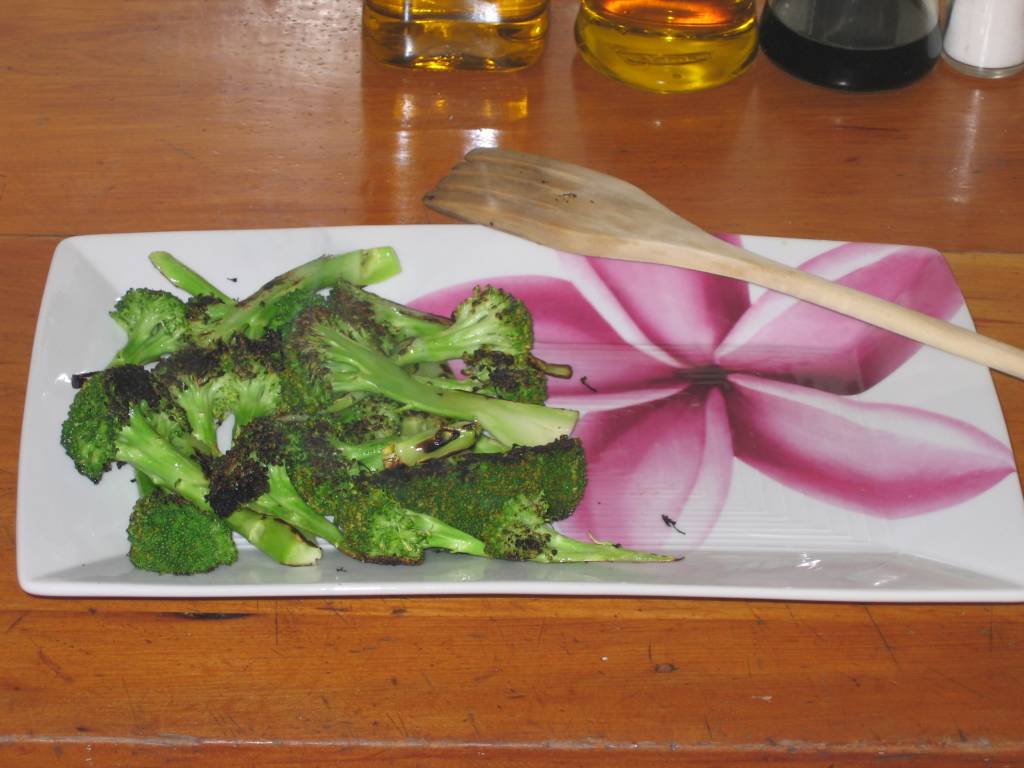
4. Once the broccolis is like that, it’s ready. Take it out of the pan and put it in a plate, dish, tray, or whatever you have handy.
Cooked broccoli
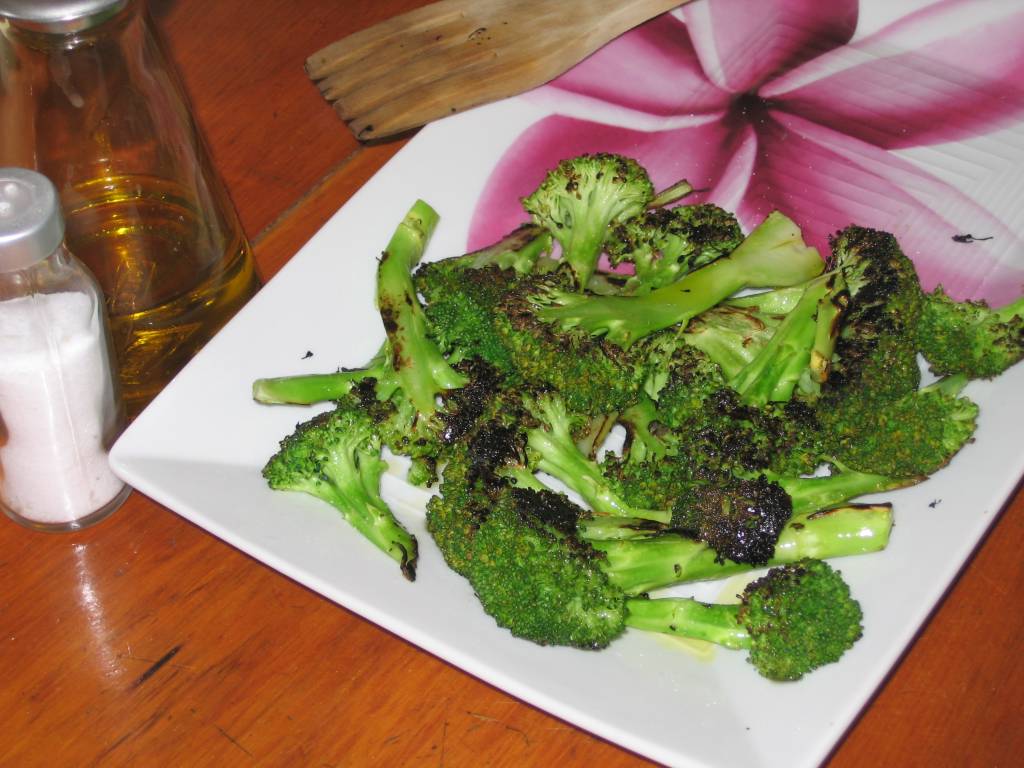
5. Now the only thing you are going to add to this. Take some good extra-virgin olive oil, and pour a bit all over the broccoli. Then, sprinkle with some salt. What we want to achieve is to have a contrast between the taste of the vegetable, the slightly sharp bite of the extra-virgin olive oil, and to make the whole thing savoury with enough salt. Don’t overdo either, but we want the taste of the olive oil to be noticeable, and to be ever so slightly salty.
Broccoli with olive oil
6. And that’s all! Yup, that’s right, couldn’t be simpler. Now, you may think you know what broccoli tastes like, but unless you’ve tried this, I wouldn’t be so sure. This simple combo tastes nothing like the crappy green goo one gets after boiling the poor thing. Serve hot!
Broccoli serving
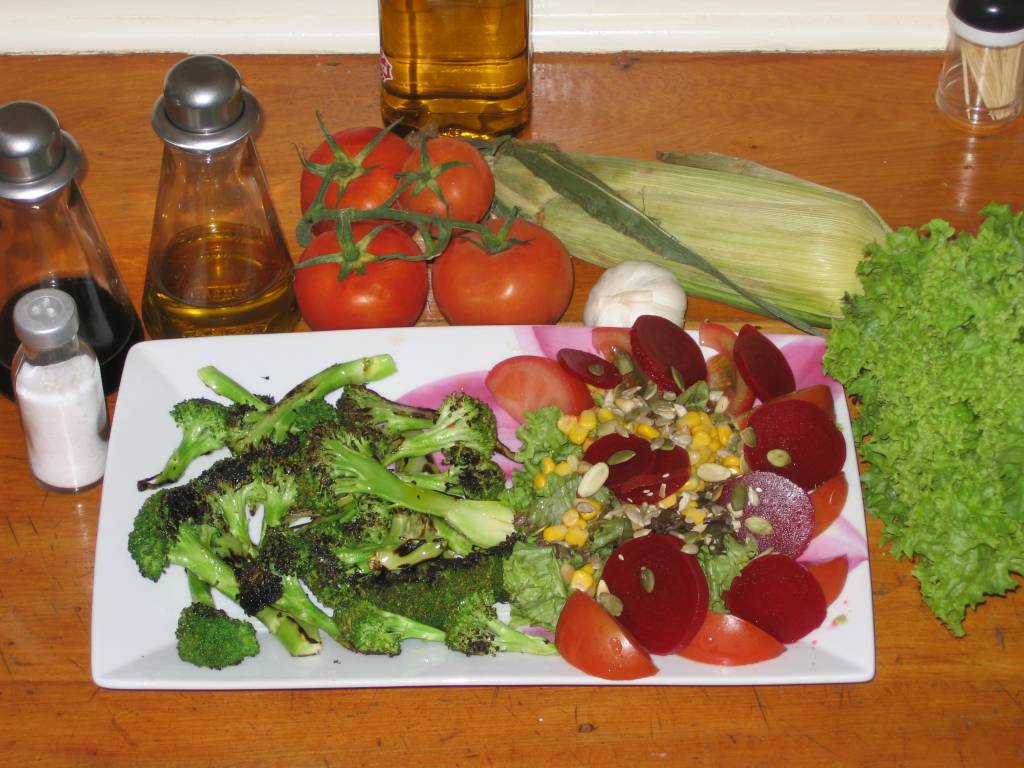
Now, this mis more of a sidedish than a main, goes well with a meat or something pretty solid. But since I wanted a light meal – in preparation to stuffing my face a few hours later when going for dinner with some friends – I just added a bit of salad and called it a day.