Russian Steaks

They are probably not Russian, but that’s what we call them in Spain, “filetes rusos.” Apparently the more literal translation, “Russian Fillets,” doesn’t sound right, go figure!

This is one of my mom’s favourite dishes, as she likes the fact that one can convert meatballs to Russian steaks if anyone complains about not liking meatballs. Anyway, on to the cooking!

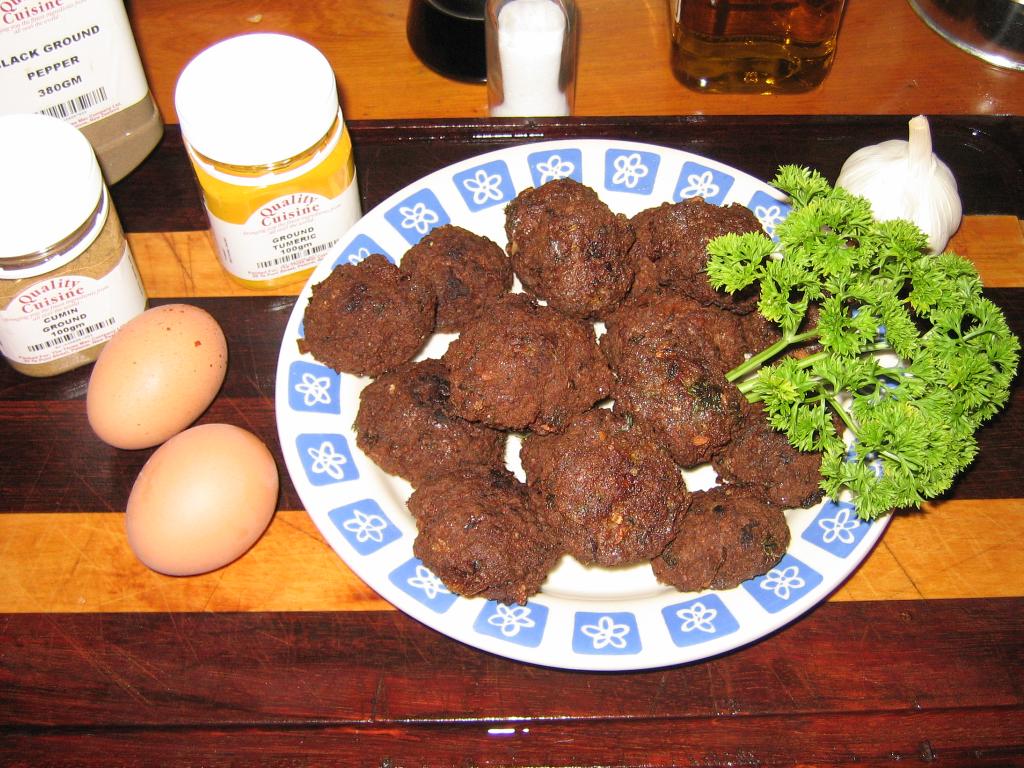
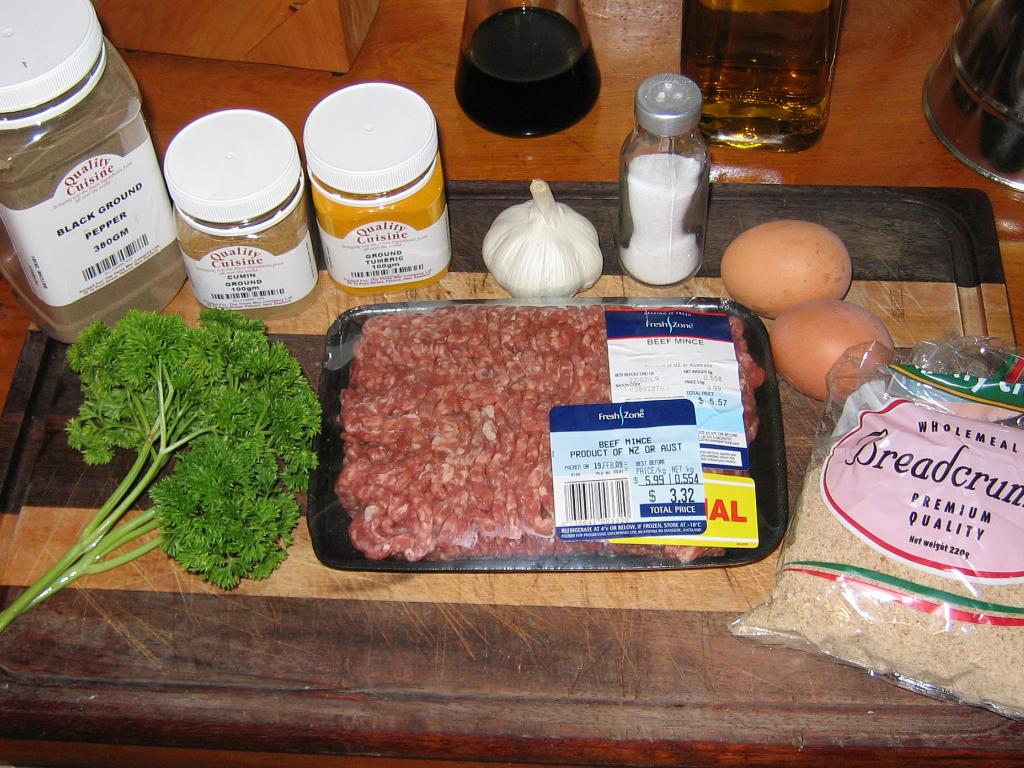
Ingredients for Russian Steaks.

So, you will need:

  • Minced meat (in this case I used ground beef).
  • Garlic.
  • Fresh parsley.
  • Eggs.
  • Breadcrumbs.
  • Some spices to spice up the meat.

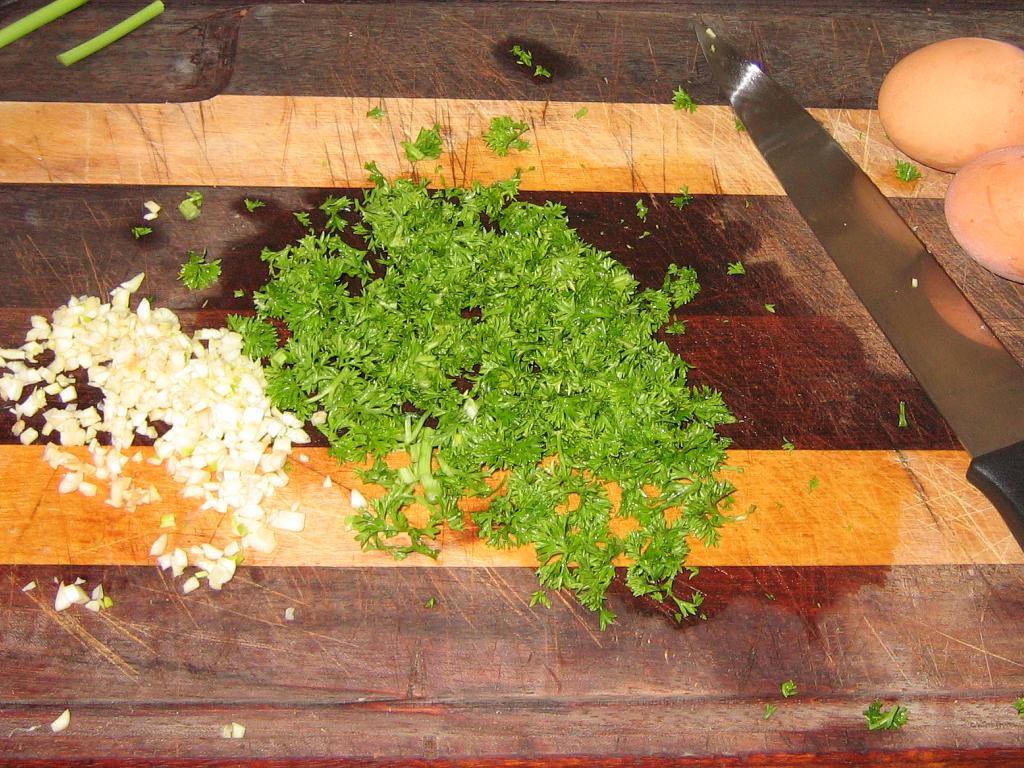
The process is simple. Start by finely chopping up the garlic (I used four big cloves for a pound of beef) and the parsley. LOTS of both, as you can see.

Lots of garlic and parsley.

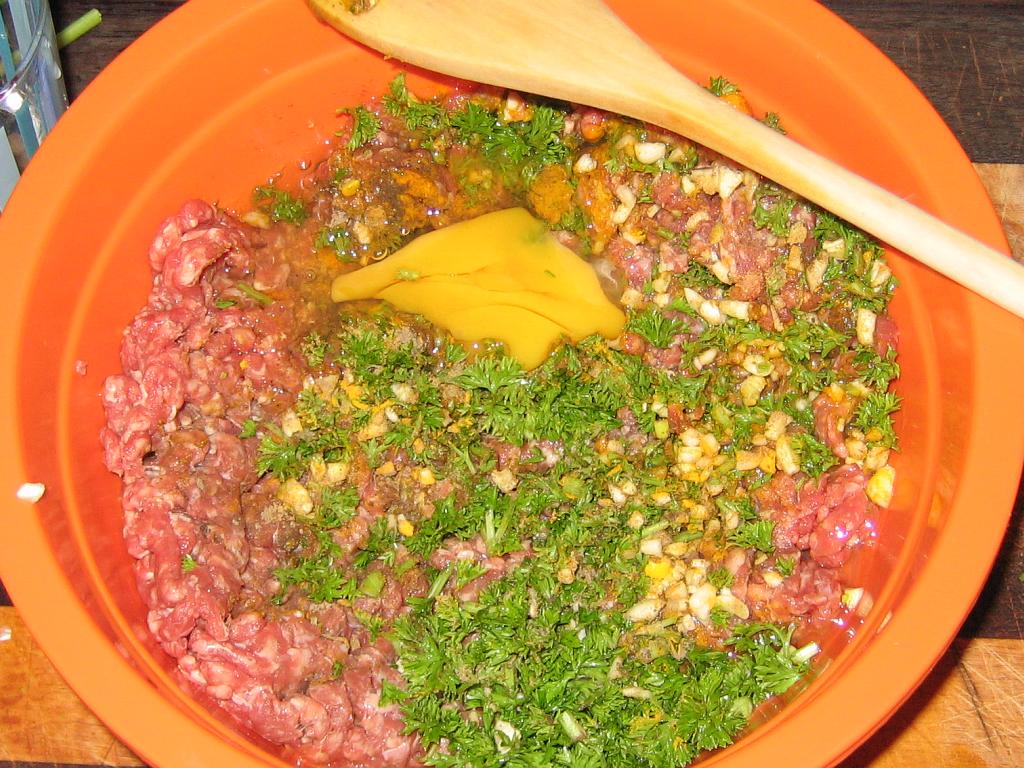
Now, in a bowl, put the meat, the garlic, the parsley, the eggs (I ended up using three), and the spices you want to add to the mix. Grab a spoon or your own two hands, and mix very thoroughly.

Meat and dressings for it.

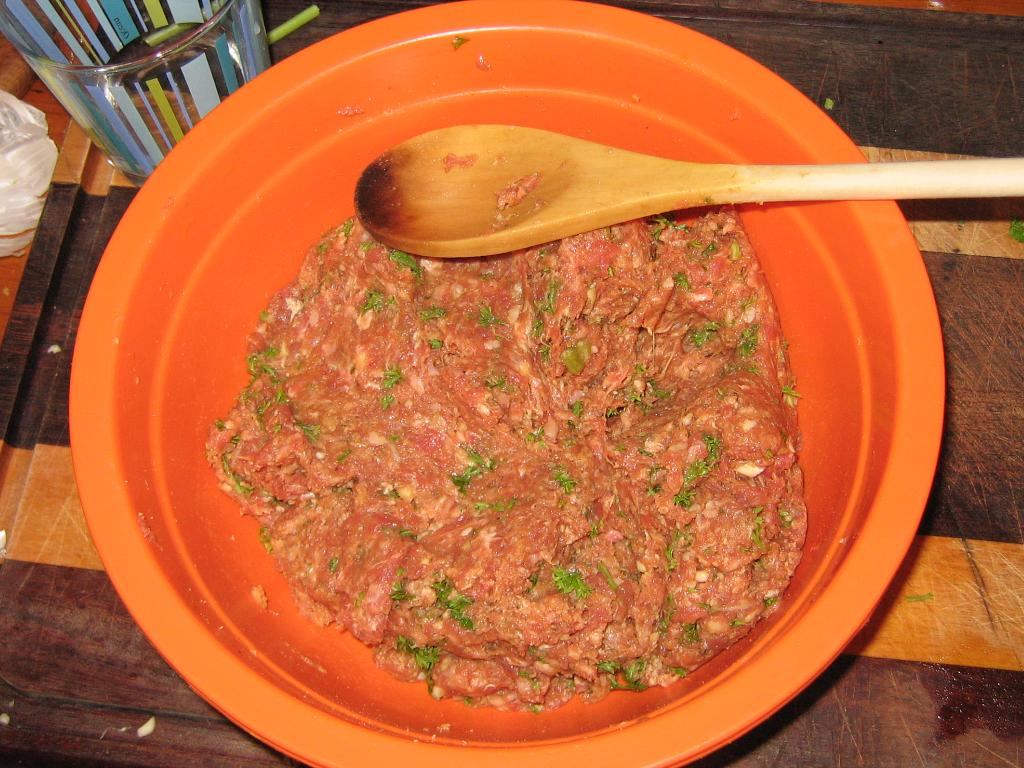
When the mix is homogeneous and ready – and don’t worry if it’s a bit too juicy – add the breadcrumbs, and mix again thoroughly. It’ll be harder as the breadcrumbs will make it go “dry” so to speak, but they add a nice touch to them.

The mix is ready!
The mix is ready!

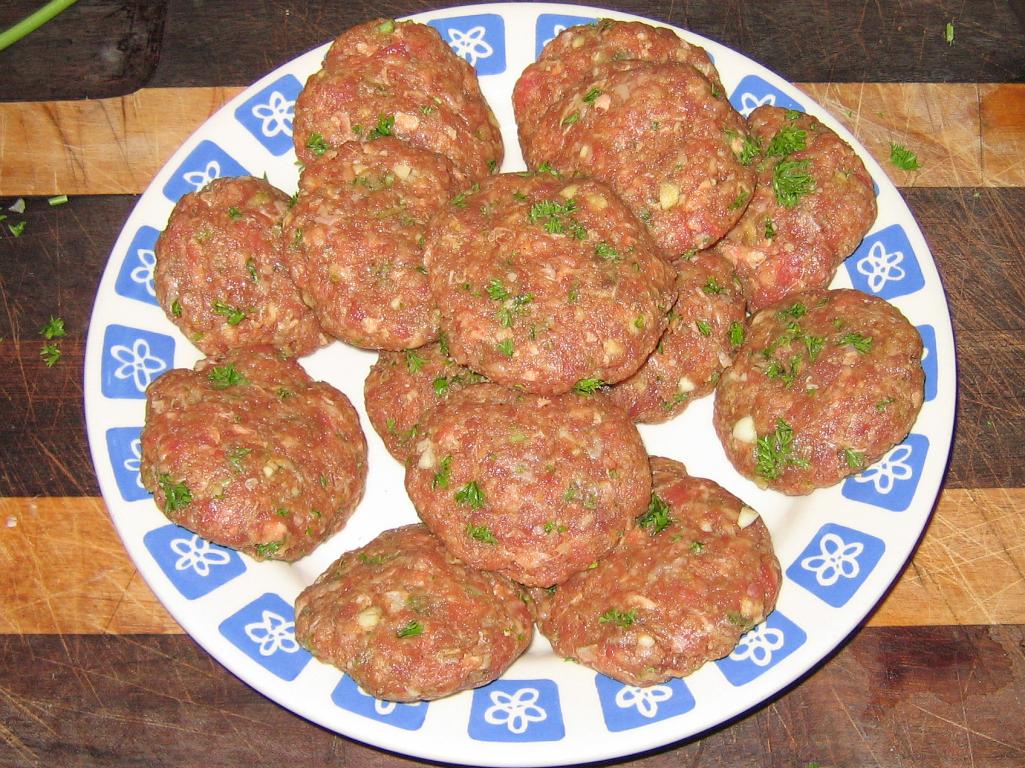
Now, to make the actual steaks. As I hinted in the beginning, these are “almost” interchangeable with meatballs. So, start by making a meatball, then when it’s ready, slap it on top to squash it. Fun!

Ready for the pan!
Ready for the pan!

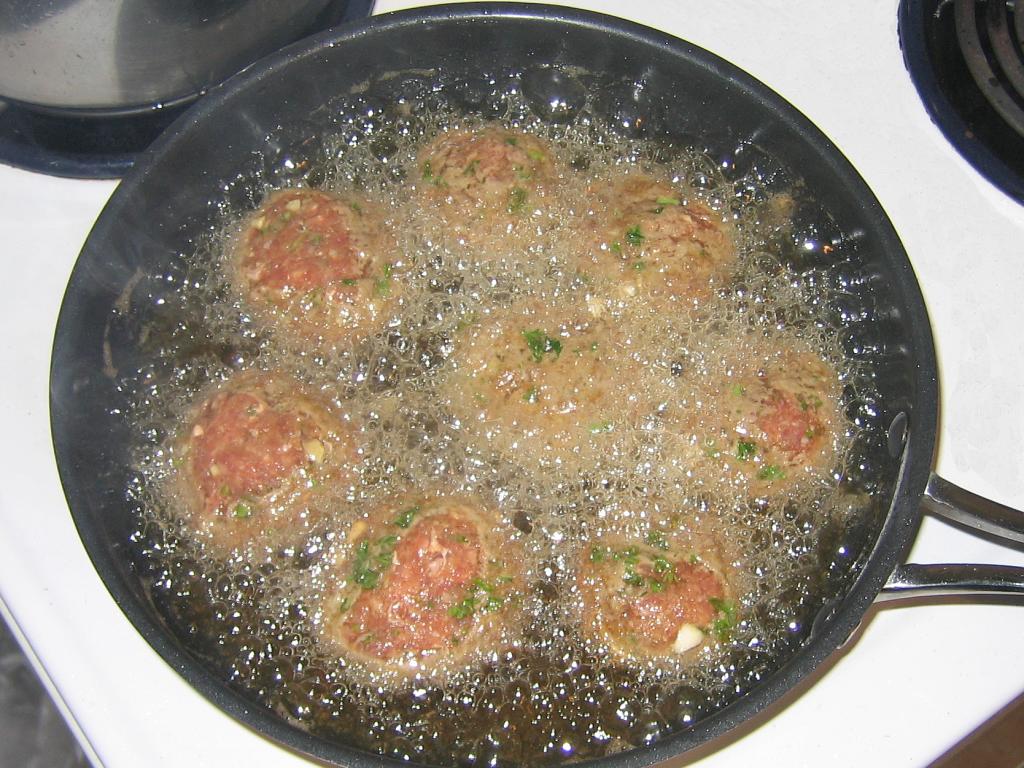
Now we want to fry them! Some people like actually crumbing them before this, but I think they have enough “stuff” as is to make it straight to the pan. Put some oil, heat it well, then give them a quick fry. They’ll go dark very quickly, thanks to all the non-meaty stuff in them!

Frying the steaks.
Frying the steaks.

And as usual, if you want to remove the excess oil, just put them on a piece of kitchen roll paper before serving, and it’ll absorb the excess oil.

Steaks ready to eat!

What does it go well with? Depending on how healthy you’re feeling, some salad or some potato fries. You can vary the kind of meat you use (mixed beef and pork goes well), you can add other bits inside (popular ones include: bits of bacon, chopped tomatoes, pine nuts), and you can make them bigger or smaller as you prefer.

I wonder if the fact that I’m making this post during my lunch hour points to some sort of dissatisfaction with the sandwich I had for lunch, heh.

Leek Cake

In yet another “are you serious??” recipe, we are going to make a fantastic dish with something as lowly regarded as a humble leek. And, once again, I have to say that I’m not kidding!

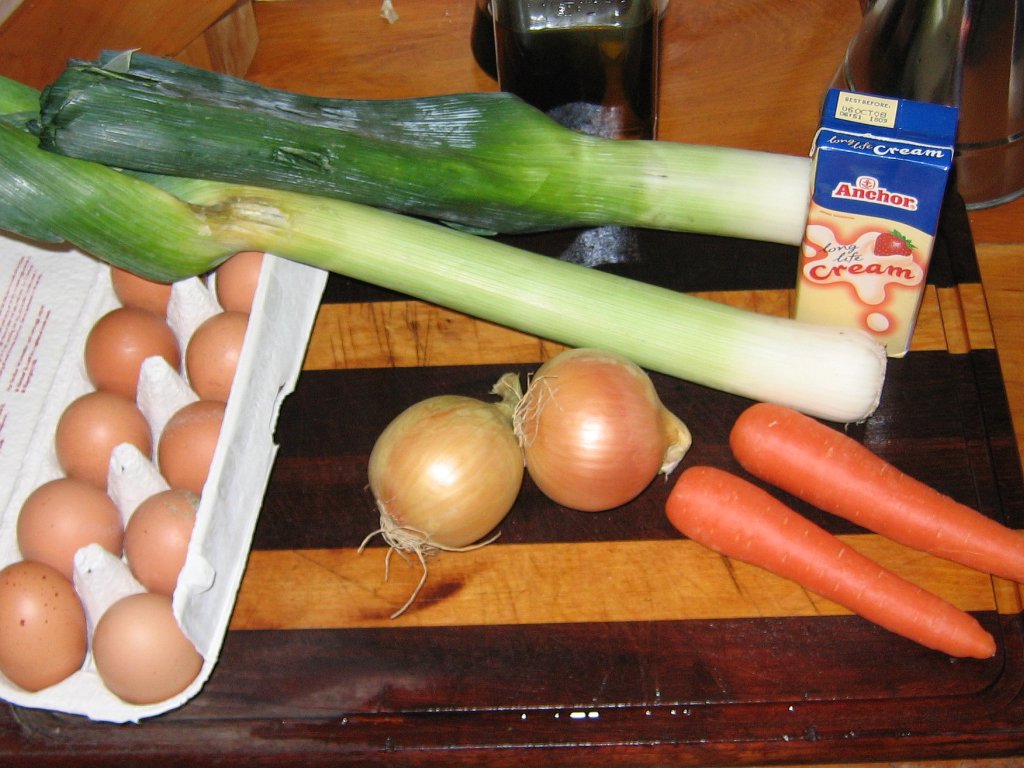
Ingredients for leek cake

You will need:

  • Some leeks.
  • Onions.
  • Cream.
  • Eggs.
  • Salt.
  • Pepper.
  • Nutmeg.
  • Butter.

You can also include other vegetables in the cake (I’ll get to that later), in this case I added some carrots too. Other vegetables that work well are asparagus or zucchini.

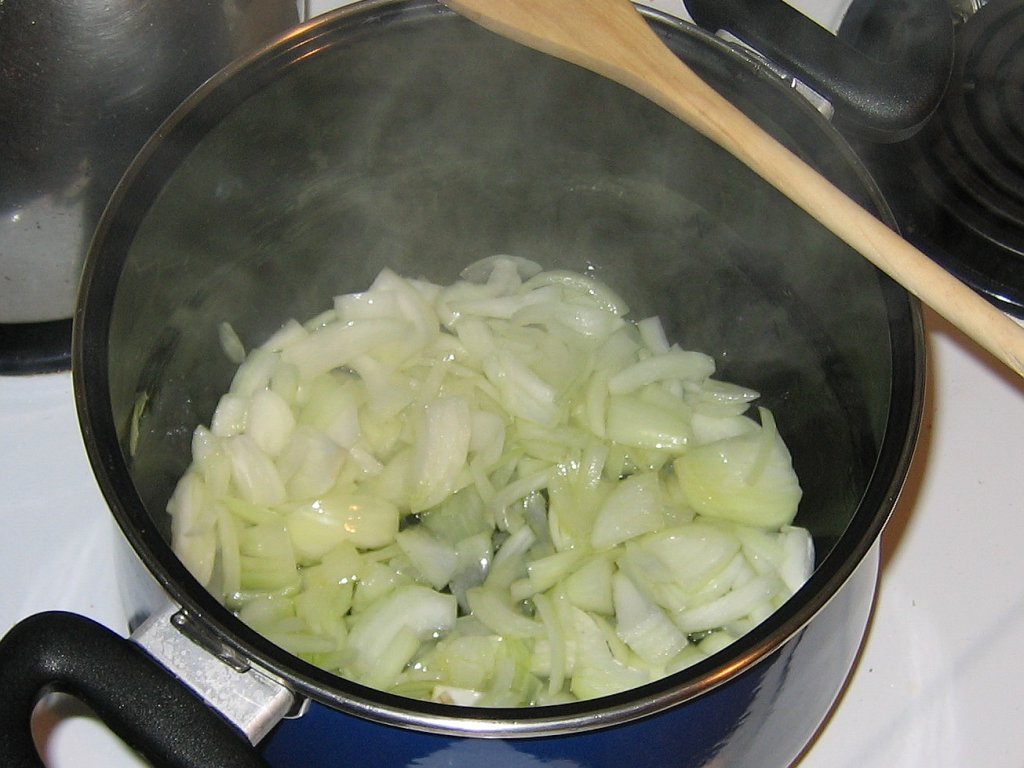
Start by chopping up the onion well, then throw it in a deep pan or pot with a nugget of butter or a bit of olive oil over a slow fire.

Frying some onion.
Frying some onion.

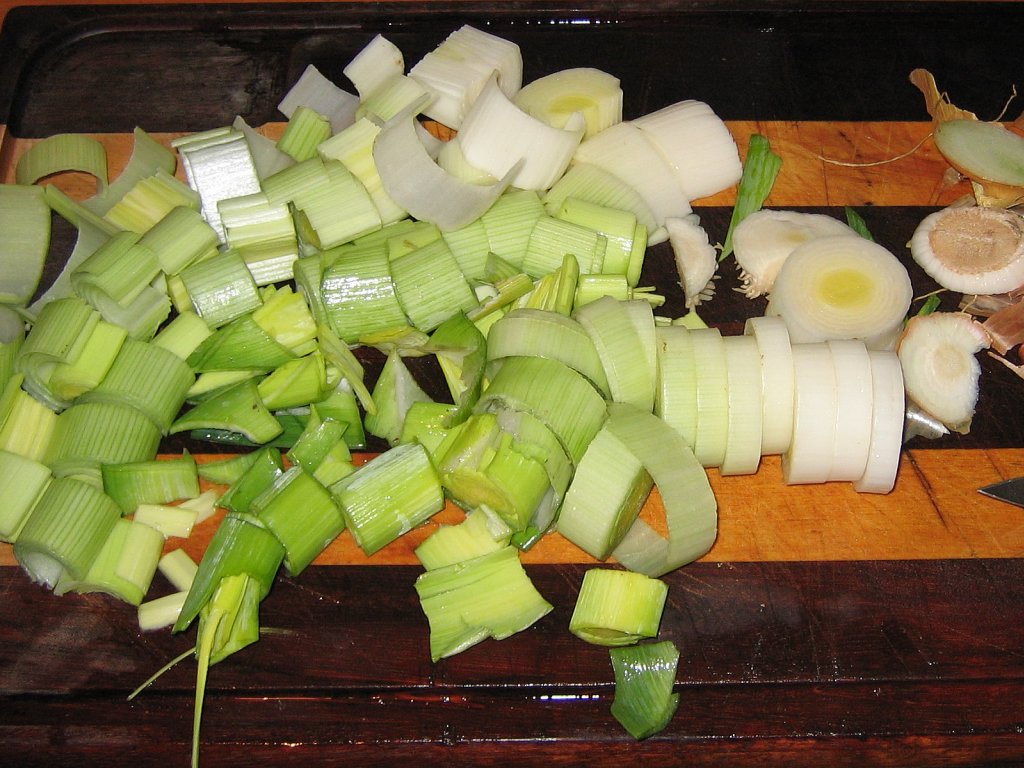
While that gets going, chop up the leeks and wash them thoroughly, making sure there is no soil/dirt left anywhere.

Chopped up leeks
Chopped up leeks.

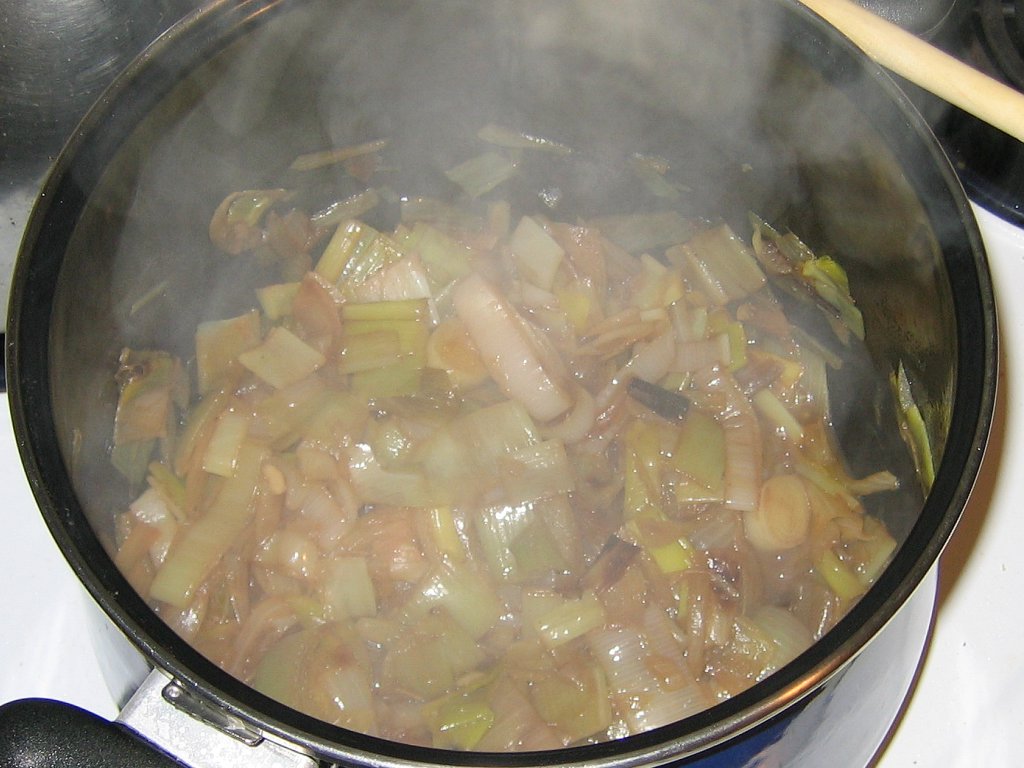
Add the leeks to the pot, and fry on low/medium, until the leeks are soft. After the initial frying, feel free to add a bit of water (half a glass or less) if they seem not to be juicy enough or are frying too fast (i.e., getting a little too burnt).

Once they are nice and soft, it’ll look a bit like this:

Leeks and onion ready!

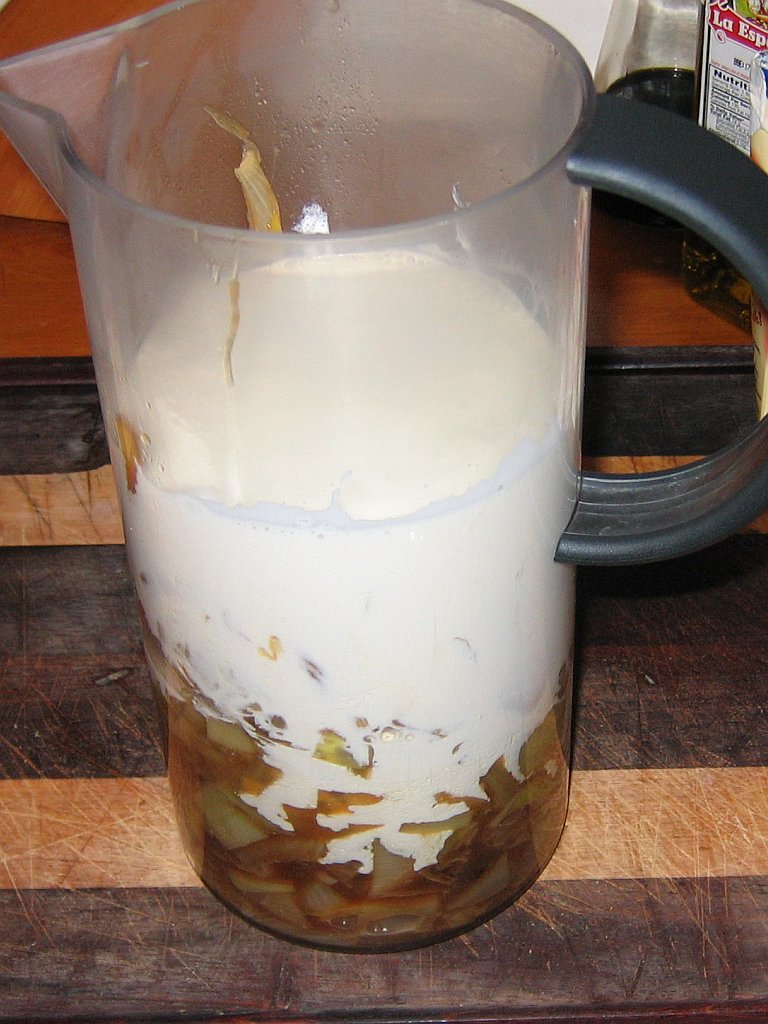
What you want to do now is to put them in a pot with the cream, the eggs (for those two leeks, which were a bit under a pound each, I used four eggs), salt, pepper, and nutmeg, and mix thoroughly with a food processor or similar implement.

Before.
Before.
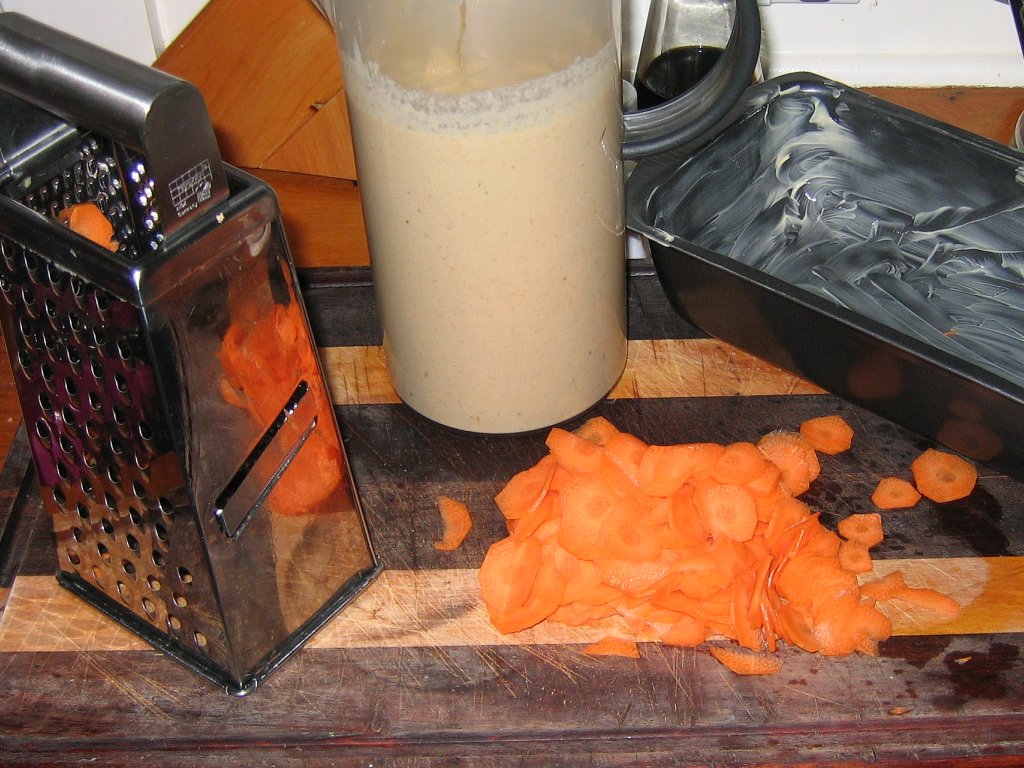
After.
After.

If you feel that the mix is a bit too liquid, you can add a spoonfull or two of flour (I did add one in this case, for example). Also, unlike some other leek dishes like, say, vichyssoise, you don’t have to turn the mix into a fine grade mush with no fibers inside, so don’t worry about that too much, it’ll be fine after we bake it. You can see the loaf pan where we’re going to make the cake and how I’ve greased it with margarine.

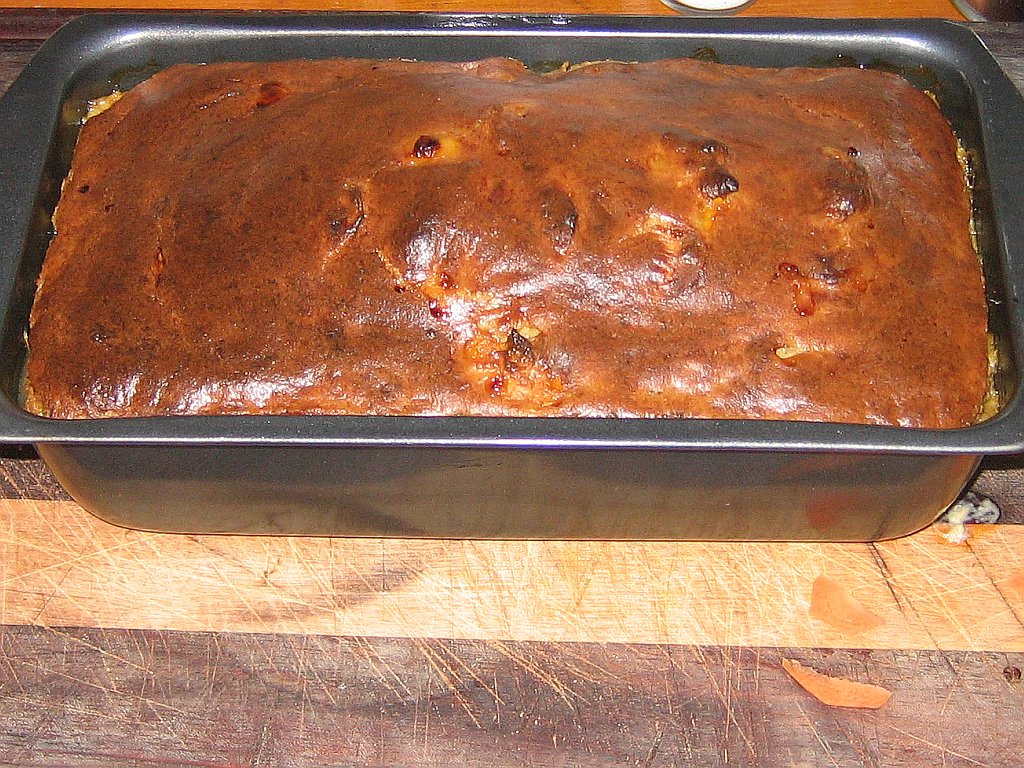
Now, to cook it. Oven at 180°C and put a tray inside full of water. Once the over and the water are hot, put the loaf pan inside, and cook for 40-60 minutes. Keep an eye on the oven and add more water if it evaporates too much. The cake will raise near the end and will have a nice toasty colour.

Leek cake ready!
Leek cake ready!

Let it cool and set before serving. It’s best served cold or lukewarm, definitely not piping hot right after baking. Good things are worth waiting for!

Ready to eat!
Ready to eat!

Now, as I said before, you can add more vegetables if you want. I added carrots and mixed them in after slicing them, but another popular way of doing this (specially if you make the cake a lot “taller” with a narrower loaf pan) is to make layers. Pour some of the mix we have prepared in the loaf pan, put a layer of carrots or asparagus or whatever, add some more mix, put another layer of vegetables, and so on, with a final layer of cake mix.

You can do a similar cake with fish, maybe I’ll put that one up soon. Enjoy the food!

Luunchbreak post!

A quickie, only to point out that I have posted new pictures in the gallery, and made a permalink on the right side (under “Pictures”, how original!).

The old pictures look terrible, don’t they? Blame it on being a pioneer at digital imaging, my first digital camera was a Sony Mavica that used FLOPPY DISKS as storage. Heh.

Baked Banana Rice

Right! So I was running low on supplies and I didn’t feel like going to the supermarket. When I mix rice and banana, I usually make “Arroz a la Cubana” (“Cuban style rice”, more or less), which is of course not cuban in origin or anything like that, but I had a lot of cheese in the fridge and decided to go for this instead. This is a “survival” recipe, i.e., something you can do when you don’t have much in your fridge.

Ingredients for BAked Banana Rice
Ingredients for Baked Banana Rice

So, you need very few things:

  • Rice.
  • Bananas.
  • Fresh Parsley.
  • Cheese. Lots of cheese.

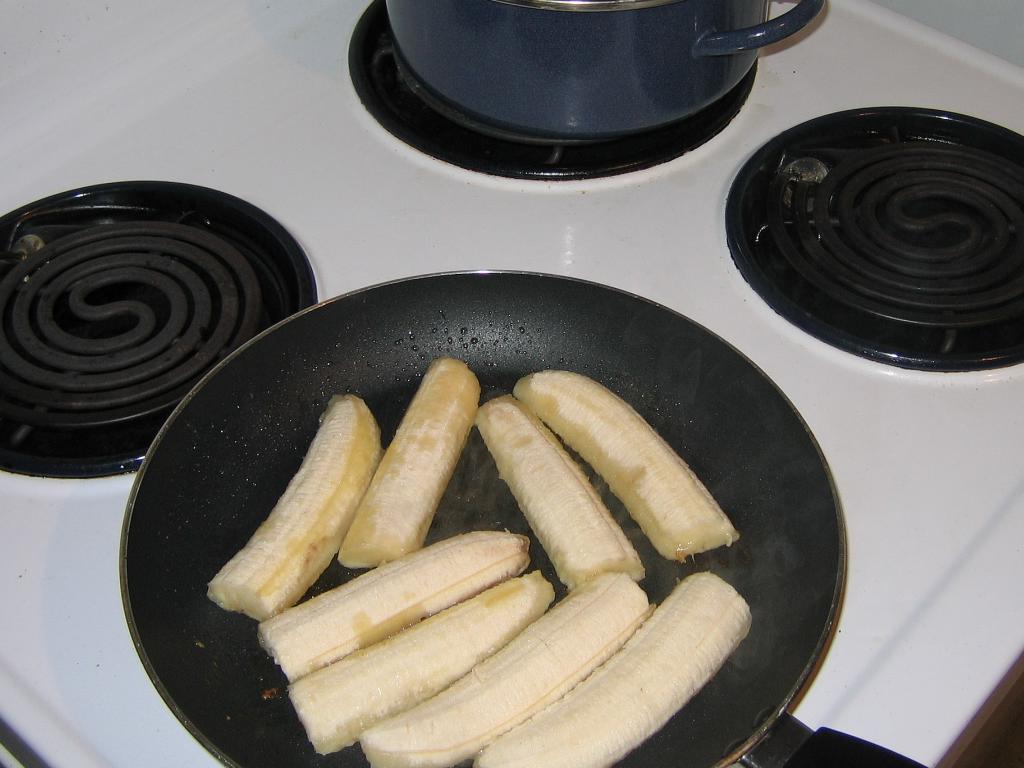
To start with, slice the bananas in half and fry them while you cook the rice.

Frying the bananas
Frying the bananas

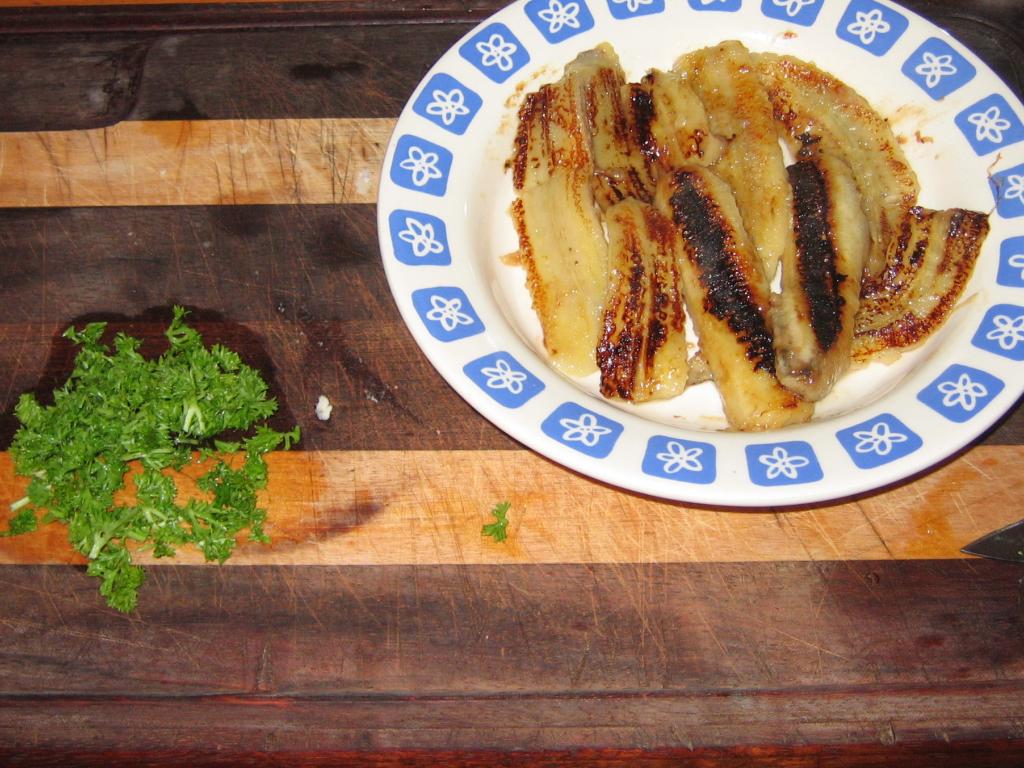
Meanwhile, you’re going to get a generous amount of parsley, and chop it up thoroughly.  Save the bananas once you’re done with them.

Parsley and bananas
Parsley and bananas

Now, once the rice is ready, put the chopped parsley on the rice and mix it thoroughly. If you want to mix some other spice or ingredient to the rice, go for it! Salt it a bit if you want, I tend to put a bit of salt on the water and cook the rice using the absorption method.

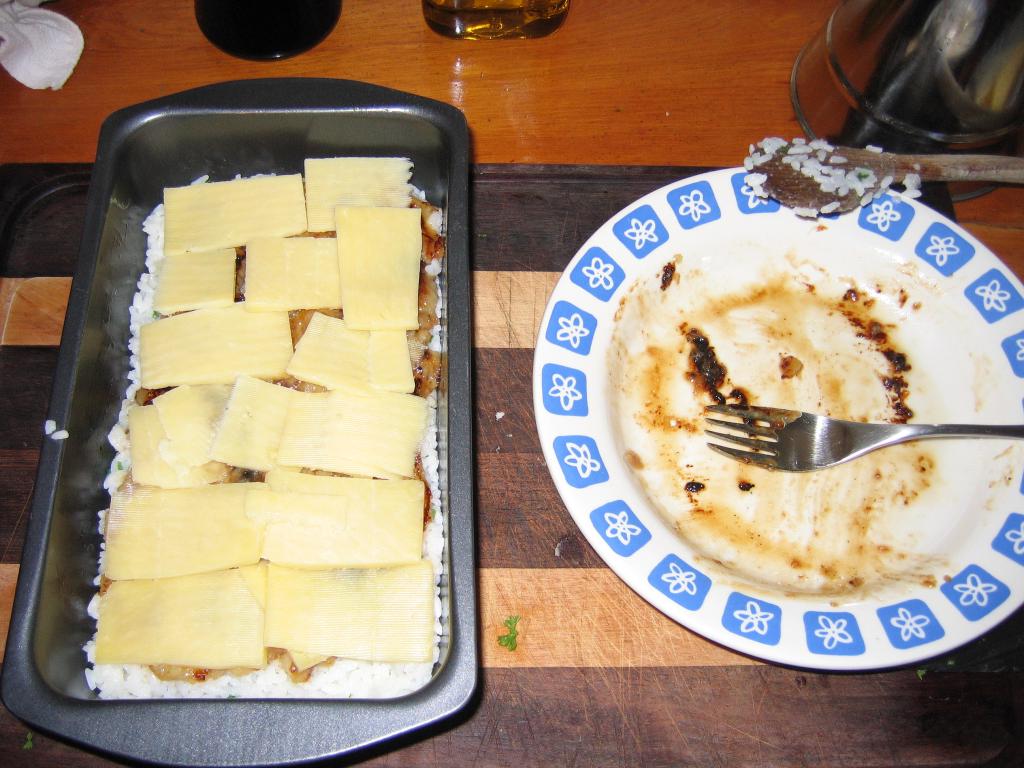
Once the rice is done, you want to get a deep oven cooking pot and start preparing  the dish like this: Place a layer of rice, on top a layer of bananas, then a layer of cheese, and repeat as much as you want. The number and thickness of the layers will depend on how many bananas and how much cheese you want to use, in my case I put a layer of rice at the bottom, only one layer of banana, and two layers of cheese (one on top of the bananas, one at the very end on top of everything).

Layering the dish
Layering the dish

Finally, heat the oven at, say, 108, and in it goes! 15-20 minutes will do, until the cheese at the top is well melted and as darkened as you want.

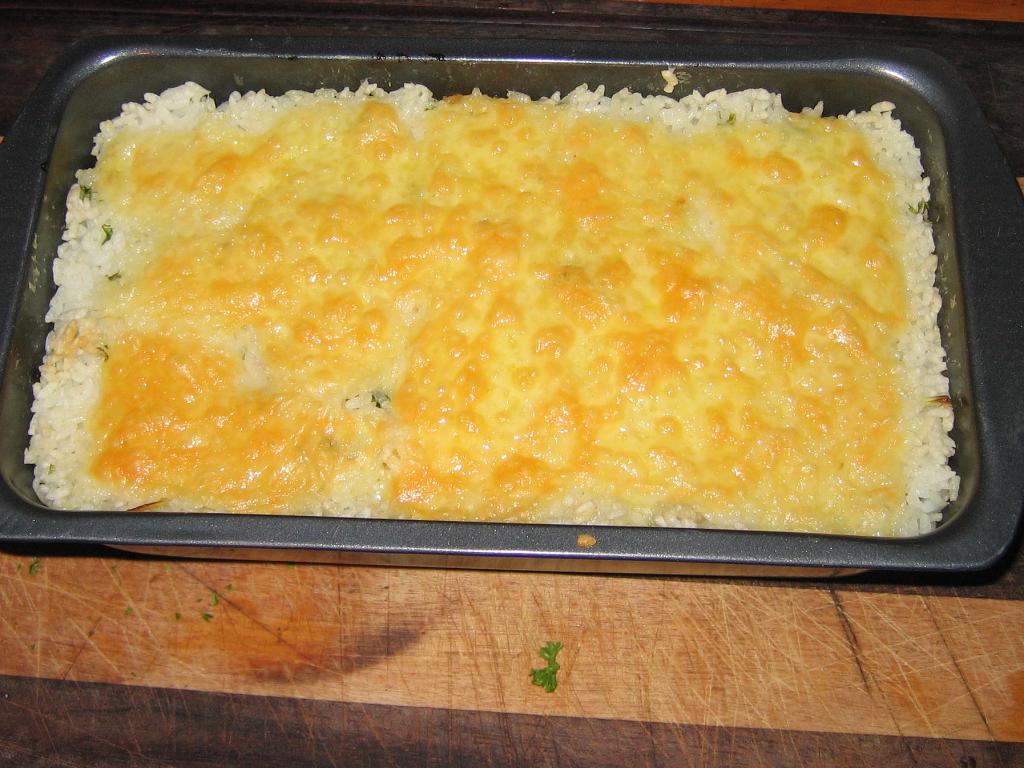
The rice is ready!
The rice is ready!

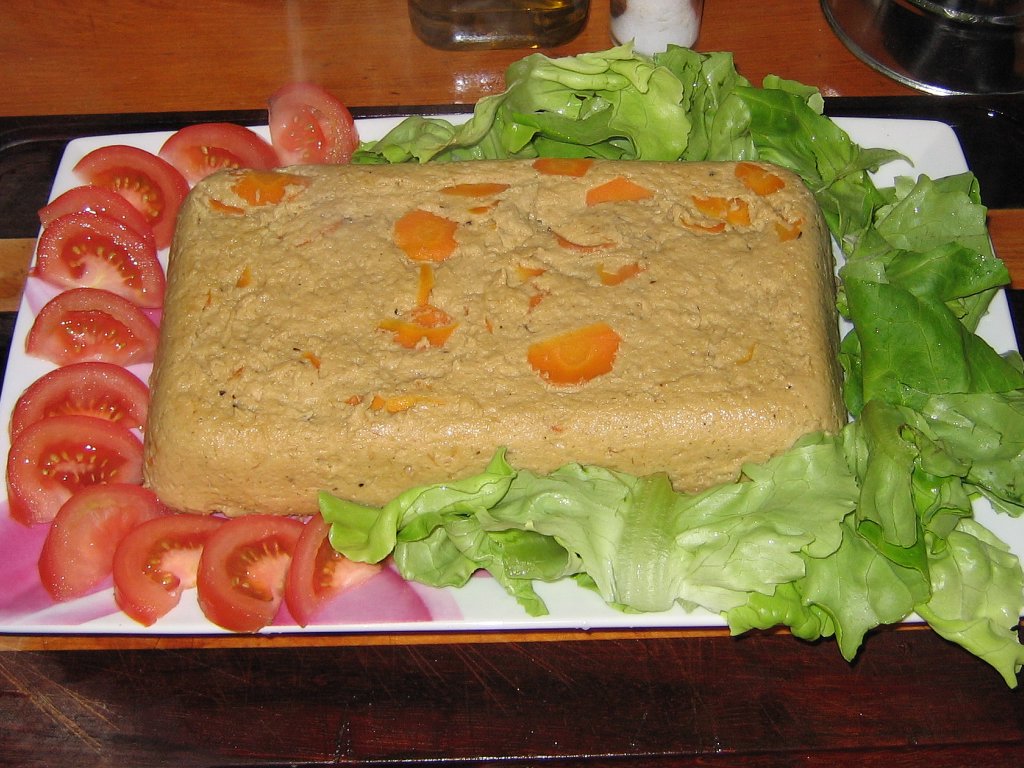
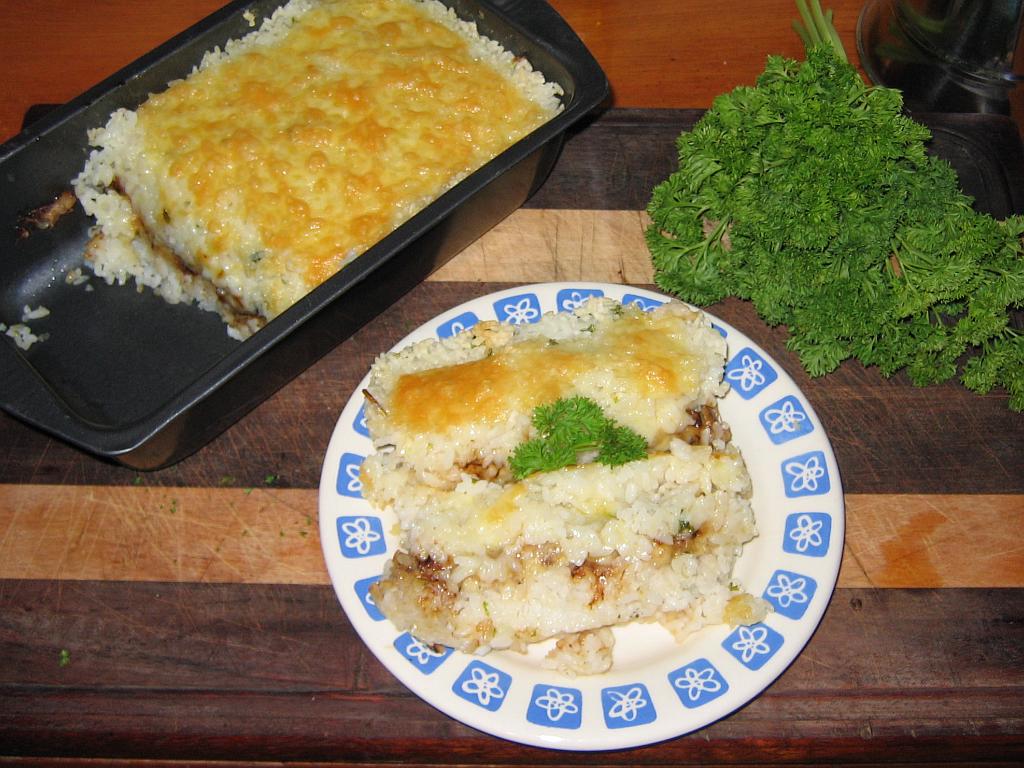
Serve in slices and serve it hot! You want the cheese to be all melty.

Looks tasty!
Looks tasty!

Simple and tasty “survival dish”. Maybe I’ll show what the “Cuban Rice” is supposed to be next time.

And the site grows!

That’s two out of three “main things” I want to put in the site, the photo gallery is now live!

http://www.walkiry.com/Fotos/

I finally decided to use Jalbum, it’s not exactly cutting edge but it’s reasonably easy to use, and does a good job at tracking changes and synchronyzing from the PC to the Server via FTP. The theme? SPARTAAAAn! Or rather, I don’t fancy excessively flashy sites.

I wanted to make the “index” of the galleries a clickable map of the world, but I couldn’t find a good non-cumbersome solution for it, specially if different groups of pictures clump together in a small area. I could have a main map menu, then a submenu with the country zoomed in I suppose, or better a zoomable map ala Google Maps, but eh, this works and is descriptive enough.

More pictures to come… Eventually!

Migas

So, while we’re at simple dishes, here’s another one that is simple, just takes some time to make. Migas. This is a traditional meal of shepherds in Spain, made with old bread and a few things to make it edible. There are as many recipes as you can imagine, and then some, so I’ll just put a basic one here and you can wing it from there. The biggest problem is, around here old bread doesn’t get dry and hard, as it should. It doesn’t even get rubbery. It just gets mouldy.

If you ever want to grow mold for some reason, move to New Zealand. You’ll love it.

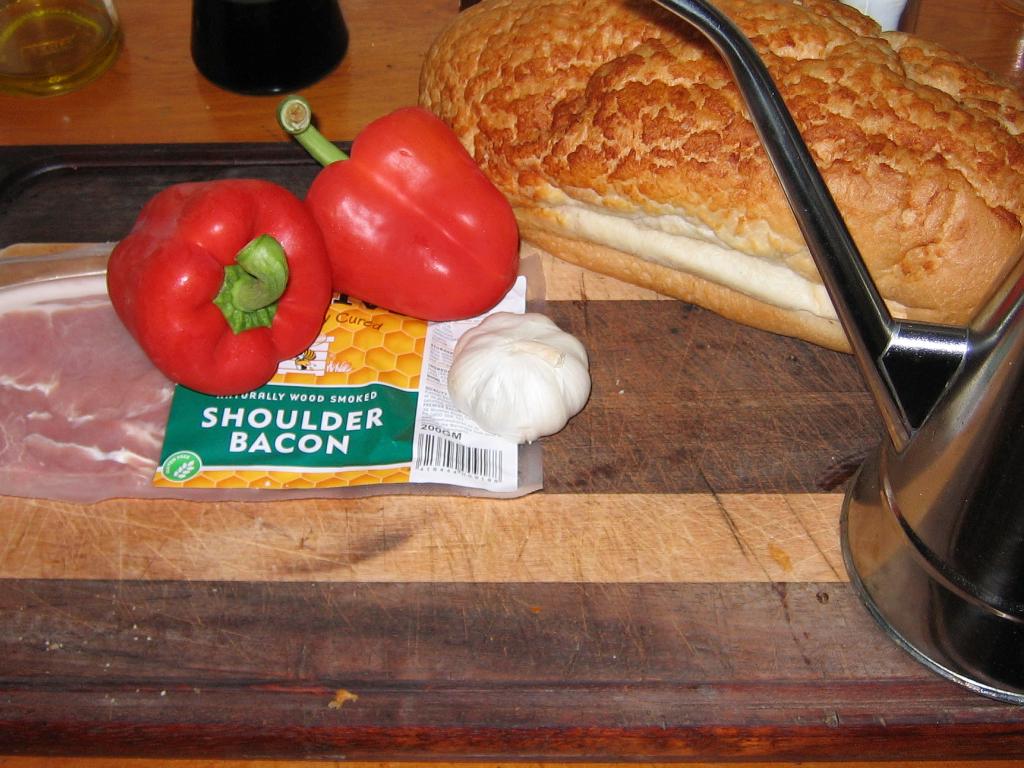
Anyway! Let’s start with some not-so-old bread and some extras.

Ingredients for migas.

Basically, we need:

  • Bread.
  • Garlic.
  • Water (do I really have to show that in the picture?).
  • Oil.
  • Bacon.
  • Red paprika.

Something that also goes really well with this is sprout garlic. Chopped up sausages work as well. Some people use milk instead of water. And raisins as well – or plain grapes, usually added at the end when everything’s done.

The first thing to do is to get rid of the crust of the bread. Usually, when the bread is hard and dry – as it should be -, I grate the outside to make crumbs, useful for later use, and just heep the white inside. After this, cut the bread into small pieces, by hand or with a knife if the bread is hard. Afterwards, you want to get them wet.

This is the delicate part, you want the bread wet enough so that it becomes kinda sticky, and the pieces start to stick together, but not so wet that it becomes a soapy mess. What I usually do is, after washing my hands thoroughfully, use them to get it wet. Put some water in my wet hands, mix with the bread pieces, do it agan, then keep at it until the texture is right. It’s very noticeable, the bread will be sticky.

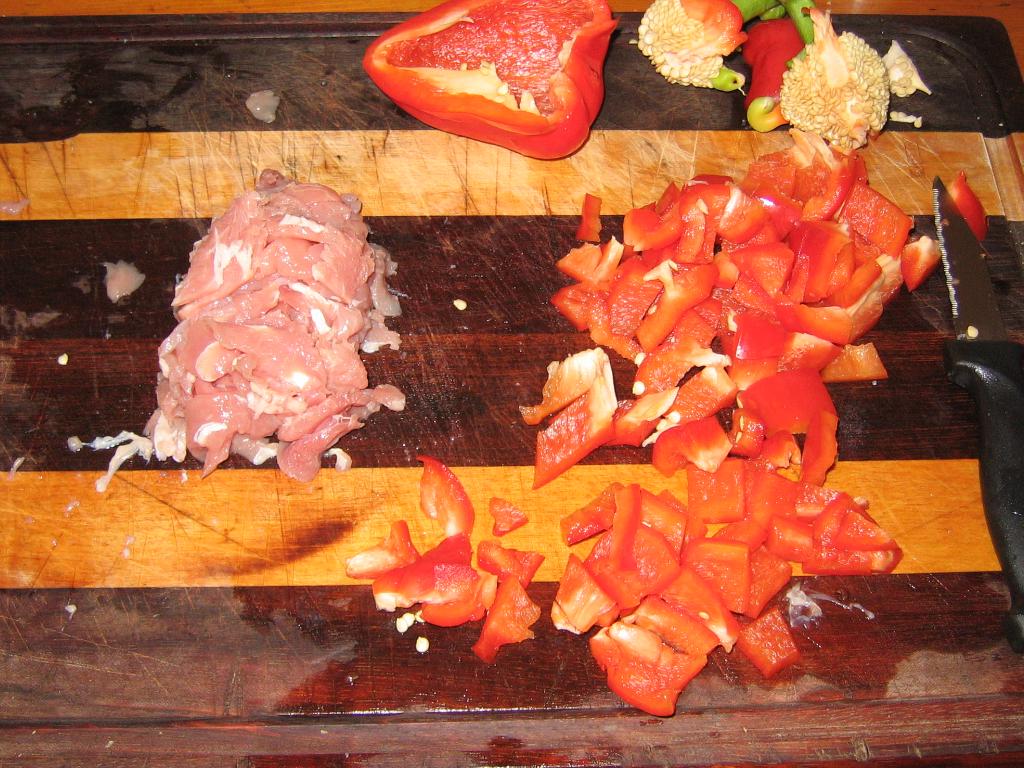
After that, chop up the non-bready ingredients. Time to get started with them!

Additions!
Additions!

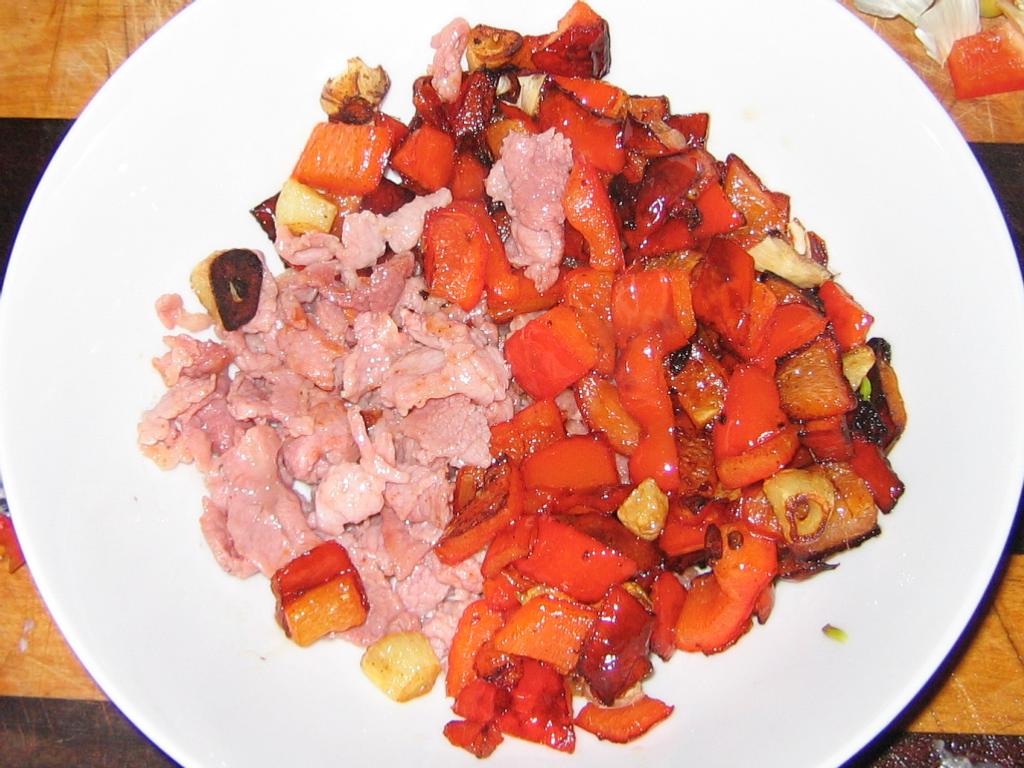
Now, put three spoonfuls of oil in a pan, and start frying them. I fried the bacon first, then the paprika mixed with four cloves of garlic, chopped into big pieces – the garlic, not the paprika. Reserve the frying ingredients, keep the oil in the pan.

Sidestuff fried.
Sidestuff fried.

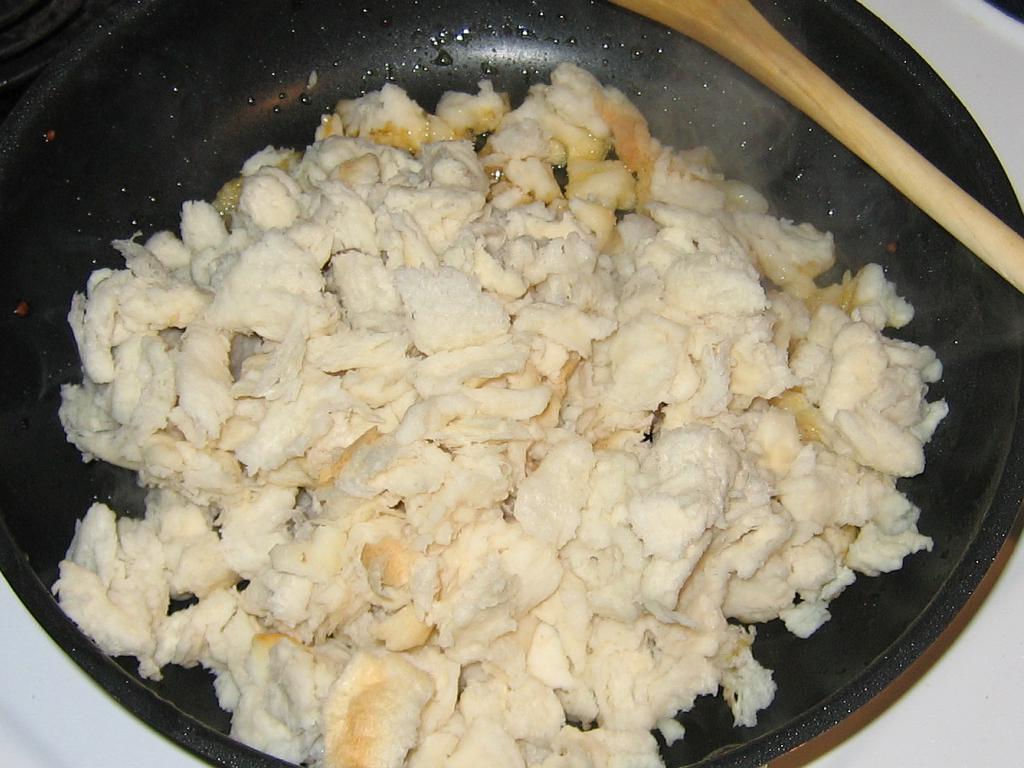
We’re ready for the last part. Now put the bread on the pan, and start mixing! The bread should come together in bigger clumps, and you have to keep stabbing at it and cutting the clumps into smaller chunks. keep at it! It’s a very active thing. IF the bread didn’t clump together after a bit, you may need some more water. Use a spatula or a wooden spoon, and keep breaking the lumps, until you turn this:

Start of the bread cooking.

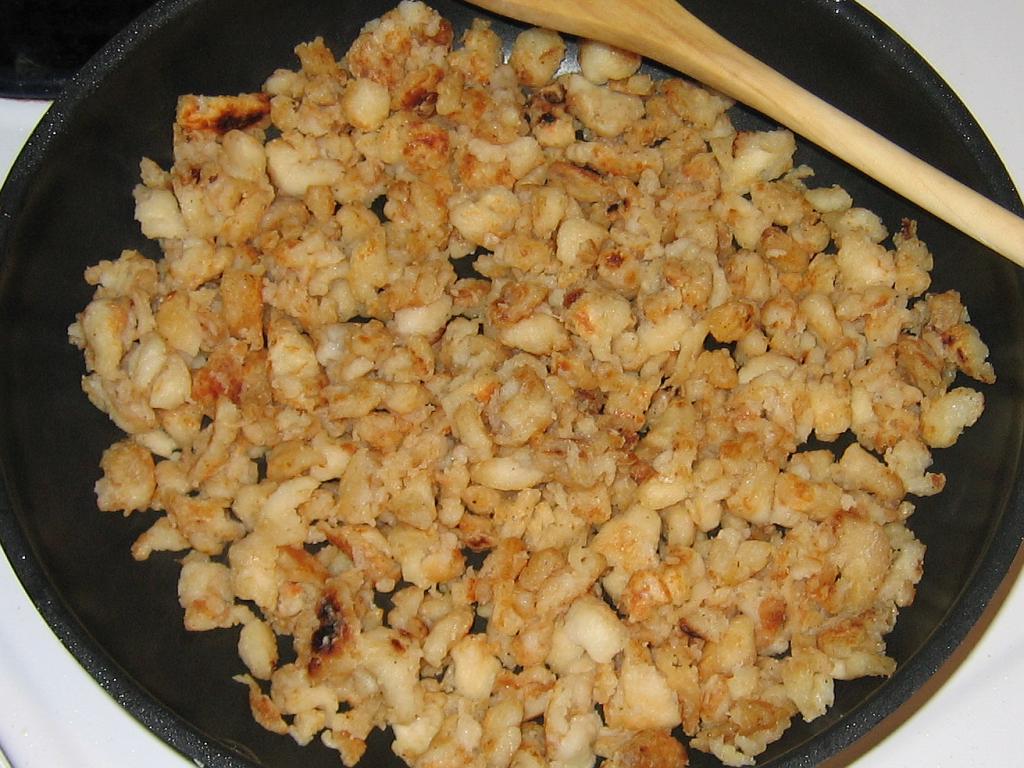
Into this:

Almost ready migas
Almost ready migas

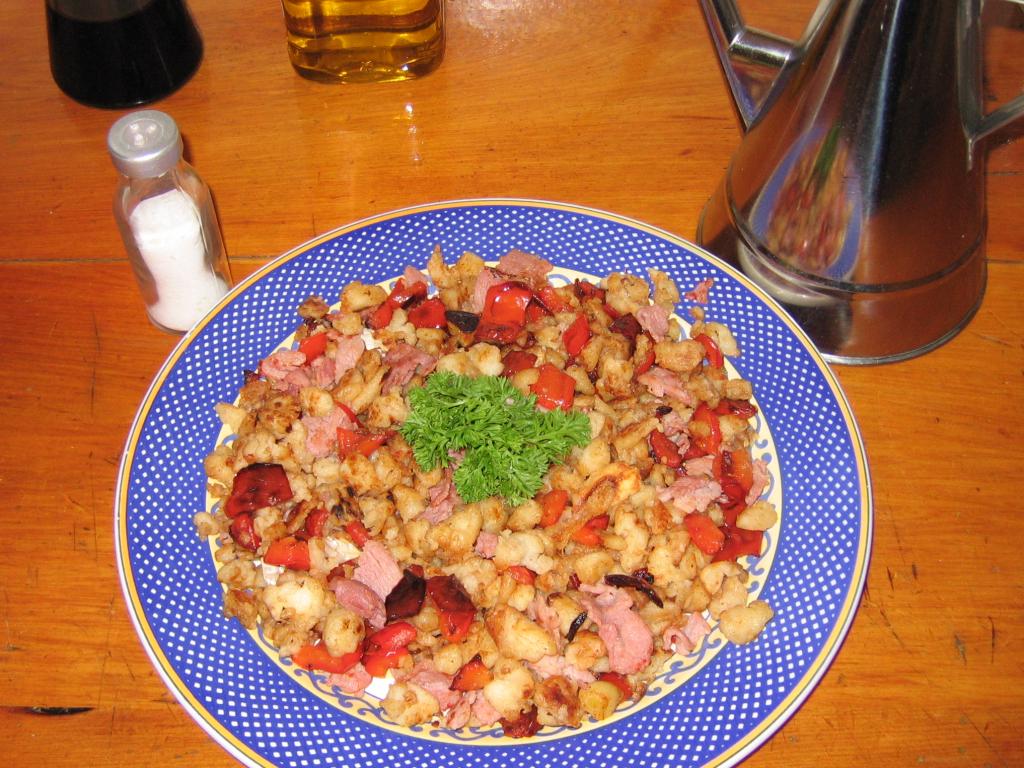
At this point, I add all the ingredients I had fried before, and mix it and fry it for about 10 more minutes. And we’re ready to eat!

Serving suggestion.
Serving suggestion.

This is a high-calorie dish, so that plate up there should actually be enough for several people (I mean, consider just how much stuff we’ve put in there, including a big loaf of bread). If now you add grapes, it’ll combine greatly.

They work cold, too. And you can even make it a sweet dish, with milk and chocolate instead of garlic.

Onion Tortilla

Simplicity is a great thing. All three people who may have been checking my page have probably noticed that, while tasty, the recipes I post aren’t exactly complicated. I like simple cooking, specially when it’s really really tasty. Not to put down more creative foods – specially from better cooks than myself -, but good simple recipes are very satisfying.

So, in that spirit, one of the simplest recipes I know, and one of the most popular and successful when I cook it for friends. Onion Tortilla, as in Spanish Tortilla – omelette -, and not the mexican one for making fajitas. What will we need?

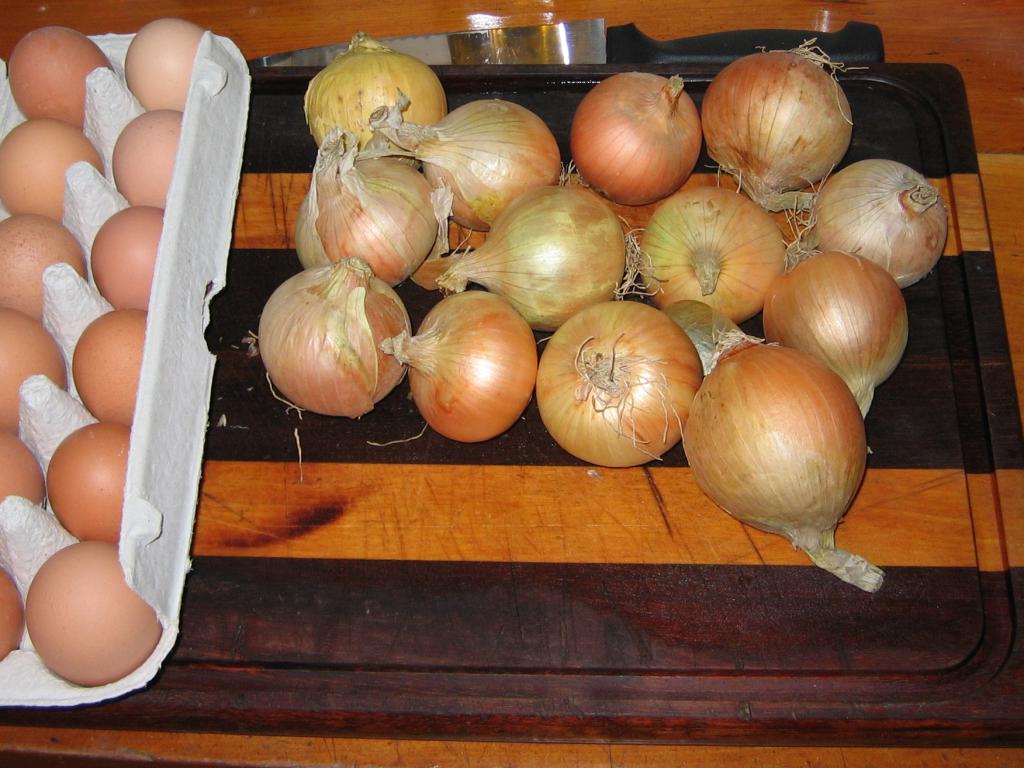
Ingredients for the Onion Tortilla

What do we need?

  • Onions.
  • Eggs.
  • Salt.
  • Cooking oil.

That’s it.

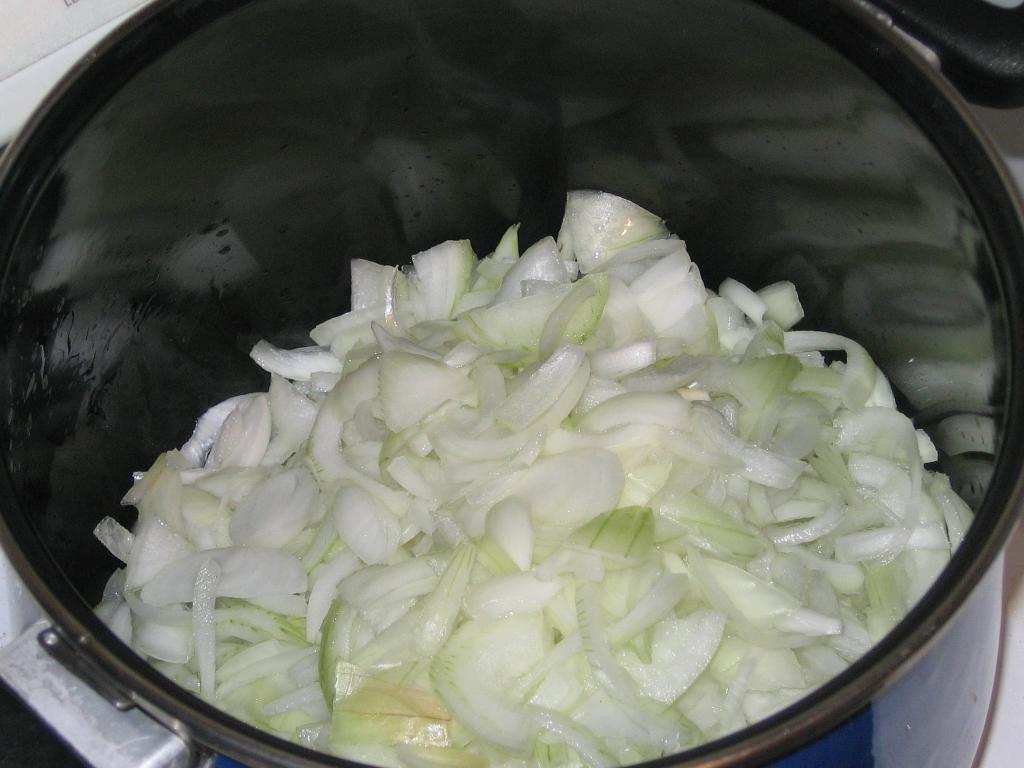
No, seriously, that’s it. And what we don’t have in exciting ingredients, we make up in cooking! Chop up the onions in the following way: Remove the roots and top, cut across the onion – if the onion was the world, the roots would be Antarctica and you want to cut across the Equator. Then just slice the halves top to bottom. This is because the onion cells run lengthwise from the roots to the top, so slicing this way maximizes the cell surface you expose to the heat. You get more juices out, and the result is a better cooking!

Onions in the pot
Onions in the pot

Now, put a bit of oil in a deep pot – two or three spoonfuls -, medium heat, and in the onions go. Now, pay attention, you’re going to cook them slowly. And I mean it, slowly. You start at medium heat, then lower it to low. To know how low I mean, use your ear. You want not the typical sizzle of frying, but almost like the bubbling of boiling.

At first you have to stir and stir constantly, because you don’t want the onions at the bottom to burn while the ones at the top stay raw. Soon, they’ll start softening up and losing juices (see? Cutting lengthwise following my instructions pays off!) At this point you still want to stir, but doesn’t have to be constant. Cover the pot with a lid when not stirring. This is when you can lower the heat to the point you want it, with all the juice the noise will be more descriptive.

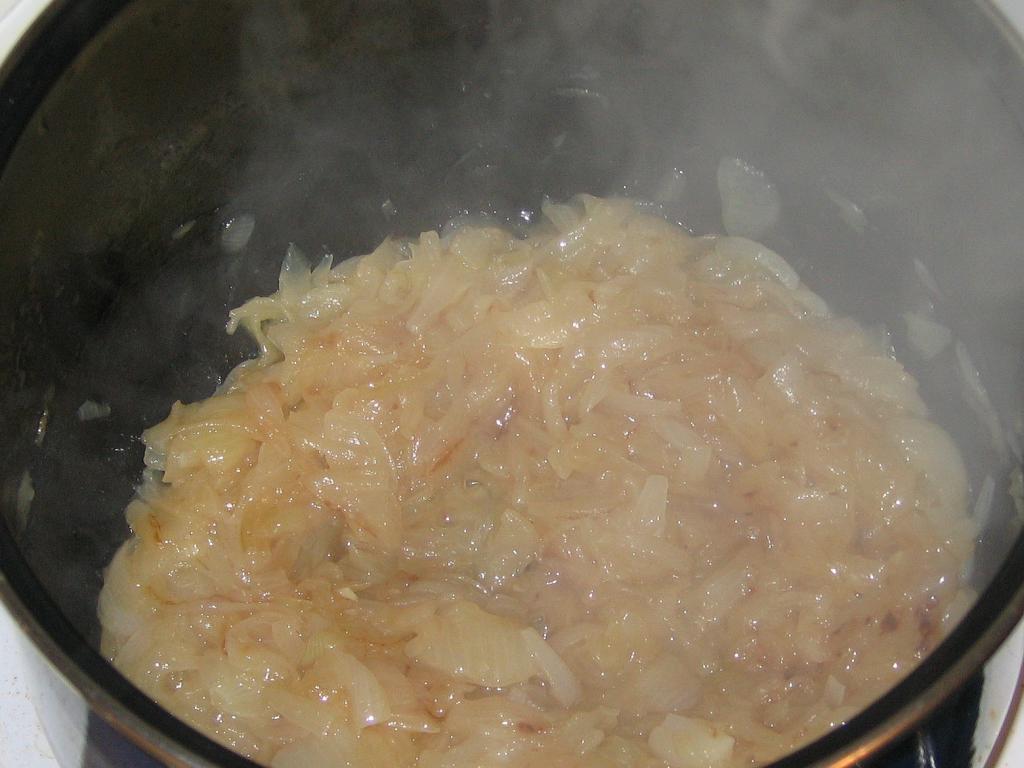
Keep stirring until the juices are mostly gone – we’re talking between half an hour and an hour here , or more if you have more onions -, you’ll be down to frying again. Keep the heat low, and stir more often, because at this point the onions may burn, and we don’t want that! You’ll be ready when your onions look like this.

Fried onions ready.
Fried onions ready.

Don’t overdo it, the onions are nice and soft and slightly brown, but not crunchy or burned. Now, get them on a strainer and drain all the oil and juice left. After they are drained, you mix them with enough beaten eggs (in my example, I used about 2 kg of onions and 6 eggs), add some salt if you want, then into a pan with a little oil and heated enough.

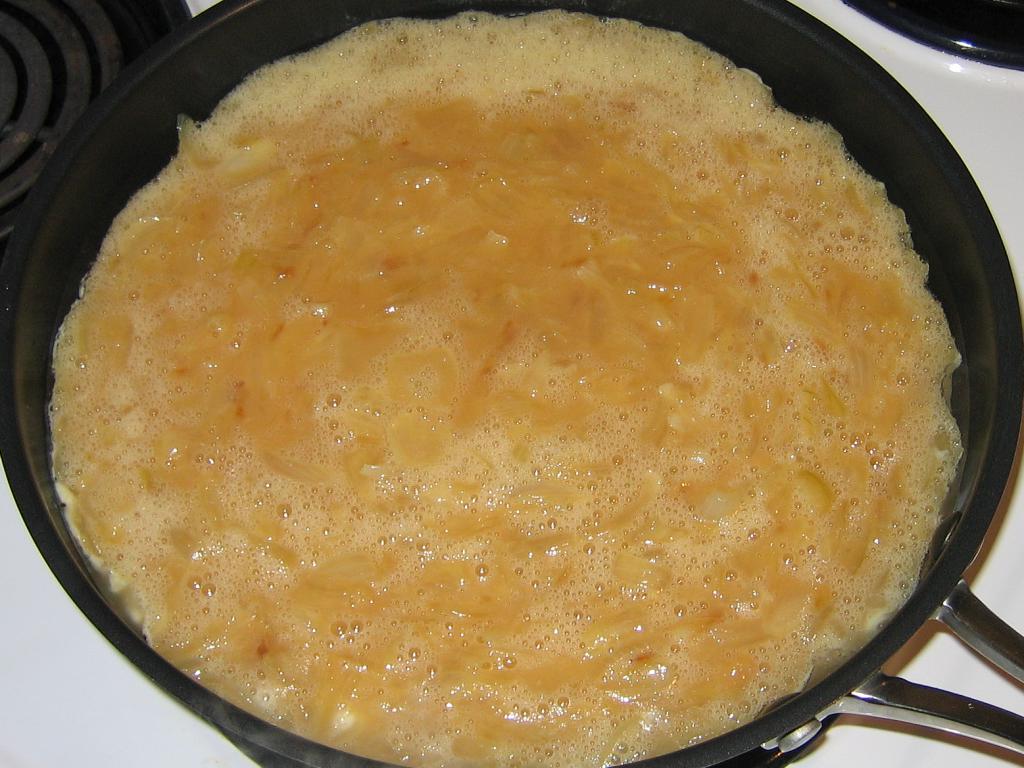
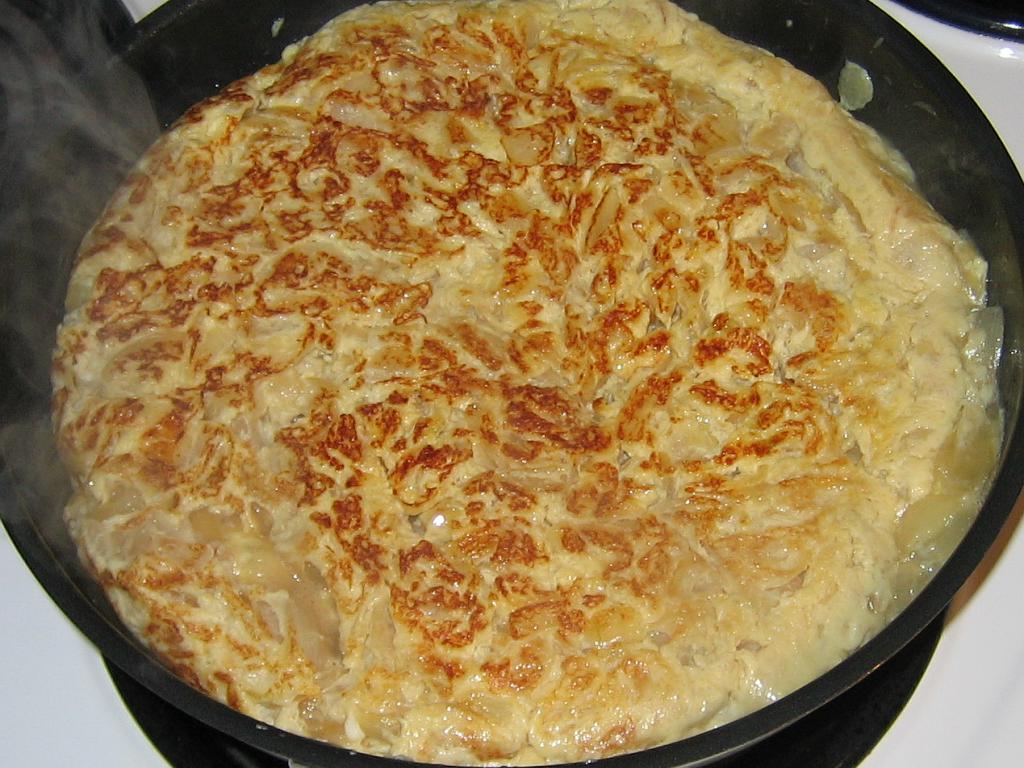
Tortilla in the pan!

Now, to cook the tortilla, I recommend the following procedure. First off, you have heated the pan and a bit of oil – good heat this time. When you add the egg/onion mix, start by pushing the egg to the center from the bottom, and flip the bottom of the center so that it doesn’t burn. You want to solidify the egg a bit at first. After that, let it sit a bit, and with a plate, flip it!

Flip me!
Flip me!

So flip it! And flip it, and flip it, and flip it again. The more you flip it, the better, because that way you get the whole tortilla to heat up, and the inside cooks properly without burning the outside. Flipping often improves the tortilla! Also, give the pan a circular motion so that the egg won’t stick. Even with a teflon non-sticky pan this helps.

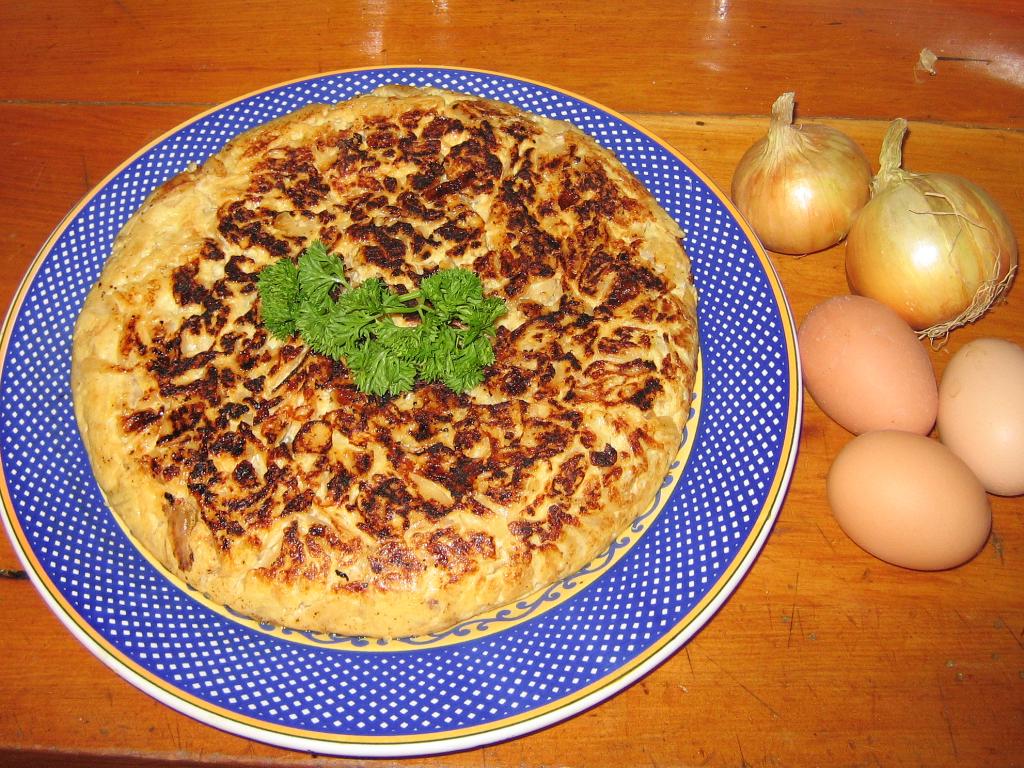
The result? A beautiful, and surprisingly, impressively tasty Tortilla! Seriously, this is delicious, just a lot of work.

Ready to be served.
Ready to be served.

Let it cool a little before serving, so that the egg will set well. Goes well with just about anything!

Have a wonderful meal, trust me, you’ll love it.

Stuffed Meatroll

So! It’s time for the non-vegetarian entry! The stuffed meatroll, a delicious dish my mom taught me, and a heavy yet awesome dish. The one I am going to make is “junior-sized.” It is advisable that, if you have more people to feed, you make a bigger one. Much bigger one (you’ll see, this dish is easy to scale).

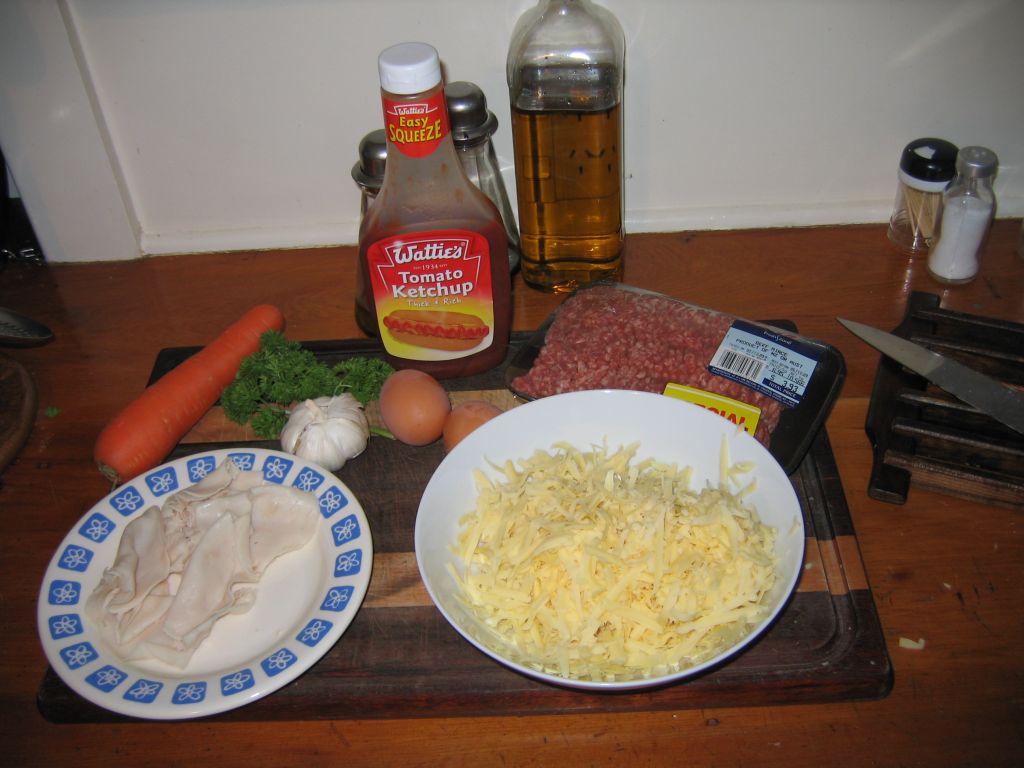
So, to start with, the usual picture of the ingredients!

Stuffed meatroll ingredients

If you are wondering:

  • Beef mince.
  • Eggs.
  • Garlic.
  • Fresh parsley.
  • Ketchup – or other tomato sauce.
  • Grated cheese.
  • Mustard. Not shown because I didn’t have any, but it really adds a wonderful zing to the meat.

For the stuffing:

  • More cheese.
  • Some deli meat (typically shaved ham, turkey or chicken works too)
  • Carrot(s).
  • Eggs.

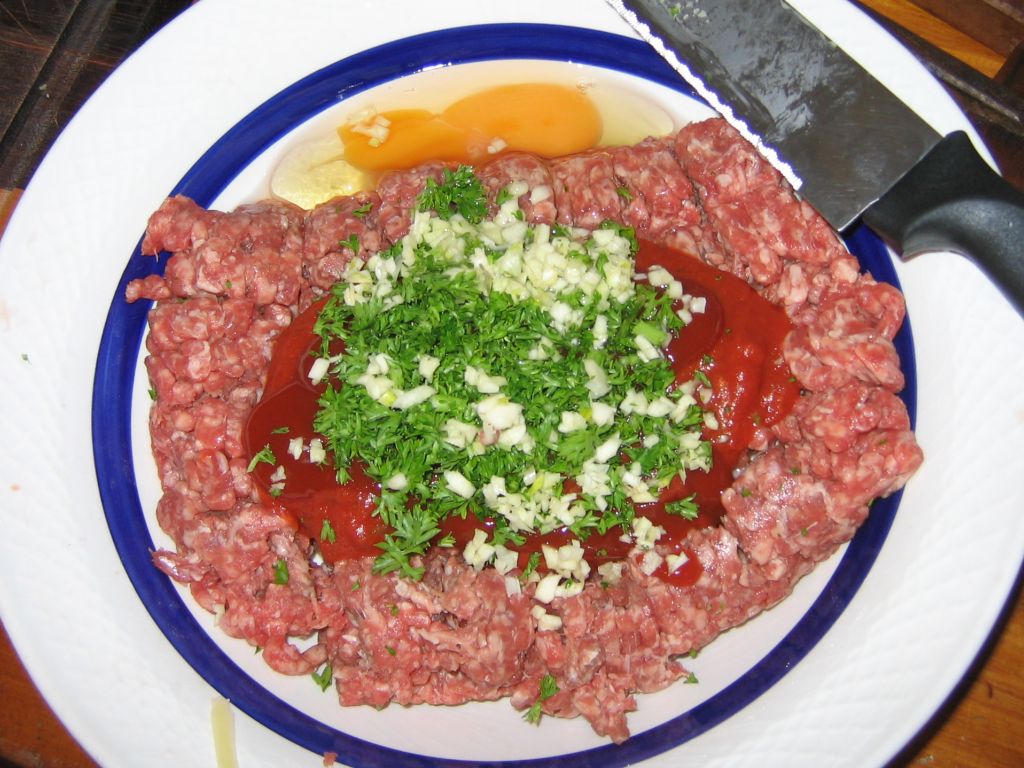
First step! You want to mix the meat with the tomato sauce/ketchup, finely chopped garlic (I put two cloves for that much meat), parsley, mustard, and one egg (or more if you have more meat). Be generous, and don’t worry if the resulting mix looks a bit too “juicy” since we’ll fix that in a second.

Mince and mixing thingies.

After the mix is thoroughly mixed (don’t forget the mustard if you have it!), add a lot of grated cheese, and mix once more. We add the cheese at the end for a reason you’ll notice immediately: If your meat mix before the cheese was juicy, after mixing the cheese in it’ll be just perfect. Cheese solidifies the mix quite a bit, and if you had added it at the same time as everything else, you’d have run into trouble trying to make a homogeneous mix.

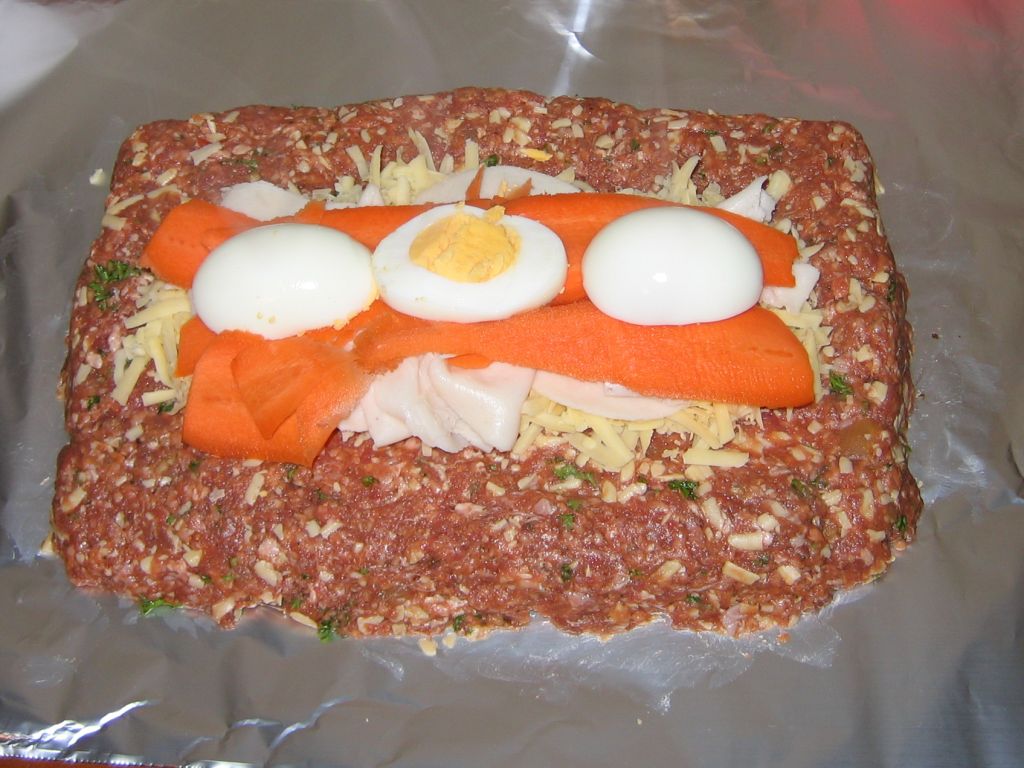
Once that is done, extend the meat on a piece of tinfoil and put the stuffing ingredients on top. The cheese (could be sliced, could be more of the grated cheese you used before), the deli, the carrots sliced thin and lengthwise, and one (or more) hard boiled eggs. You can be more creative with the stuffing too, you can add bacon – which works really well if you like porky stuff -, you can add capiscum or other “hard” vegetable, it’s really up to you!

Meat and stuffing
Meat and stuffing

As I said before, this is a “junior sized” roll. Don’t hesitate to make the roll thicker, by making the meat extension wider. For that you will need an “extra-wide” roll or tinfoil, or to turn the tinfoil 90° and make a “stubbie” roll – shorter but thicker.

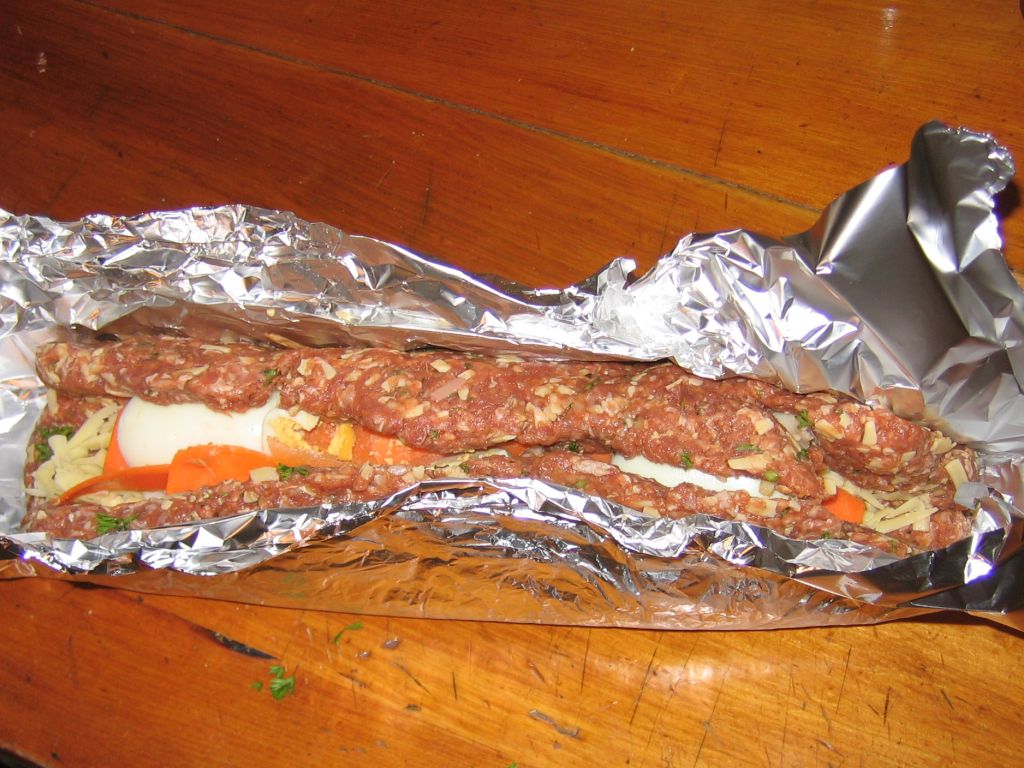
Now, the rolling part is the most delicate part of the operation. You want the roll to wrap around the stuffing well and to completely close over it. To aid yourself in this operation, don’t distribute the meat evenly over the foil. The layer of meat should be thinner in the center, where the stuffing is, and thicker on the edges. When you wrap the meat using the tinfoil, you’ll have to press more or less hard to make the meat come through, and finally, make doubly sure that the roll is properly closed everywhere, specially of course at the top. If you have to add more meat so that it closes, or redistribute the whole thing again, don’t hesitate to do it. If the roll doesn’t close properly, it won’t cook as well!

Closing the meatroll

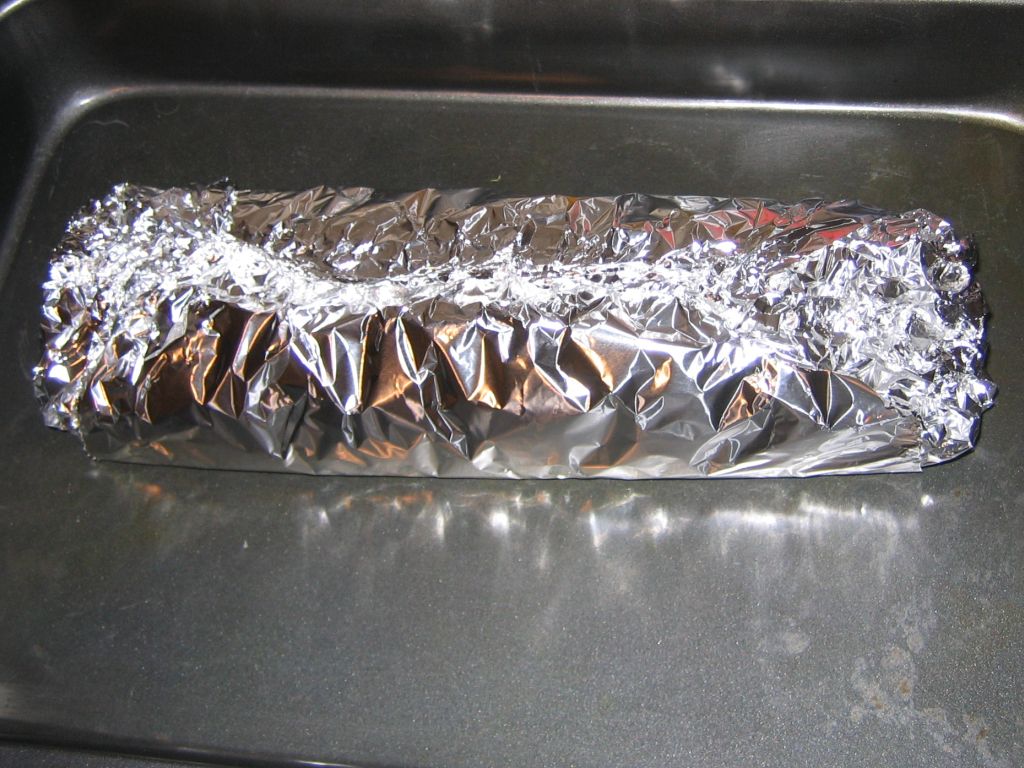
Finally, your roll is ready for the oven! 180-200°C pre-heated oven, and in we go!

Wrapped meatroll
Wrapped meatroll

You want to let it cook for about 20-30 minutes (varies with the over, I left mine for 20 minutes), then bring it out and open the tinfoil. With the tinfoil open, lower the oven heat a bit, and put the meatroll in again for another 20-30 minutes (again, I used 20 minutes for my oven). Times will depend greatly on the oven you use, mine is a rather potent fan baking oven, so things cook fast. Leave it more time if you want, it should be juicy enough not to go dry!

Opening the tinfoil
Opening the tinfoil

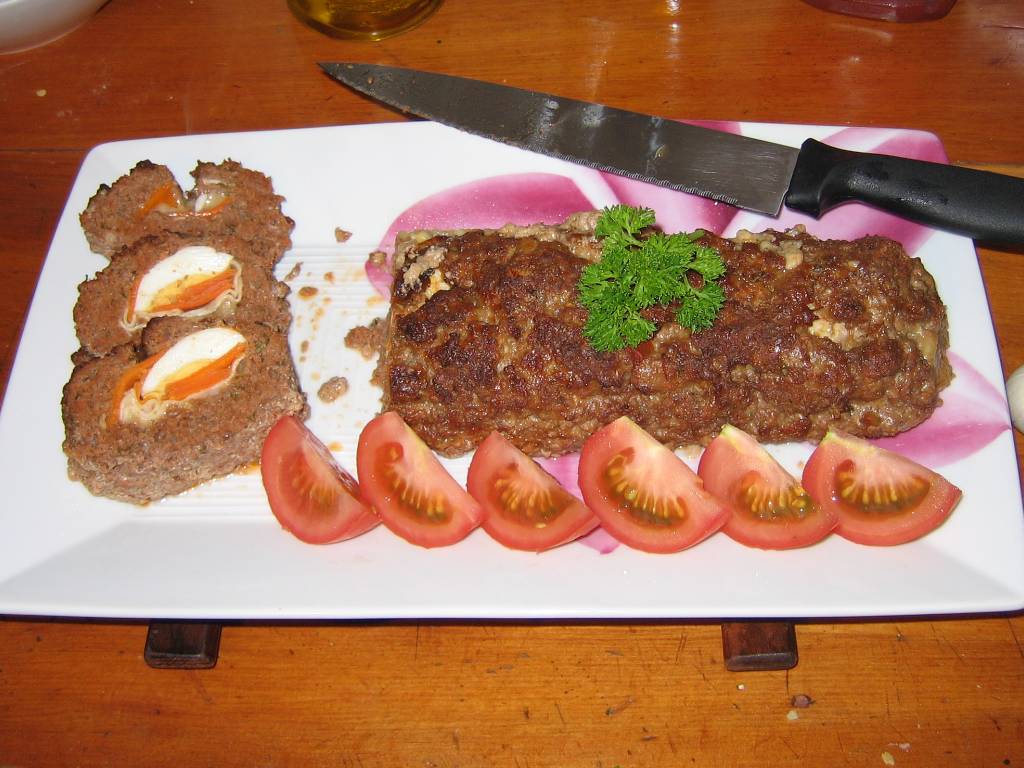
And it’s ready! Be careful when taking it out of the wrap. You’ll see that a lot of fat (mostly from the cheese) has come out, which is a good thing. Serve hot or cold, slice it up, make lots of it and freeze the slices in individual portions if you have too much. It freezes and de-freezes well.

Serving the Meatroll

As you can imagine, this isn’t exactly a light meal. Put something light like a salad or some steamed vegetables to go with it.

Enjoy!

The Lords of the World

This is a translation of an article written by Spaniard author Arturo Pérez-Reverte in 1998, published in “El Semanal” under the title “Los Amos del Mundo”. Ten years later, it looks like he was right on the money. Full credit, of course, goes to him.

The Lords of the World.

You don’t know it, but you depend on them. You neither know them, nor will cross their paths in your whole life, but those great sons of bitches have in their hands, in their handhelds, in the Intro key of their keyboards, your future and that of your children. You don’t know what their faces look like, but they’re the ones who’ll send you to the unemployment line in the name of a three point seven, or a probability index of zero point zero-four.

You have nothing to do with those Does because you’re a shop attendant in a hardware store, or a cashier in the supermarket, and they studied in Harvard and did a Masters in Tokyo – or the other way around -, every morning they go to the stock exchange in Madrid or Wall Street, and say things in English like long-term capital management*, and talk about high risk investment funds, of multilateral investment agreements and of savage economic neoliberalism, as if they were talking about the Sunday game.

You haven’t even seen a painting of them, but those suicide drivers who ride a van full of money at two hundred miles an hour will run over you any day now, and you won’t even have the consolation of going after them on your wheelchair with a shotgun to blow their balls off, because they have no public face, despite being such reputed analysts, finance sharks, prestigious experts on other people’s money. Such expertise they have that they always manage making that money their own; because they are the ones who always win, when they win, and they’re the ones who never lose, when they lose.

They don’t create riches, they merely speculate. They open to the world fatuous combinations of financial economy which had nothing to do with productive economy. They raise houses of cards which they guarantee with smoke and mirrors, and all the powerful men in the world crap themselves just looking at them to butter them up and get on the train.

This can’t fail, they say. Here, no one will lose; risk is minimal. Great Nobel Prize winners in Economy, prestigious financial reporters, international groups with cool acronyms of renowned prestige all support us. So the president of the transeuropean whatever bank, and the president of the Helvetian union of banks, and the fat cat of the latin-american bank, and the euroasiatic consortium, and the mother that gave birth to the lot of them, happily hop aboard for the adventure, bring in money by the truckload, and then they sit to wait for the buff that will make them even more filthy rich, them and all those they represent.

And as soon as the first thing goes right they go and risk more for the second, because hey, it’s a deal so good it’s almost a steal, and a zillion-percent interest rate can’t be found every day.

And while this mirage of speculation has nothing to do with the real economy, with the everyday life of the people on the streets, it’s all euphoria, and pats on the back, and even official banks risk their currency reserves. And, ladies and gentlemen, this is a bed of roses.

And all of a sudden it turns out that no. All of a sudden the invention has some failings, and the high risk thing wasn’t just a phrase but it meant exactly what it said: real, true high risk. And at that point the whole marquee comes down crashing. And those special funds, dangerous, which have an increasingly important role in the world economy, show their dark side. And then – wonder of wonders! – while the benefits were for the sharks who ruled the roost and for those who risked other people’s money, turns out that the losses are not.

The losses, the financial bite, the payment for those poshland rich kids who play with the world economy as if it were a game of Monopoly, land squarely on the backs of all of us. Then it turns out that, while the benefits were private, the errors are of all of us and the losses must be socialized, coming to the rescue with emergency measures and lifesaving funds to avoid domino effects and their goddamn mothers.

And that solidarity, mandatory if we want to save the world economy, is paid with their skin, with their savings, and sometimes with their jobs, by John A. Smith, an employee at a chain store, and the millions of unhappy Johns that, all through the world, wake up at six in the morning every day to earn a living.

That’s what’s coming, I’m afraid. No one will forgive a single cent of the debt owed by the third world countries, but there will never be a lack of funds to cover holes left by speculators and swine that play Russian roulette on other people’s heads.

So we better start holding onto our hats. That is the landscape the Lords of the World have prepared for us, with the fairy tale of all that economic neoliberalism and all that shit, of so much speculation and so little shame.

Translation ends.

* In English in the original publication.

The text has been circulating around and spread far and wide in the spanish-speaking web. A sample link to the original sotry:

http://alicanteconfidencial.blogspot.com/2008/11/los-amos-del-mundo-arturo-prez-reverte.html

If there’s something you can count on is for Arturo to call a spade a spade and don’t mince words when things matter.
Pisto

So! Quite a few days since I posted anything. Well, that’s what happens when one is busy, has a stash of frozen goodies prepared for just such occasions, and spends afternoons in places such as Himatangi beach (with pics to follow – once I find a decent gallery software I can run on this server!). But! Eventually one cannot live off the reserves forever, and has to go to the market to buy things. Which brings me to the following recipe.
Pisto. A traditional Spanish dish made with vegetables from the nearest vegetable garden, a marvelous dish for the summer days. As I go along, you may recognize the dish. Ask a French, and he’ll claim this is actually a “ratatouille”. Ask an italian, and he’ll tell you this is a “ciambotta di magro di verdure”. And so on. That’s because we are all, basically, from the same Mediterranean region and, at the end of the day, we all eat the same! So, such a simple dish with “whatever is handy from the vegetable garden” is, unsurprisingly, easily found in a variety of places in a similar fashion.

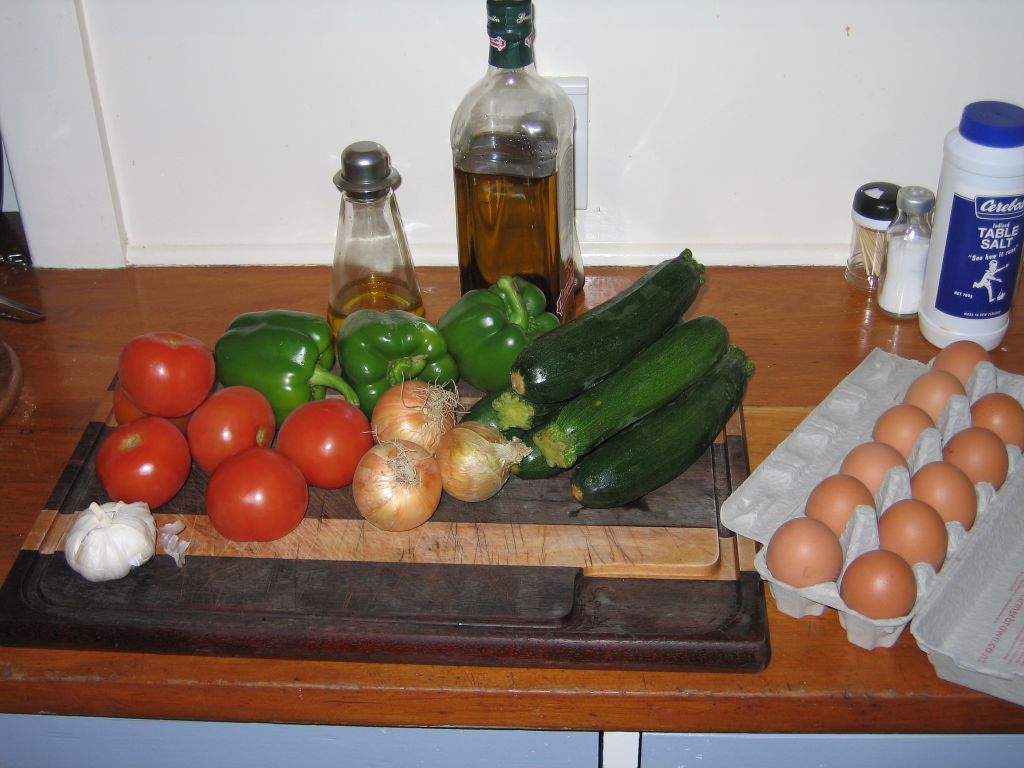
Let us begin, shall we? First, grab all of this stuff:

Ingredients for Pisto

The text-only version:

  • Tomatoes.
  • Green peppers, paprika, capiscums, whatever you call them.
  • Zucchini.
  • Onions.
  • Garlic.
  • Some olive oil.
  • Eggs.
  • Anything else that cooks in a similar fashion that you may have handy in your vegetable garden!

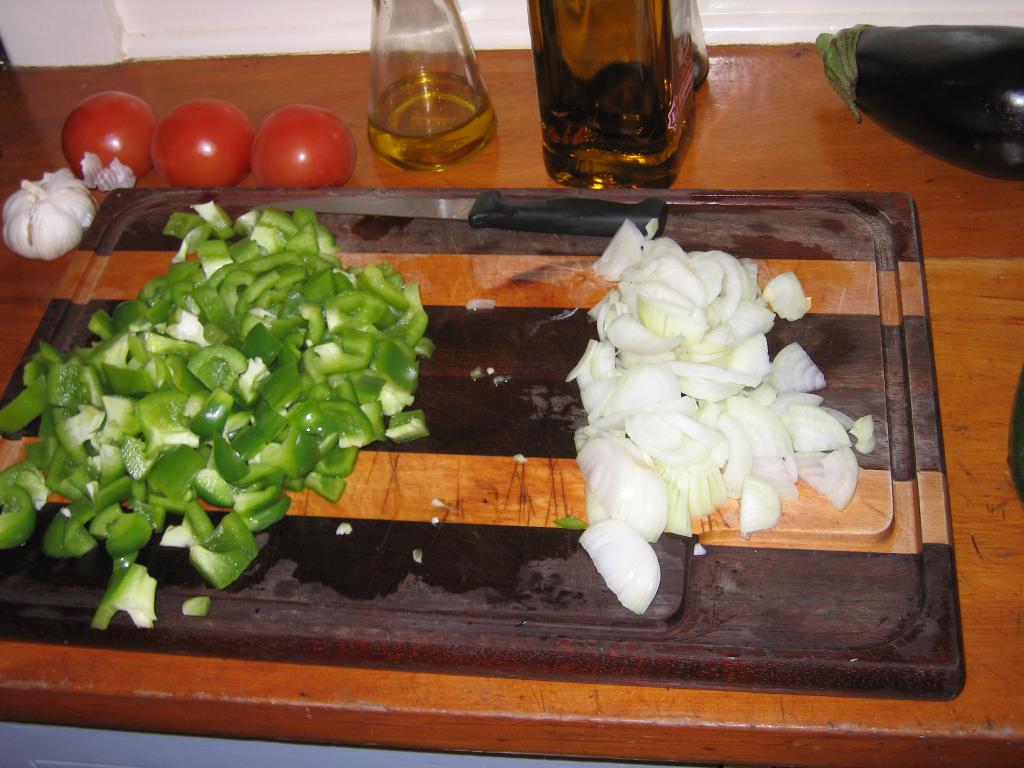
So, start by chopping the onion and whatever vegetables take the longest to cook.

Chopped onions and green peppers

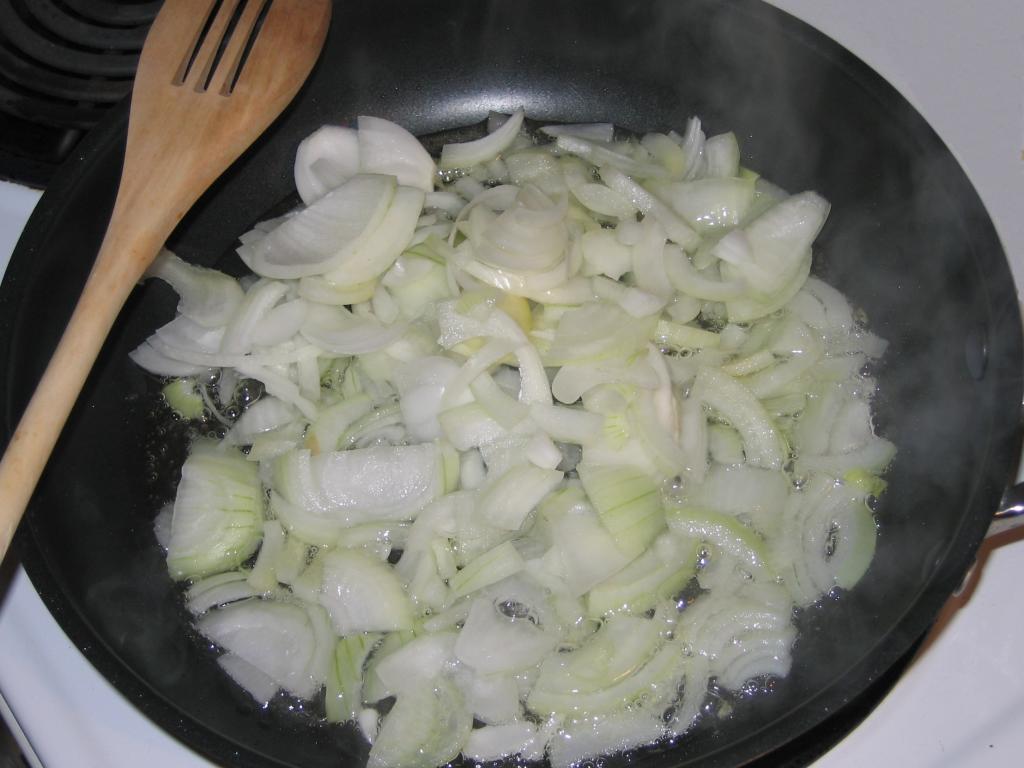
Then add some oil in adeep frying pan or a pot (best if it’s non-sticky), put it on medium-low heat, and start by frying the onion and the garlic. While it fries slowly, get chopping the rest of the stuff.

Frying onion
Frying onion

As you can see, the chopping of the onions is a bit irregular, there are some rather large chunks in there. The reason is personal taste, I chopped one of the onions rather finely, so that it’ll mix well with the whole rest of the ingredients, and chopped others a bit more “chunky”, because I like chunky vegetables.

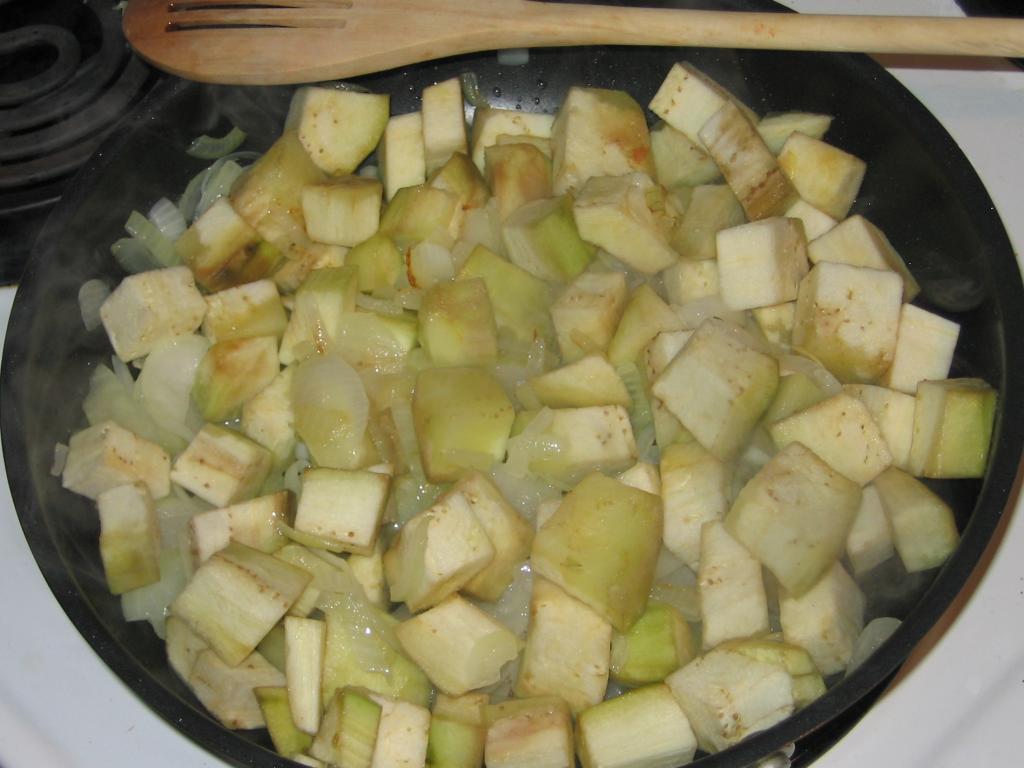
Eggplant added early

I had an eggplant kicking about. Now, if you bother to look in the net for recipes, you will see many “Eggplant stuffed with Pisto” ones, but to be honest, that seems like a lot of bother for little return. Rather, I peeled it, diced it, and added it straight to the pan. Much easier!

Peppers and tomato added

After some minutes, I added the green peppers, let them fry for a bit, and then added the tomatoes. At this point I raise the heat to exactly medium in my stove – check yours before being too hash!

You’ll notice that the tomato seems to be exceedingly juicy and red, that’s because I added, on top of the natural tomatoes, some tomato puree I had, leftover from the pasta I cooked yesterday. While good natural tomatoes are undoubly best, if you happen to be in the wrong season or the local tomatoes where you happen to live are bad (or expensive!), or you have some leftovers that you don’t want to throw away, don’t hesitate to use tinned diced or crushed tomatoes. The taste is slightly less good, but it works fine!

In the picture you probably noticed another wonderful thing about frying tomatoes: spillage! Bop, bop, bop, you’ll have little droplets of tomato all over the place. At this stage I usually cover the pan, let the whole thing simmer and cook. It protects the stove from spillage, and makes sure that the whole thing cooks, not just burns at the bottom while leaving the top raw. Stir every so often too!

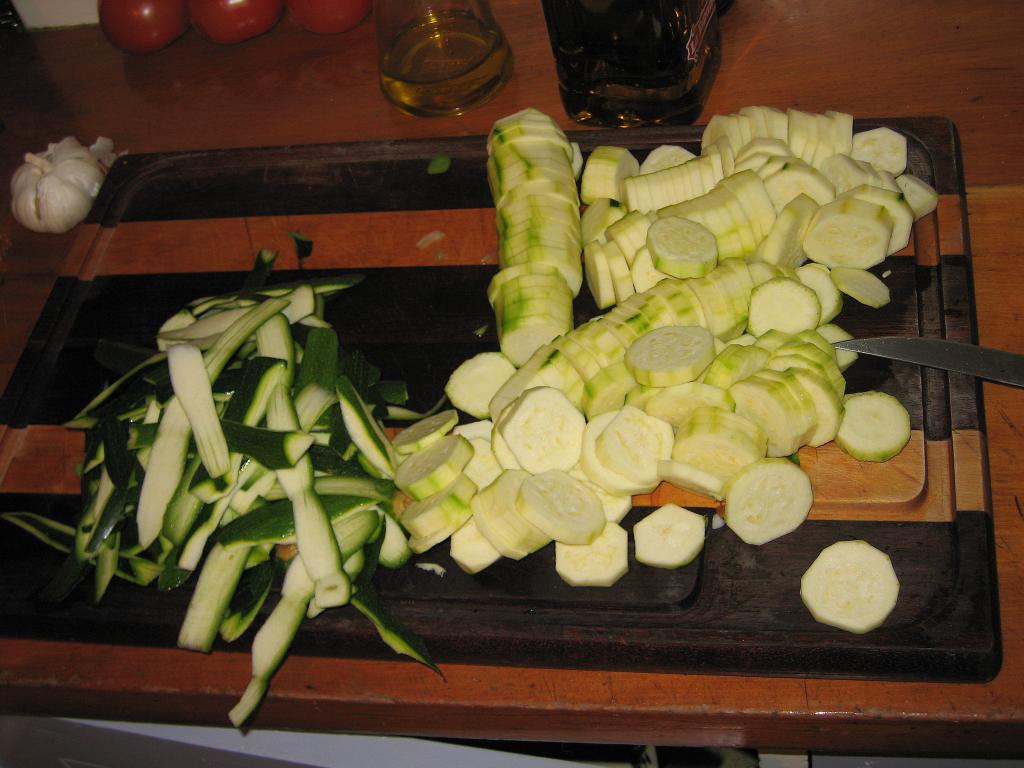
Sliced Zucchini
Sliced Zucchini

In the meantime, I have a whole bunch of zucchini I had to slice. These particular ones happen to have a rather tough skin, so I peeled them before adding them to the mix. It’s always better – and more nutricious – if you don’t do this, but there you go. If the zucchini is of the “much bigger” variety, dice it instead of slicing it like I did. Give the tomato and peppers 10-15 minutes, then add the zucchini.

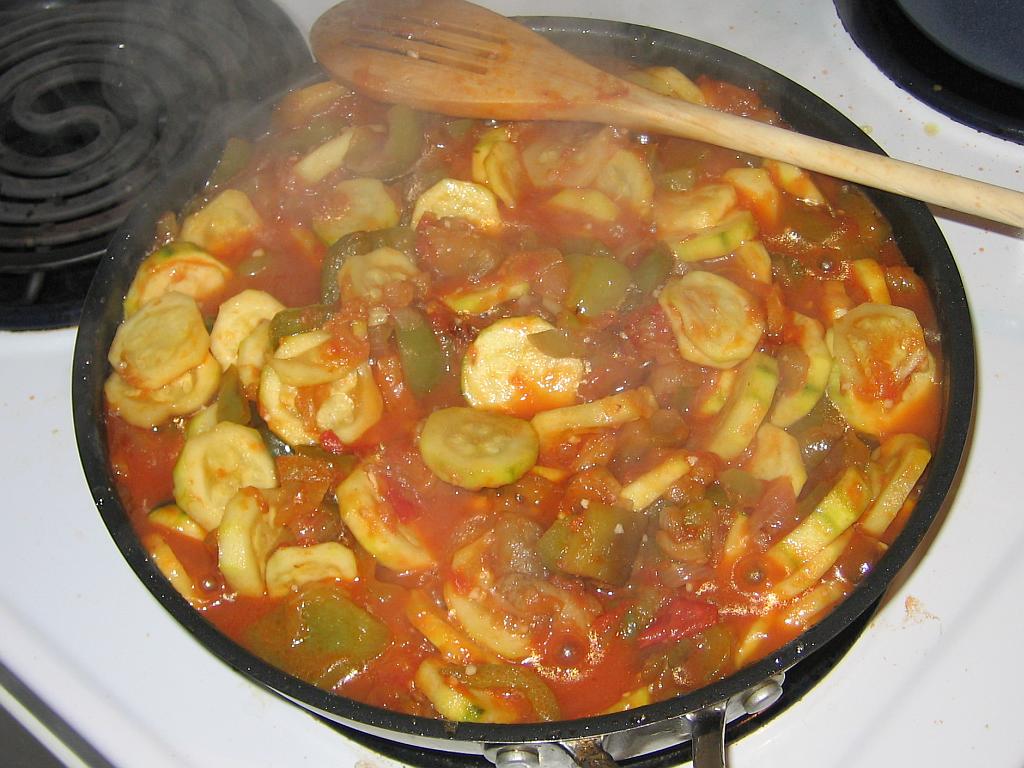
Last ingredient added!

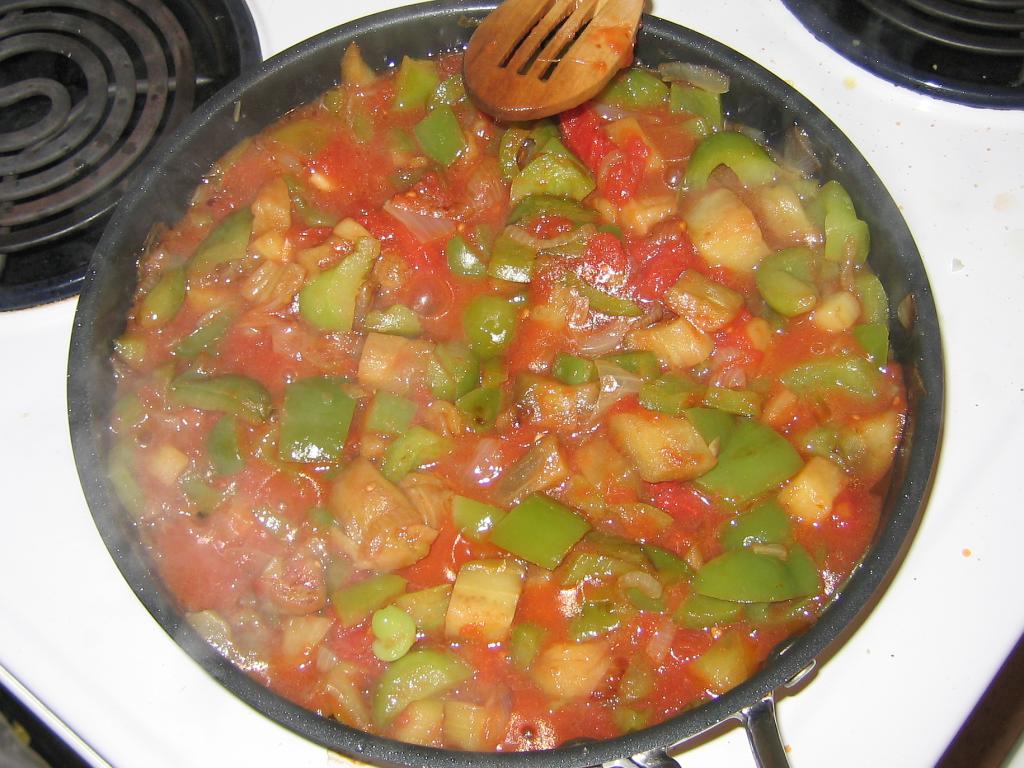
This is the perfect chance to correct the salt! That is, add some salt if you want to. Now, we want to cover it for a while, stir every so often, then when the vegetables start to go soft, remove the cover completely and cook it to reduce the juices. When will it be ready? When the vegetables are soft, and the juicy look of the picture above changes into something like the one below:

That Pisto is ready!

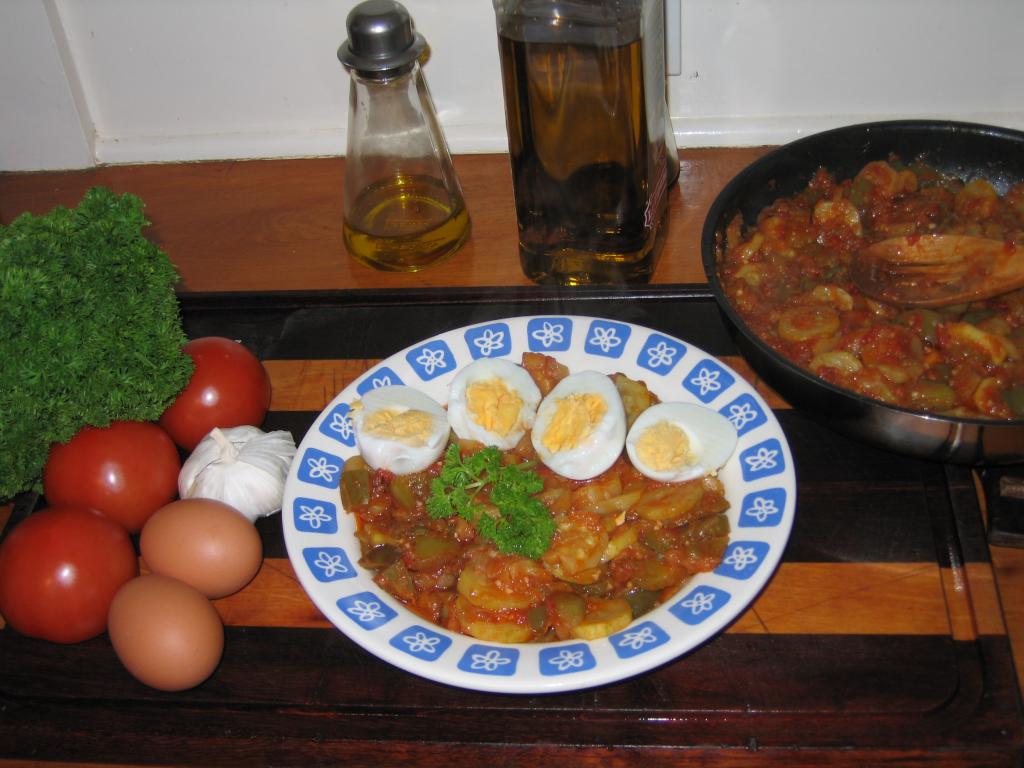
So, that’s ready to serve! The traditional way is to serve a portion topped with a fried egg or two. I’m not a fan of fried eggs, mostly it’s the runny yoke thing that puts me off, but I like eggs otherwise. In my case, I added a couple of hard boiled eggs.

A tasty plate of Pisto

Other things that can be added are croutons, or poached eggs. Pisto is a flexible dish, you can put it inside a puff pastry and make a wonderful treat that way, and it freezes well – do as I did, cook a big pot, then freeze individual portions for later use. You won’t regret it!

At this rate it’ll look like I’m a vegetarian or something. Next entry will be a more “meaty” one, enjoy your Pisto!

Byte-sized Notes